The ink on the diploma does not care who signed the check. But the hands holding it do.
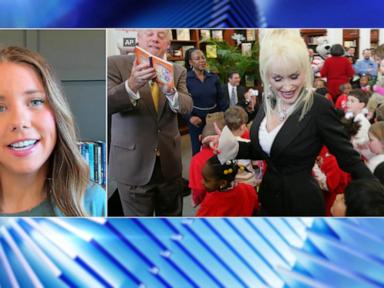
Consider Kendra Fleming. To understand the quiet gravity of what happened when the world lost Dolly Parton, you have to look past the velvet curtains of Nashville, past the rhinestone-studded spotlights, and right down into the trembling fingers of a parent trying to figure out how tomorrow's tuition gets paid.
When the news broke that the eighty-year-old country legend had finally laid down her pen after a quiet battle with cancer, television networks scrambled for archival footage. They played the high notes of "Jolene." They rolled clips of the fluttering acrylic nails and the platinum wigs. They talked about millions of records sold and decades spent dominating charts.
They missed the real story entirely.
Out in the quiet corners of East Tennessee and across the wider map of ordinary American struggle, the grief tasted different. It tasted like cold coffee and unmailed financial aid forms. For scholarship recipients like Fleming, whose families had relied on the infrastructure of the Dollywood Foundation to keep educational dreams breathing, the loss of the singer felt less like a celebrity passing and more like the removal of a invisible safety net.
Dolly never wanted statues. She wanted literacy. She wanted classrooms that smelled like fresh wood and new paper instead of the damp poverty she remembered from her childhood cabin on the banks of the Little Pigeon River. Long before corporate philanthropy became a tax write-off trend, a girl from Sevier County who grew up with twelve siblings and a father who couldn't read decided that her wealth was just rented property.
She gave it back. One book at a time. One scholarship check at a time.
Think about the math of a legacy. It is easy to quantify the millions funneled into vaccine research at Vanderbilt or the hundreds of millions of books shipped out by the Imagination Library. Statistics are comfortable. They let us categorize generosity into neat little spreadsheets. But numbers do not capture the exact texture of panic a mother feels when looking at college application deadlines with zero dollars in savings.
That panic is where the Parton foundation always lived.
When scholars and historians attempt to dissect why her absence leaves such a violent tear in the cultural fabric, they point to her uncanny ability to unify a fractured nation without ever uttering a partisan word. But local recipients know the truth. She was a lifeline disguised as a celebrity. She looked at rural poverty and saw her own reflection staring back.
She refused to let geography be a life sentence.
When Fleming spoke to local media about the passing of the country icon, she wasn't mourning a voice on the radio. She was mourning an architect of possibility. The foundation checks kept her children's futures anchored. They transformed the abstract concept of higher education into a lit kitchen table at midnight where a mother could finally exhale.
Icons die. Headlines fade. The broadcast trucks pack up their cables and move on to the next tragedy.
Yet, tomorrow morning, across bedrooms in small towns where opportunity is scarce, a child will pull a book from a mailbox bearing a familiar return address. The music has stopped. The stage is dark. But the ink keeps drying on a million futures that never would have existed if a poor girl from the mountains hadn't decided to share her wealth with the world.