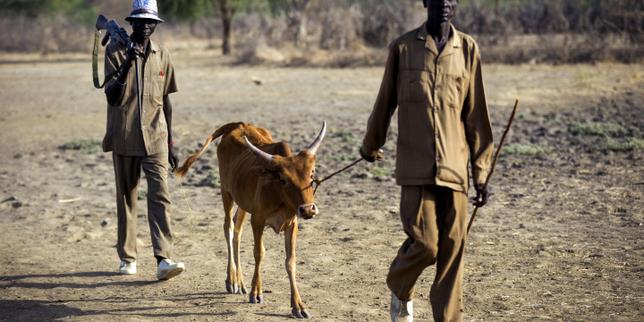
The cycle of destruction in the world's youngest nation is no longer a matter of seasonal irregularity. It is a compounding catastrophe. South Sudan finds itself trapped in a brutal hydrological whiplash, swinging wildly from multi-year historic droughts straight into catastrophic deluges driven by shifting weather patterns. When extreme dry spells bake the soil into a concrete-like barrier, the earth loses its capacity to absorb water.
When the rains finally arrive—amplified by strong climate phenomena—the result is not relief. It is inundation. Entire communities are swallowed by rising waters, displacement camps are submerged, and arable land is washed away before crops can even take root.
Understanding this crisis requires looking beyond the immediate imagery of rising floodwaters. Journalists often frame these events as sudden tragedies, but the reality is a slow-motion systemic failure rooted in decades of environmental degradation, infrastructure deficits, and geopolitical instability. South Sudan's vulnerability is magnified by the White Nile and its vast wetland system, the Sudd. As upstream management changes and erratic precipitation increases, the natural sponge of the Sudd overflows with devastating precision.
Villages that once relied on predictable seasonal flooding for agriculture now face permanent displacement. Families who survived months of scorched earth and failed harvests are forced to pack what little they have onto makeshift rafts or wade through chest-deep water to reach higher ground. The human cost is measured in lost livelihoods, spiking rates of waterborne diseases, and an acute food security emergency that threatens millions. Humanitarian agencies are stretched to their absolute limits, navigating flooded terrain where roads have dissolved into impassable swamps.
International response mechanisms remain chronically reactive rather than proactive. Aid dollars flow after the dykes break and the cholera outbreaks begin, yet long-term adaptation financing lags behind. Building climate resilience in a fragile state requires heavy investment in water management infrastructure, early warning systems, and sustainable agricultural practices that can withstand both drought and flood.
Without a fundamental shift in how the international community approaches climate vulnerability in conflict-affected regions, South Sudan will remain caught in an endless loop of emergency response. The water is still rising, and the window to break the cycle is closing fast.