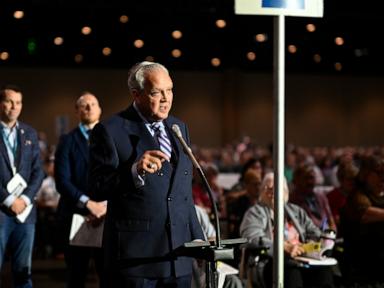
The mainstream media is treating the Southern Baptist Convention’s recent voting maneuvers to ban churches with female pastors as a medieval theological regression. Critics scream from the sidelines about patriarchy, glass ceilings, and the cultural backwardness of the American South.
They are missing the entire point.
This is not a theological debate dressed up as church politics. It is a desperate corporate restructuring disguised as orthodoxy.
When the SBC votes to advance a formal constitutional amendment explicitly barring churches with women pastors, they are not fighting a spiritual war. They are executing a defensive brand-protection strategy. I have spent years analyzing the institutional mechanics of massive, decentralized organizations, and the playbook here is identical to a legacy corporation trying to lock down its remaining market share in a shrinking industry.
The lazy consensus says the SBC is alienating the modern world and accelerating its own demise. The reality is far colder, calculated, and market-driven.
The Economics of Hyper-Differentiation
Every business school graduate understands the danger of the "muddy middle." When a brand tries to appeal to everyone, it appeals to no one. You lose your core demographic while failing to capture the new market.
The religious marketplace in America is experiencing a brutal contraction. According to long-term data from organizations like Gallup and the Pew Research Center, church membership across the board has plummeted. But the bleeding is not uniform. Mainline Protestant denominations—the ones that modernized, adopted progressive social stances, and welcomed female leadership decades ago—are in a literal demographic freefall. The Episcopal Church, the Evangelical Lutheran Church in America, and the Presbyterian Church (USA) are watching their numbers collapse at a terminal rate.
The SBC leadership looks at those numbers and reads the writing on the wall. They know they cannot compete with secular culture or progressive denominations on progressive terms. If a consumer wants progressive social values, they do not go to a Baptist church; they go to a local non-profit or a progressive mainline church.
The SBC’s only viable survival strategy is hyper-differentiation.
By drawing a hard, unyielding line on female pastors, the SBC is signaling a distinct brand identity. They are telling a specific, highly committed demographic: We are the uncompromised alternative to the modern world.
In a shrinking market, intense loyalty from a smaller, radicalized base beats lukewarm engagement from a larger, diffused base every single time. It is the exact same mechanism that drives luxury brands to burn unsold inventory rather than discount it. It preserves the perceived purity of the product for the core consumer.
The Illusion of Decentralization
To truly understand why this vote is a structural disruption, you have to dismantle the fundamental lie of Baptist polity: local church autonomy.
For over a century, the Southern Baptist identity was built on the premise that no central hierarchy could tell a local church what to do. If a local congregation in California wanted to ordain a woman, the national convention theoretically had no power to stop them. The convention was merely a voluntary association for missions.
The push for this constitutional amendment destroys that myth. It is a hostile regulatory takeover by the central elite.
Imagine a franchise system where the corporate headquarters suddenly decides to audit every independent location’s internal staffing decisions, overriding the local owner's authority. That is what is happening here. The SBC is shifting from a loose trade association to a tightly controlled ideological cartel.
The Mechanism of Exclusion
The proposed amendment alters the SBC constitution to state that the convention will only cooperate with churches that affirm, appoint, or employ "only men as pastor or elder as qualified by Scripture."
Look at the wording. It does not just target senior pastors. It targets any pastoral role. Youth pastors, children's pastors, worship pastors. If a woman holds the title, the church is cast out.
This is a massive risk management play. The leadership is willing to purge high-profile, high-giving mega-churches—like Saddleback Church in California, which was already ousted—to enforce compliance. When you fire your top-performing revenue generators to prove a point, you are not acting out of ignorance. You are setting an example to keep the mid-tier franchises in line.
Dismantling the People Also Ask Mythos
The public discourse surrounding this issue is choked with flawed premises. Let us address the most common misconceptions with brutal honesty.
Does banning women pastors mean the SBC is dying?
No. It means it is consolidating. The corporate entity might shrink in total assets and seat count, but its operational core becomes far more disciplined. A smaller, ideologically pure organization is highly resilient against external cultural pressure. They are trading scale for stability.
Is this purely a theological disagreement over scripture?
Hardly. Scripture has said the exact same thing for two thousand years. The text did not change between 1980 and today. What changed was the cultural ecosystem. Theology is the language used to justify the policy, but the timing of the enforcement is driven by institutional anxiety over cultural irrelevance and internal power struggles.
Will this move alienate younger generations permanently?
It will alienate the secular and moderate youth, who were likely leaving anyway. But it acts as a powerful recruiting tool for a highly specific subset of younger, hyper-conservative men who are attracted to rigid, patriarchal hierarchies. The SBC is deliberately choosing to own 100% of a hyper-niche market rather than 10% of a mainstream market.
The Massive Blind Spot in the Strategy
While this consolidation strategy makes cynical business sense on paper, it possesses a catastrophic structural flaw that the SBC leadership refuses to admit.
By defining their brand purely through negation—by what they ban, reject, and exclude—they create a culture of perpetual internal policing. When you run out of external enemies to fight, the ideological purity tests inevitably turn inward.
Once the female pastors are completely purged, the mechanism of exclusion will not just stop. The compliance committees will need new targets to justify their existence. They will move on to Calvinism vs. Arminianism, specific translation preferences, or political litmus tests.
The downside of building a fortress is that you eventually starve inside it. The SBC is successfully protecting its core brand asset, but they are doing so by sealing the doors from the inside. They are betting everything on the assumption that the hyper-conservative market segment will remain wealthy enough and large enough to sustain their massive institutional footprint. That is a high-stakes gamble in an economy where religious affiliation among younger demographics is cratering across every single metric.
The conventional media will keep writing articles analyzing the spiritual or moral failures of this vote. They will keep expecting the SBC to have an epiphany and join the twenty-first century.
It will not happen. Stop looking at the altar. Look at the balance sheet. This is a cold, calculated consolidation of a legacy brand trying to survive an existential market disruption by becoming the most radical version of itself.