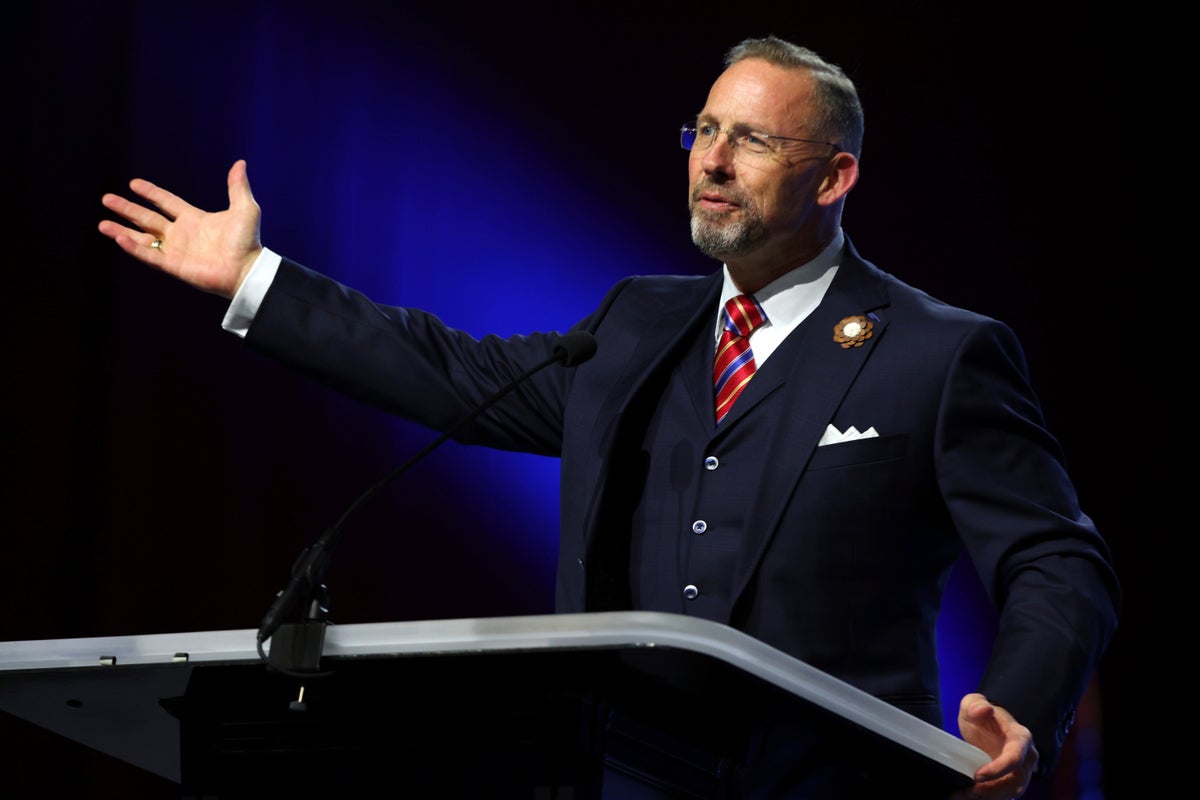
The floor of the Southern Baptist Convention annual meeting is rarely peaceful, but right now in Orlando, the tension is flat-out suffocating. Over 11,000 messengers have packed into the Orange County Convention Center. They aren't just there to sing hymns. They're deciding the identity of America's largest Protestant denomination.
The immediate fight centers on a new constitutional amendment aimed at permanently expelling any church that allows women to hold pastoral titles or preach on Sundays. It's the fourth consecutive year this issue has dominated the gathering. For a more detailed analysis into similar topics, we recommend: this related article.
If you think this is just a minor squabble over church titles, you're missing the bigger picture. This showdown isn't merely about semantics. It represents a massive, high-stakes struggle for power, theological purity, and control over the future of the evangelical movement.
The Illusion of Unity and the Battle for the Constitution
Southern Baptists already agree on the basics of leadership. Their official statement of faith, the Baptist Faith and Message 2000, explicitly states that the office of pastor is limited to men. For years, that was enough. To get more details on the matter, in-depth reporting can also be found on TIME.
But it's not enough anymore. The current crisis exists because local, independent churches have found wiggle room. While a church might reserve the "Senior Pastor" slot for a man, it might employ a female "Children's Pastor," "Worship Pastor," or "Discipleship Minister." To hardline traditionalists, that's a dangerous compromise.
Albert Mohler, the influential president of the Southern Baptist Theological Seminary, is leading the charge to close that loophole. He's introducing what he calls the "Truth and Unity Amendment." This measure would officially bar any church that acts to "affirm, appoint, or endorse a woman serving in the office or function of a pastor/elder/overseer, specifically preaching to the assembled congregation."
Look at his phrasing. He isn't just targeting the title. He's targeting the function. If a woman stands behind a pulpit on a Sunday morning to deliver a sermon to men and women, that church would be disqualified from cooperating with the SBC.
Why This Amendment Keeps Stalling
Passing a constitutional amendment in the SBC is deliberately difficult. It requires a two-thirds supermajority vote at two consecutive annual meetings. That's where the hardliners keep hitting a wall.
The original "Law Amendment"—named after Virginia pastor Mike Law—passed its first vote with flying colors. But during the second vote in 2024, it fell short, drawing around 61% support. Close, but not enough. Then a 2025 variation proposed by Texas pastor Juan Sanchez met a similar fate, pulling in just over 60% of the vote.
Why can't a denomination that claims to be deeply conservative cross that 66.7% finish line?
It comes down to a fundamental Baptist conviction: local church autonomy. Many messengers who completely oppose female senior pastors still vote against these amendments. They don't want a national steering committee policing their local staff structures.
Consider how this plays out on the ground. A small country church might have a woman serving as a "Youth Pastor" because they can't afford to hire anyone else. She isn't preaching the main Sunday sermon. Under these strict rules, however, that church faces excommunication. Opponents of the amendment argue that this shifts the convention's focus from global missions to an internal witch hunt. It forces the SBC to hunt down churches over job titles rather than fighting common cultural battles.
The Real Numbers and What is at Stake
Don't let the loud debates fool you. The SBC has already proven it has the teeth to expel prominent churches without changing its constitution. They don't need an amendment to kick people out; they've been doing it for years using a simple majority vote to declare churches "not in friendly cooperation."
- Saddleback Church: The massive California megachurch founded by Rick Warren was ousted after ordaining three female pastors and appointing a woman as a teaching pastor.
- Fern Creek Baptist: A historic Kentucky church was kicked out because it had been faithfully led by a female pastor, Linda Popham, for decades.
The financial stakes are massive. The SBC thrives on the Cooperative Program, a unified funding pool where local churches send money to support global missionaries, domestic church planting, and seminaries. When you expel a megachurch like Saddleback, you don't just lose a name on a roster. You lose millions of dollars in mission funding.
The denomination is already facing severe headwinds, including declining membership numbers and a fractured response to a sweeping sexual abuse crisis exposed a few years ago. Critics note that while plans for a public database of abusive pastors have stalled out, energy and resources are flowing abundantly into tracking down female children's ministers.
The Next Practical Steps for Local Churches
If you manage an SBC church or lead a ministry within one, navigating this theological minefield requires clear, immediate action. The reality of this debate means your church cannot afford to be ambiguous about its structure.
1. Audit Your Staff Titles Immediately
If your church wants to remain in the SBC without looking over its shoulder, look at your website and organizational chart. Titles like "Children's Pastor" or "Women's Pastor" are flashing red targets. Consider changing these to "Director of Children's Ministry" or "Minister to Women." It preserves the role while removing the specific vocabulary that triggers convention actions.
2. Define the Function of the Pulpit
Clarify who is allowed to preach during your primary worship services. If your church allows women to deliver Sunday morning expositions to the main congregation, be aware that you are outside the mainstream SBC consensus. You need to decide if that practice is worth a potential challenge from the floor of a future annual meeting.
3. Educate Your Messengers
If your congregation values its autonomy but supports the SBC mission, ensure your church sends its full allotment of messengers to the annual meetings. The outcome of these votes is determined entirely by who shows up in the room. Unregistered or absent members mean your local perspective won't be counted when these critical supermajority thresholds are tallied.
The SBC is drawing a hard, unambiguous line in the sand. Whether this specific amendment passes or fails, the cultural momentum within the denomination is moving toward absolute conformity. Leaders are making it clear that local flexibility is no longer welcome on the convention floor.
The Southern Baptist Women Pastors Controversy — What the Bible Says
This video provides a deep look into the theological arguments surrounding the role of women in the Southern Baptist Convention, highlighting the biblical texts and internal debates driving the current legislative conflict.



:max_bytes(150000):strip_icc():focal(665x0:667x2)/gettyimages-50733149-2000-8b129a2475974982a915418ce92a73d8.jpg)