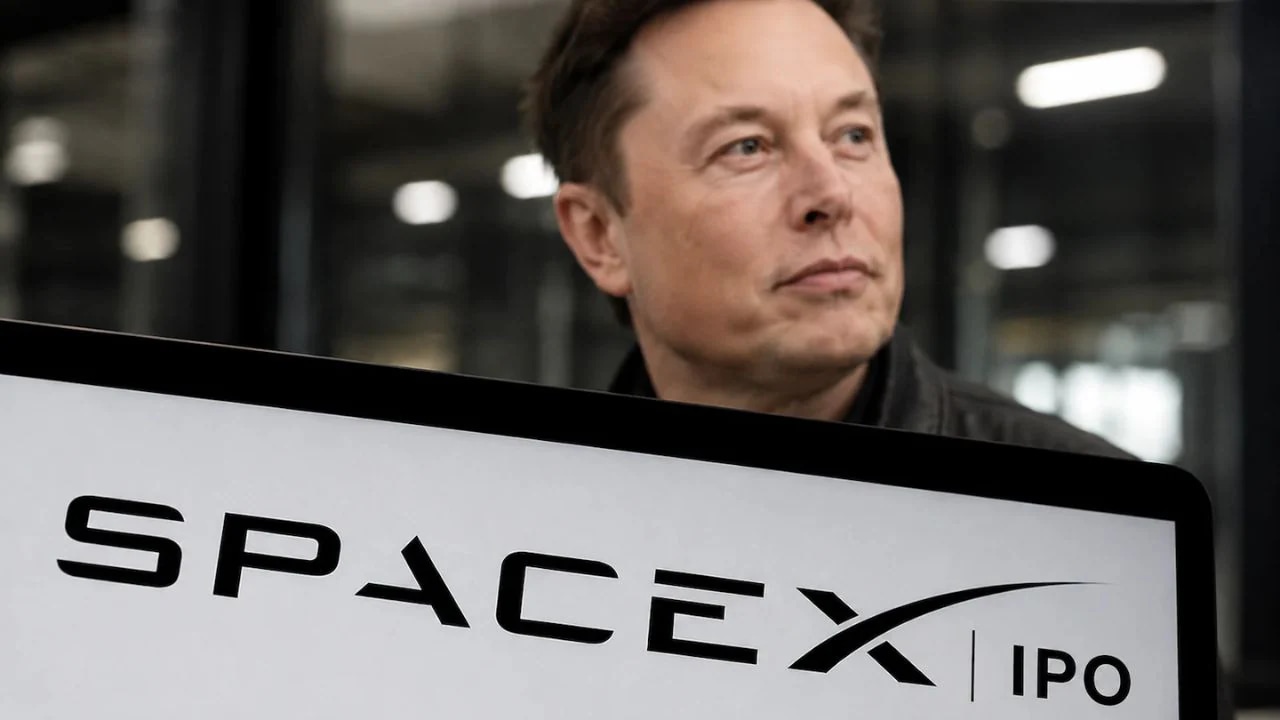
The financial press is drowning in collective euphoria over SpaceX's latest paper valuation. The headlines scream that Elon Musk’s rocket factory has eclipsed Amazon to claim the title of the world's fifth most valuable company.
It is a beautiful narrative. It is also a total illusion.
Comparing a privately held defense and aerospace contractor to a publicly traded cash-flow machine like Amazon is not just apples-to-oranges. It is comparing a hypothetical harvest on Mars to a grocery store down the street. Wall Street pundits are treating secondary market share sales as if they represent liquid, public market caps. They are conflating potential future monopoly power with current operational reality.
SpaceX is a phenomenal engineering triumph. But as an investment vehicle valued at this stratospheric level? The math does not check out.
The Secondary Market Valuation Mirage
To understand why this valuation is a fantasy, look at how the number was minted. Public companies like Amazon, Apple, and Microsoft are valued every second of the trading day. Millions of shares change hands in a highly liquid market. Prices reflect audited quarterly financials, public disclosure forms, and institutional consensus.
SpaceX creates its valuation through tightly controlled insider liquidity events.
When a private company runs a tender offer allowing employees to sell shares to hand-picked investors, it sets the price. If a select group of venture capitalists agrees to buy $100 million worth of shares at a price that implies a massive valuation, that does not mean the whole company is worth that amount on the open market.
There is no short-selling in private markets. There is no public price discovery. If you tried to liquidate $50 billion worth of SpaceX equity tomorrow morning, the price would crater. Liquidity premiums exist for a reason. Public markets demand transparency, and transparency breeds sober valuations. Private markets breed hype.
Starlink Is a Capital Expenditure Black Hole
The core justification for SpaceX's multi-trillion-dollar trajectory is Starlink. Bull cases assume Starlink will capture the global satellite broadband market, funding Musk's interplanetary ambitions.
Let us look at the actual economics of mega-constellations.
Satellite internet is a race against gravity and physics. These satellites do not last forever. Low Earth Orbit (LEO) satellites have a lifespan of roughly five to seven years. They decay, burn up in the atmosphere, and must be replaced.
This means Starlink is not a software business with 90% gross margins. It is a heavy infrastructure business with a permanent, recurring capital expenditure requirement.
Imagine a scenario where a telecom company has to rebuild its entire cellular tower network every five years from scratch. That is Starlink's operational reality.
- Launch Costs: Even with reusable Falcon 9 and Starship vehicles, internal launch costs are not zero. Every launch dedicated to Starlink is a launch that cannot be sold to a paying commercial or government customer.
- Customer Acquisition: Consumer satellite dishes are expensive to manufacture. SpaceX historically subsidized the cost of user terminals, losing money on every signup.
- Spectrum and Capacity Constraints: LEO networks face strict bandwidth limitations over densely populated areas. You cannot serve millions of users in Manhattan or Tokyo from orbit; there isn't enough throughput. Starlink is structurally limited to rural and maritime markets, which caps its Total Addressable Market (TAM).
Amazon’s AWS operates on physical servers that sit in buildings for a decade, generating compounding returns. Starlink operates on hardware that burns up in the sky.
The Starship Monopsony Trap
The second pillar of the valuation is Starship. The promise of cheap, fully reusable super-heavy lift capability is supposed to unlock entirely new industries.
But who is buying the lift?
Right now, the global launch market is small. If Starship drops the cost per kilogram to orbit by a factor of ten, it does not automatically scale the market by a factor of ten. The bottleneck is not just launch costs; it is the cost of building payload hardware. Satellites cost hundreds of millions of dollars to engineer.
Without a massive influx of space-based manufacturing, asteroid mining, or orbital tourism—none of which are viable businesses today—SpaceX faces a monopsony problem. Its primary customers are national governments and its own subsidiary, Starlink.
Relying on government contracts from NASA and the Department of Defense is a highly profitable, stable business. It is a defense contractor model, similar to Lockheed Martin or Northrop Grumman. Those companies trade at price-to-earnings ratios between 15 and 20. They do not trade at tech-platform multiples.
Amazon Generates Cash, SpaceX Consumes It
The comparison to Amazon is offensive to the concept of free cash flow.
Amazon is an infrastructure layer for global commerce and computing. In a single quarter, Amazon generates tens of billions of dollars in operating cash flow. It can fund its operations, invest in logistics, develop custom AI silicon, and still have capital left over to buy back stock.
SpaceX operates on a model of constant capital consumption. Every dollar generated by the mature, profitable Falcon 9 program is immediately incinerated in the development of Starship and the expansion of the Starlink constellation.
If capital markets tighten, or if a Starship development delay stalls the deployment of next-generation Starlink satellites, the financial pressure will mount quickly. A public company can pause buybacks or cut capital expenditures to protect its balance sheet. SpaceX cannot pause Starlink launches without watching its existing constellation slowly decay into uselessness.
The Key Risks Private Investors are Ignoring
Institutional investors buying into secondary rounds are betting on a best-case scenario where everything goes perfectly. They are ignoring glaring structural risks.
- Key Man Risk: The entire valuation hinges on Elon Musk’s focus. Between Tesla, X, xAI, Neuralink, and Boring Company, his attention is fragmented.
- Regulatory Hurdles: Space is heavily regulated. Environmental reviews, FAA launch licenses, and international orbital slot allocations can delay operations for years.
- Geopolitical Vulnerability: Starlink has become critical military infrastructure. This makes SpaceX a geopolitical target. State actors possess anti-satellite capabilities, and orbital debris fields represent an existential threat to LEO constellations.
Dismantling the Hype
Stop looking at the headline numbers. SpaceX is a vital asset for Western aerospace supremacy, a brilliant engineering firm, and a historical outlier.
But it is not worth more than Amazon.
The valuation is a byproduct of a closed liquidity loop, venture capital FOMO, and a fundamental misunderstanding of the capital-intensive nature of space infrastructure. When the music stops and these private shares are forced to face the harsh light of public market earnings multiples, the correction will be brutal.
Buy the engineering. Short the valuation.
.jpg)