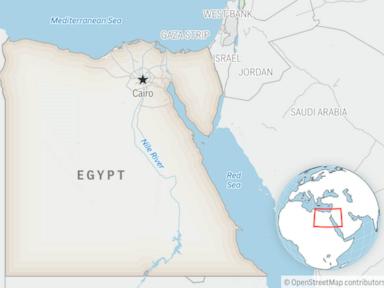
Speaking the truth shouldn't land you in a jail cell. But on Tuesday evening in Damanhour, Beheira province, that's exactly what happened to Omnia Swaydan.
Swaydan, a former Egyptian medical resident, was sitting alone at home when security forces raided her house. They ordered her to shut off her phone. They took her into custody. Her crime wasn't theft, violence, or corruption. She simply opened her Facebook account and wrote down what she saw during her residency training at al-Shatabi Hospital, a prominent university medical center in Alexandria.
She detailed a horrifying environment inside the obstetrics and gynecology department. She described rampant obstetric violence, verbal degradation, deliberate medical negligence, and even instances of sexual assault against vulnerable women undergoing childbirth.
The state response was predictable and swift. By Wednesday afternoon, prosecutors in Alexandria interrogated Swaydan. They slapped her with the standard toolkit of charges used against whistleblowers in Egypt, specifically spreading false news and misusing social media. She secured her temporary freedom only after shelling out 20,000 Egyptian pounds, roughly 401 dollars, for bail.
This case isn't just an isolated incident of a medical dispute. It uncovers a terrifying reality about the systemic silencing of medical professionals who refuse to look the away.
The Cost of Whistleblowing in Public Healthcare
When young doctors enter public or university hospitals, they expect long hours and low pay. They don't expect to witness systemic cruelty against patients. Swaydan edited her original social media post right before her arrest. She explicitly clarified that her goal wasn't to destroy the hospital's reputation. She wanted a serious review of working conditions and better protection for patients and junior doctors.
Instead of an investigation into the perpetrators, the state investigated the whistleblower.
The Egyptian legal framework regularly deploys vague cybercrime and national security laws to penalize anyone airing public grievances online. When a professional exposes institutional failure, the machinery of the state treats the exposure as a security threat rather than an administrative failure. This defensive reflex protects institutions at the direct expense of human lives.
Swaydan's defense lawyers, including Asmaa Naeim and Mohamed Ramadan, confirmed that her legal ordeal is far from over. Paying bail merely means she awaits her fate outside a cell. Prosecutors can recall her at any moment, and she still faces the very real threat of a formal trial and years in prison.
What is Obstetric Violence and Why is it Ignored
Obstetric violence is a term many people don't know, yet thousands of women experience it daily. It encompasses verbal abuse, humiliation, physical coercion, unauthorized medical procedures, and the withholding of pain management during labor and delivery.
Human rights advocates have long pointed out that these practices are systemic across facilities that offer free or low-cost medical services. Lobna Darwish, who directs the women's rights program at the Egyptian Initiative for Personal Rights, noted that these abuses aren't unique to al-Shatabi Hospital. They happen nationwide.
Public facilities are severely underfunded, overcrowded, and understaffed. Medical residents frequently work crushing shifts with minimal oversight. In this environment, patients lose their humanity in the eyes of exhausted, unchecked staff. Cruelty becomes a tool for compliance.
When a laboring woman is screamed at, slapped, or subjected to invasive procedures without her explicit consent, it isn't just bad medicine. It is an assault. Yet, the medical establishment rarely penalizes this behavior because it has been normalized for decades as standard practice for managing high patient volumes.
The Official Medical Defenses and Institutional Inertia
Following the public uproar caused by Swaydan's post, official bodies moved quickly to manage the narrative. The Doctors' Syndicate issued a statement claiming they hadn't received any formal, official complaints regarding the specific horrors Swaydan described. They urged people to file formal reports through the proper regulatory channels instead of venting on social media.
This advice ignores how the system actually operates. Filing a formal report against senior medical staff within an Egyptian university hospital is often professional suicide for a junior doctor. The hierarchy is absolute. Senior professors hold total control over a resident's career progression, licensing, and future employment.
Alexandria University eventually released a statement indicating they are reviewing and investigating the allegations. But history shows these internal investigations usually happen behind closed doors, resulting in minor administrative slaps on the wrist rather than systemic reform or criminal accountability.
The Floodgates Open on Public Trauma
Swaydan's arrest backfired on the authorities in one major way. Instead of burying the story, it triggered a massive wave of public anger. Dozens of women and family members came forward online to share their own horror stories about al-Shatabi Hospital and similar public medical wards.
One woman stepped forward to testify that her own sister died after a severe surgical error during childbirth, which was subsequently botched and hidden by the attending medical staff. Another family shared a video detailing how their daughter died following a poorly managed tracheostomy procedure due to atrocious post-surgery hygiene and outright medical neglect at the same facility.
These aren't mere statistics or complaints about bad food or long wait times. These are families grieving over preventable deaths and structural violence. Social media has become the only courtroom where regular citizens feel they can get a fair hearing, even if that hearing carries the risk of a police raid.
Navigating Patient Rights and Staff Safety Moving Forward
If you are a patient navigating the public healthcare system or a junior medical professional witnessing abuse, protecting yourself requires strategic action. Do not rely on public social media posts alone if you want to avoid legal retaliation under current cybercrime laws.
For patients and their families, document everything immediately. Write down the names of every doctor and nurse involved in the care. Note the specific times, dates, and direct quotes if verbal abuse occurs. Request copies of your medical records and discharge papers instantly before the hospital has an opportunity to alter the files.
Junior medical staff must prioritize collective documentation. If you witness systemic malpractice, do not act as a lone whistleblower on a personal account. Gather evidence quietly. Share the data securely with established human rights groups or independent legal syndicates who can anonymize the findings and present them to international oversight bodies or file formal legal complaints under corporate or institutional names. This splits the risk and shields individual doctors from immediate state retaliation.
The fight for medical accountability in Egypt won't be won overnight. True reform requires tearing down the culture of fear that keeps abusive medical personnel protected while punishing the brave individuals who try to save lives.


