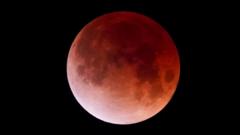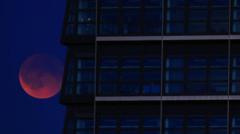
Stargazing in Northern Ireland usually means battling stubborn cloud cover and freezing winds. But every so often, the universe lines up something genuinely worth losing sleep over. A deep partial lunar eclipse is sweeping across the night skies, throwing about 93 percent of the Moon into the darkest part of Earth's shadow.
If you plan on catching this astronomical show, you need to know the exact timings and the right spots to stand. Forget complicated gear or expensive equipment. This is one event where your naked eyes do all the heavy lifting. For a different look, see: this related article.
When To Look Up
Timing is everything. This celestial event unfolds in the early pre-dawn hours, meaning you will need to set a very aggressive alarm.
The penumbral phase kicks off around 2:23 AM BST, when the Moon drifts into the outer edge of Earth's shadow. Honestly, the shift early on is almost imperceptible. The real magic starts at 3:33 AM BST when the partial eclipse begins, taking a distinct, dark bite out of the lunar disk. Similar reporting on this matter has been published by Apartment Therapy.
Maximum eclipse hits right around 5:12 AM BST. At this point, roughly 93 percent of the Moon sits swallowed by the umbra. You are looking for a striking coppery-red glow. That eerie hue happens because sunlight filters through Earth's atmosphere, bending red wavelengths directly onto the lunar surface.
Where To Position Yourself
Northern Ireland's landscape offers plenty of high ground, but this specific eclipse demands a clear view toward the west-southwest.
As the event peaks and winds down, the Moon sinks dangerously low toward the horizon. Stand behind a dense cluster of trees or a tight row of buildings, and you will miss the climax entirely. Open coastlines or elevated inland ridges give you the best fighting chance.
Consider heading out to the Antrim Plateau or finding an unobstructed vantage point along the North Coast. If you live closer to Belfast or Omagh, local parks with wide, unobstructed western horizons work just fine, provided city light pollution does not wash out the fainter copper tones.
Gear And Common Mistakes
You do not need special certified glasses for a lunar eclipse. That rule strictly applies to solar events. Looking directly at a lunar eclipse poses zero threat to your vision since the Moon merely reflects sunlight rather than blasting it straight into your retinas.
A common mistake people make is stepping outside right at maximum eclipse without letting their eyes adjust. Give yourself at least ten minutes in total darkness before checking the sky.
Binoculars or a small travel telescope will dramatically upgrade your experience. While the naked eye catches the grand scale, magnification reveals the subtle texture of the craters slipping into shadow. Dress warmly. August nights in Ireland turn bitterly cold when you spend hours standing completely still on a hill. Check the local Met Office forecast right before heading out, keep your expectations flexible regarding cloud breaks, and enjoy the silence of the pre-dawn sky.