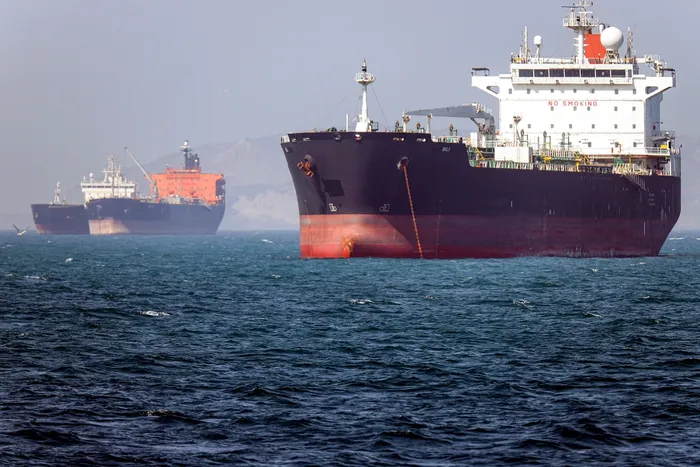
The air on a cruise ship is supposed to taste like salt and expensive freedom. It is a curated atmosphere, pumped through thousands of miles of ductwork to ensure that every guest, from the luxury suites on the Veranda deck to the interior cabins deep in the hull, breathes the same crisp, climate-controlled dream. But for the crew of the Oceanic Horizon, the air began to taste like metallic anxiety.
Panic does not start with a scream. It starts with a whisper in a galley, a flickering fever in a laundry room, and the sudden, jarring realization that the invisible boundaries keeping the outside world at bay have dissolved. When news broke that a Hantavirus outbreak had collided with a standard mid-voyage operation, the holiday didn’t just end. It transformed into a floating laboratory of human error and biological unpredictability.
Hantavirus is not a graceful guest. Unlike the common cold or even the seasonal flu, it doesn’t usually travel through a sneeze or a handshake between passengers. It is a gritty, rural pathogen, typically found in the dust of old barns or the shadows of forest cabins, carried in the waste of rodents. To find it here, amidst the marble foyers and neon-lit buffets of a multi-million dollar vessel, felt like a glitch in reality.
The Mouse in the Machine
Consider a hypothetical engineer named Elias. He has spent twenty years navigating the tight, greasy bowels of ships just like this one. Elias knows the sound of every piston. He understands that a ship is not a building; it is a closed system. When the vessel docked at a remote port for a routine resupply and minor structural repair, Elias was the first to notice the breach.
It wasn't a hole in the hull. It was a pallet of dry goods, sitting too long on a damp pier, that brought the hitchhikers aboard.
The biological reality of Hantavirus is a brutal one. It belongs to the family Bunyaviridae, and in its most feared form, it causes Hantavirus Pulmonary Syndrome (HPS). The virus enters the body when a human inhales aerosolized particles of rodent urine, droppings, or saliva. In the confined, recirculated environment of a cruise ship, the word "aerosolized" takes on a terrifying weight.
Imagine the ventilation system as the ship's lungs. If the lungs are contaminated, every cabin becomes a potential site of infection. Elias began to feel the ache in his joints forty-eight hours after clearing out a storage locker. He thought it was the humidity. He thought it was the late shift. By the time his temperature spiked to 103 degrees, the operation was already spiraling into chaos.
The Breakdown of Order
Public health protocols are designed for stable ground. They rely on the ability to move people, to isolate the sick in specialized wards, and to bring in outside experts. On a ship five hundred miles from the nearest deep-water port, those protocols are paper-thin.
The chaos began when the medical staff realized the symptoms weren't matching the usual Norovirus outbreaks that plague the industry. This wasn't a simple case of "wash your hands and stay in your room." The patients were struggling to breathe. Their lungs were filling with fluid, a classic hallmark of HPS where the capillaries leak, effectively drowning the patient from the inside out.
The ship’s captain faced a Choice of Evils. To turn back would mean admitting a level of contagion that could bankrupt the line and leave thousands of passengers in a state of mutiny. To push forward was to gamble with lives.
The operation to contain the virus was thrown into disarray by the very thing that makes cruising popular: density. You cannot social distance on a ship designed to maximize every square inch of revenue-generating space. When the decision was finally made to quarantine the lower decks, the social fabric of the vessel tore.
The Invisible Stakes
We often view health crises through the lens of statistics—case counts, mortality rates, R-naught values. But the true cost of the Hantavirus operation was measured in the silence of the Grand Ballroom. It was measured in the eyes of the kitchen staff who were suddenly ordered to wear N95 masks while flipping omelets, told it was "just a precaution" even as their colleagues disappeared into the infirmary.
The logistical nightmare of a Hantavirus response on water is unparalleled. Decontamination requires more than a wipe-down with bleach. Because the virus is hardy and spread through dust, the entire HVAC system—the very breath of the ship—had to be scrutinized. Every filter was a potential bomb. Every vent was a delivery system.
Experts from the CDC and international health agencies were consulted via satellite, their voices crackling over the airwaves with instructions that felt impossible to follow.
"Isolate the source," they said.
"How?" the ship's doctor replied. "The source is the air."
This is the point where the cold facts of a news report fail to capture the atmosphere. The "chaos" mentioned in headlines wasn't just a lack of organization; it was the visceral fear of the invisible. Unlike a fire or a mechanical failure, you cannot see a virus. You cannot fight it with a wrench or an extinguisher. You simply wait to see if your own breath betrays you.
The Physics of Fear
Why did the operation fail so spectacularly? The answer lies in the intersection of biology and bureaucracy. Cruise lines operate under a complex web of international maritime laws, often flying flags of convenience that make jurisdictional responsibility a headache. When the Oceanic Horizon reported the cluster of respiratory distress, no one wanted to claim the problem.
One port refused entry, fearing the "plague ship" narrative. Another offered to send supplies but forbade anyone from disembarking. The ship became a floating pariah, a steel island cut off from the world it was meant to explore.
The human body reacts to Hantavirus in stages. First, the "prodromal" phase: fever, chills, and muscle aches. It feels like a bad day at the office. Then, the "cardiopulmonary" phase hits. This is the cliff. Within hours, the heart rate climbs, and the lungs fail. On a ship, where the "intensive care unit" is often just a two-bed room with basic monitoring equipment, the cardiopulmonary phase is a death sentence.
Elias, our engineer, sat in that infirmary. He watched the white curtains flutter as the air conditioning—the very thing he spent his life maintaining—hummed overhead. He knew that if the virus reached the upper decks, where the elderly passengers were dining on lobster and complaining about the slow Wi-Fi, the ship wouldn't just be in chaos. It would be a tomb.
Beyond the Horizon
The resolution of such crises is rarely clean. There is no cinematic moment where a hero finds a cure in a test tube and saves the day. Instead, there is the slow, grueling process of attrition. The operation was eventually brought under control not by a stroke of genius, but by a brutal, total shutdown of the ship’s systems.
They killed the air.
For twelve hours, in the sweltering heat of the tropics, the ship sat silent. No fans. No cooling. No circulation. In that stifling heat, the crew moved through the ship like ghosts, sealing vents with plastic and spraying down every inch of the ventilation shafts with high-grade disinfectants. It was a desperate, low-tech solution to a high-stakes biological problem.
When the ship finally limped into a friendly port, the passengers were ushered off in a daze, greeted not by a steel drum band, but by men in hazmat suits. The "chaos" was over, replaced by the sterile, quiet efficiency of a shoreline quarantine.
But the lesson of the Oceanic Horizon remains, vibrating under the surface of every luxury vacation. We have built ourselves marvels of engineering that allow us to carry our comforts into the most inhospitable corners of the globe. We have created closed loops of air and water, thinking we have successfully locked the wild world outside.
We forget that the wild world is small. It is microscopic. It is patient. It doesn't need a boarding pass or a passport. It only needs a single breath, a stray rodent on a pier, and a ventilation system that never stops humming.
The ship is moving again now, repainted and renamed, its ducts scrubbed and its filters replaced. The guests on the Veranda deck look out at the blue expanse and breathe deeply, savoring the salt and the luxury. They do not think about Elias. They do not think about the silver dust in the vents. They believe they are safe because the air feels cool, unaware that the most dangerous things in life are the ones we cannot see until they are already inside us.
The vents continue to hum, a low, steady vibration that sounds, if you listen closely enough, like a heartbeat.