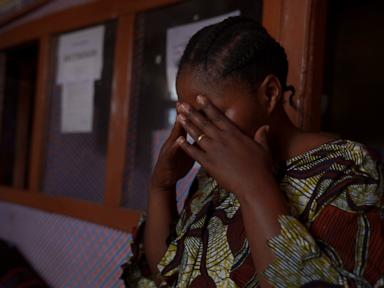
Stigma does not drop out of the sky during an Ebola outbreak. People do not wake up one morning in the Democratic Republic of the Congo, look at a grieving neighbor, and spontaneously decide to be cruel.
Yet every time an outbreak hits the DRC, the standard media playbook rolls out like clockwork. Grieving families. Fearful communities. Stigma blamed for hiding cases and slowing containment. It is tidy. It is emotional. And it is lazy.
Blaming "stigma" lets outsiders off the hook for building response systems that terrify the very people they claim to serve.
I have worked alongside public health teams and watched well-meaning response machinery burn through millions of dollars while alienating entire neighborhoods in a matter of days. When sirens wail down a dirt road, men in white moon suits step out of unmarked vehicles, and a loved one is whisked away behind plastic curtains—often without family members allowed inside or given clear updates—calling the resulting terror "irrational stigma" is a cop-out.
That is not stigma. That is pattern recognition.
The Lazy Consensus Around Fear and Stigma
The conventional story goes like this: Ebola strikes a community in the DRC, fear spreads, survivors and bereaved relatives face rejection and shunning, and public health workers struggle to gain trust because locals cling to harmful beliefs or misinformation.
There is real pain in that narrative. Families do lose loved ones in brutal circumstances. Survivors do face awkwardness, suspicion, and economic strain when they return home. Pretending social rejection never happens would be dishonest.
Where the lazy consensus fails is in treating stigma as a root cause rather than a symptom—and worse, using it as a shield against uncomfortable operational truths. When an outbreak response fails to communicate clearly, ignores local burial traditions without negotiating safe alternatives, or treats communities like obstacles instead of partners, resistance spikes. Labeling that resistance "stigma" turns a design flaw in the response into a moral failing of the victim.
In outbreaks across the DRC—from North Kivu and Ituri to Equateur—researchers and responders studying community behavior have repeatedly found that fear is tightly bound to lived experience. If people see neighbors enter treatment centers and rarely come out, or if they are barred from washing and honoring their dead according to customs that carry deep spiritual weight, fear is not a mystery. It is a rational reaction to perceived danger and loss of control.
Defining the Terms Before We Point Fingers
Precision matters in an epidemic, even when emotions run high. People toss around words like stigma, fear, misinformation, and hesitancy as if they are interchangeable. They are not.
Fear is an emotional response to threat—real, imagined, or exaggerated. During an Ebola outbreak, where case fatality rates in past outbreaks have ranged widely depending on the strain and speed of care (historically averaging around 50%, though varying significantly between outbreaks and strains), fear of dying or catching a hemorrhagic fever is basic human survival wiring.
Stigma, as sociologist Erving Goffman framed decades ago, is a social mark that discredits a person and leads to devaluation, exclusion, or discrimination. In an epidemic, stigma attaches to people perceived as carriers, contacts, or survivors—sometimes long after a survivor has cleared the virus and is no longer infectious.
Mistrust is different again. Mistrust is a judgment based on history, power, and treatment. In eastern DRC, communities have lived through decades of armed conflict, displacement, economic extraction, and broken promises from institutions far removed from daily life. Asking traumatized populations to hand over sick relatives to strangers in full protective gear requires earned credibility, not scolding press releases about "stigma."
When commentators collapse fear and mistrust into "stigma," they erase agency and excuse bad execution. A mother who hides a feverish child because she fears never seeing the child alive again is not acting out of pure prejudice. She is weighing terrifying options in a crisis where no option feels safe.
You Are Asking the Wrong Questions
Most coverage and even plenty of outbreak planning circles around the wrong questions. They ask how to "reduce stigma" or "convince communities to trust responders" as if trust were a switch you flip with a radio jingle or a pamphlet.
The sharper question is: What about our own response architecture makes families feel hunted, excluded, or humiliated?
Consider how people actually search when a headline breaks:
- "Why do families hide Ebola cases?" Usually not out of malice. Families hide cases to keep loved ones close, avoid social blame, protect household income, or escape forced isolation when they do not understand what happens behind closed doors. If reporting a symptom feels like triggering a raid rather than getting compassionate care, people will conceal illness until the last possible moment.
- "Why does Ebola stigma last after recovery?" Because public messaging often emphasizes contagion far louder than recovery and non-infectiousness. Once the acute emergency fades and international cameras leave, survivors are left navigating rumors with thin local support.
- "How do you stop fear from spreading during an outbreak?" You cannot lecture fear away with statistics. You reduce fear by making care transparent, humane, predictable, and locally owned—and by delivering actual clinical survival, not just containment.
Think about the difference between a system built primarily to stop transmission and a system built to save people with dignity. Both matter, and modern therapeutics—such as monoclonal antibody treatments used in recent DRC outbreaks—have dramatically improved survival when patients arrive early. Yet if early arrival feels scary or punitive, patients wait. Delay kills.
Imagine a Scenario Where Grief Is Treated as Sacred
Imagine a scenario where a father dies of suspected Ebola in a rural Congolese town.
Under a rigid, top-down model, a burial team arrives, seals the body in a bag, enforces a rapid burial, and leaves—while grieving relatives stand back, angry and heartbroken, convinced their loved one was treated like garbage. Rumors flare. The next sick person in the family stays home.
Now imagine a different operational design. Before the crisis peaks, local elders, religious leaders, families, and public health teams co-design dignified, safe burials that honor cultural respect while preventing transmission—allowing relatives to witness, pray, and participate safely rather than being shoved aside. Meanwhile, treatment centers allow safe, structured family contact or clear, regular communication so patients are not ghosts behind a curtain.
That is not a fairy tale. Teams working in DRC outbreaks—including anthropologists, local health workers, and agencies like the World Health Organization and Médecins Sans Frontières—have pushed hard for community-led approaches precisely because top-down enforcement backfires. When locals lead the bridge-building, resistance drops because the solution belongs to the community, not an outside task force.
What Actually Works When Everything Is on Fire
If we want fewer grieving families pushed to the margins during Ebola outbreaks, we need practical shifts—not recycled hand-wringing.
- Put survival and compassion at the center of early care. Communities judge response teams by how their sick are treated. Clear explanations, pain and symptom management, respectful staff, and access to modern treatments turn clinics from places people flee into places people seek out.
- Negotiate rituals before a crisis forces a showdown. Safe and dignified burial protocols work best when hashed out with local leaders and families ahead of time, not barked at grieving relatives at a graveside.
- Fund local communicators, not just foreign messaging templates. A trusted local nurse, pastor, or community health worker who speaks the dialect and shares the neighborhood's history carries weight no imported slide deck can match.
- Support survivors long after the outbreak ends. Recovery does not end at discharge. Medical follow-up, mental health care, economic reintegration, and clear public reassurance about recovery help prevent lingering social isolation.
- Measure community trust alongside epidemiological curves. Tracking case counts without tracking whether families feel heard and respected gives leaders a dangerous blind spot.
The Catch With Going Community-First
Honesty cuts both ways, and my own contrarian push has real trade-offs.
Moving slower to consult, negotiate, and build consensus can feel agonizing when a deadly virus is moving fast. Every hour matters in an Ebola flare-up. Over-indexing on negotiation without firm, clear public health safeguards can leave windows open for transmission if boundaries are vague.
Also, community-led work is messy. Local leaders do not always agree with one another, local politics can complicate access, and outside responders sometimes face genuine security risks in conflict zones. Pretending that community engagement is a magic wand that solves every outbreak bottleneck would be just as naive as blaming everything on stigma.
Real public health work lives in that tension: moving fast enough to save lives while moving respectfully enough not to lose the people you are trying to save.
Stop treating grieving families like a PR problem to manage. Fix the fear factories in how outbreaks are run, and watch how fast trust begins to grow.


