Sand remembers the weight of sandals that walked it three thousand years ago. It remembers the sound of bronze chisels striking limestone, the smell of cedar oil burning in temple courtyards, and the quiet murmurs of scribes recording grain taxes by candlelight. When a city falls, the sand does not forget. It simply covers the proof, waiting for someone to care enough to brush it away.
Consider a single fragment of carved stone. To a customs official filling out a manifest in New York, it is item number fourteen: a limestone relief from Palmyra, dated to the first century, valued at some fraction of a five-million-dollar total. To a smuggler in the back rooms of a Beirut warehouse, it is liquid capital, a passport out of a war zone carved into the very face of a dead deity. But to the hands that first shaped it, and to the descendants of the people who walked beneath its gaze, that stone is a pulse. It is an anchor thrown backward into time, screaming across the centuries that we were here, we loved, and we built things meant to outlast our bones.
We talk about cultural property as if it were real estate. We debate jurisdiction, provenance, and the dry legal architecture of international treaties like the 1970 UNESCO Convention. We use words like repatriation and recovery, turning human tragedy into a ledger entry.
Stop.
Look closer at the 36 pieces that just crossed an ocean to find their way home. Thirty-six antiquities. Fourteen mosaics. A limestone Palmyra relief carved with the haunting, wide-eyed gaze of a woman who has been dead for two millennia. These are not just assets seized in a raid by Homeland Security Investigations or Manhattan prosecutors. They are refugees. They survived the Roman legions, the desert sun, the pillage of centuries, and, most recently, the sledgehammers and dynamite of modern extremists who sought to erase history by pulverizing its physical shell.
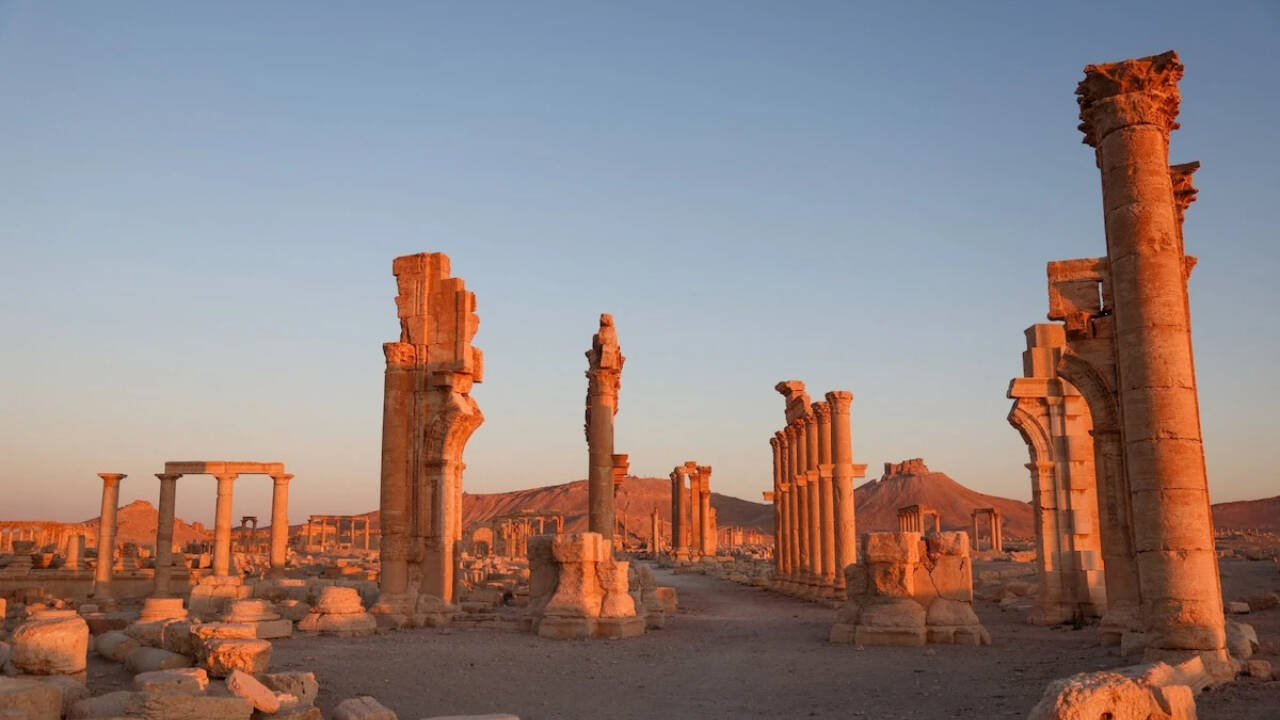
Imagine standing in the desert outside Palmyra before the war. The sun is a white hammer in the sky. The colonnaded streets stretch out like petrified ribs. You run your palm over a funerary bust, feeling the coarse grain of the local stone. You are touching the face of a mother or a merchant whose name was spoken aloud for generations until the language that named them faded from the earth.
Then came the darkness. The black smoke of burning museums. The systematic, televised destruction of the Temple of Bel. The frantic looting of tombs by desperate men trading fragments of eternity for bread and Kalashnikov bullets. When a nation bleeds, its history bleeds first. Antiquities become currency. They are smuggled through porous borders, laundered through freeports in Geneva, hidden behind forged provenance papers in London, and offered to wealthy buyers who prefer to keep their conscience as sterile as their white-walled galleries.
This is the invisible machinery of illicit antiquities trafficking. It is a shadowy, multibillion-dollar ecosystem where organized crime syndicates intersect with antiquities laundering rings and sometimes terrorist financing. A mosaic hacked from a Syrian floor goes from a scorched villa to a middleman on an encrypted messaging app, onto a container ship disguised as scrap metal, and finally onto the open market, laundered through shell companies until its dirty origin is scrubbed clean by time and forged receipts.
Except the paper trail is never quite clean enough.
For years, investigators from the Antiquities Trafficking Unit in Manhattan and federal agents have quietly hunted these ghosts. They follow the paper trails of wire transfers. They lean over high-resolution photographs, matching chipped corners of limestone to old excavation archives from the 1930s. They raid storage lockers in Queens and luxury apartments on the Upper East Side. They do this because stolen heritage is more than just contraband; it is stolen memory.
When United States authorities formally handed those 36 antiquities back to Syrian representatives, the headlines called it a gesture of international cooperation. They listed the valuation: five million dollars. They talked about law enforcement milestones.
Those numbers miss the point entirely.
Valuing a Palmyra relief at a few hundred thousand dollars is like putting a price tag on your grandmother's wedding ring while the house is burning down. Money is a poor vocabulary for grief. When you steal an antiquity from a country torn apart by civil war, you are not just taking a luxury good; you are severing the last fragile tether connecting a displaced people to their own ground. You are telling a refugee huddled in a tent in Jordan or freezing in a camp in Idlib that not only has their home been destroyed, but the very proof that their ancestors were civilized human beings is now sitting on a billionaire’s coffee table in Manhattan.
Think of the fourteen mosaics. Imagine the Roman artisan kneeling on a scaffold, pressing tiny cubes of colored stone—tesserae of terracotta, limestone, and glass—into wet mortar. He is working out a pattern of vine leaves and geometric knots. He does not know that two thousand years later, men with crowbars will pry his work from the earth, shatter the mortar with a hammer to make the slabs lighter for shipping, and pack them into wooden crates.
When those mosaics arrived back in safe custody, they returned with scars. Grout lines are broken. Edges are chipped. They bear the literal violence of their rescue. Every restoration mark is a stitch in a wound.
We live in an age that worships the new, the digital, the ephemeral. We scroll through images of destruction on our phones, swiping past burning cities and shattered museums as if they were special effects in a movie. We grow numb to the scale of loss. Millions displaced. Hundreds of thousands dead. Ancient cities reduced to gray powder. In that torrent of catastrophe, a few dozen stolen stones can feel like a drop of water in an ocean of misery.
Why do they matter?
Because totalitarianism and extremism always begin with erasure. To control a people, you must first convince them that they are orphans—that they have no history, no culture, and no rightful claim to the earth they stand on. ISIS understood this with terrifying clarity. That is why they blew up temples. That is why they smashed statues with sledgehammers and filmed it for propaganda. They were not just destroying stone; they were murdering the future by assassinating the past.
When a stolen mosaic is tracked down, seized, and returned, it is an act of defiance against that erasure. It is the international community saying: You do not get to wipe the slate clean. We remember. The stone remembers.
The 36 antiquities returned to Syria will not feed a starving child or stop a bullet. They will not rebuild a shattered hospital or heal the trauma of a generation born in exile. They cannot do those things.
What they can do is hold the line.
They are the trustees of an identity waiting for the storm to pass. They are proof that nations break, borders shift, and regimes fall, but the human desire to leave a mark on the world outlasts the empires that try to consume it. Someday, when the war is a generation gone and the children of Syria return to walk among the columns of Palmyra, those stones will be there. They will be waiting in the dust, scarred and battered, ready to teach a new generation how to spell their own name.
Until then, the limestone woman stares out across the room with her wide, unblinking eyes. She has seen the legions come and go. She has watched the world burn down to the roots and grow back again. She is not an investment. She is a witness. And she is finally, quietly, home.