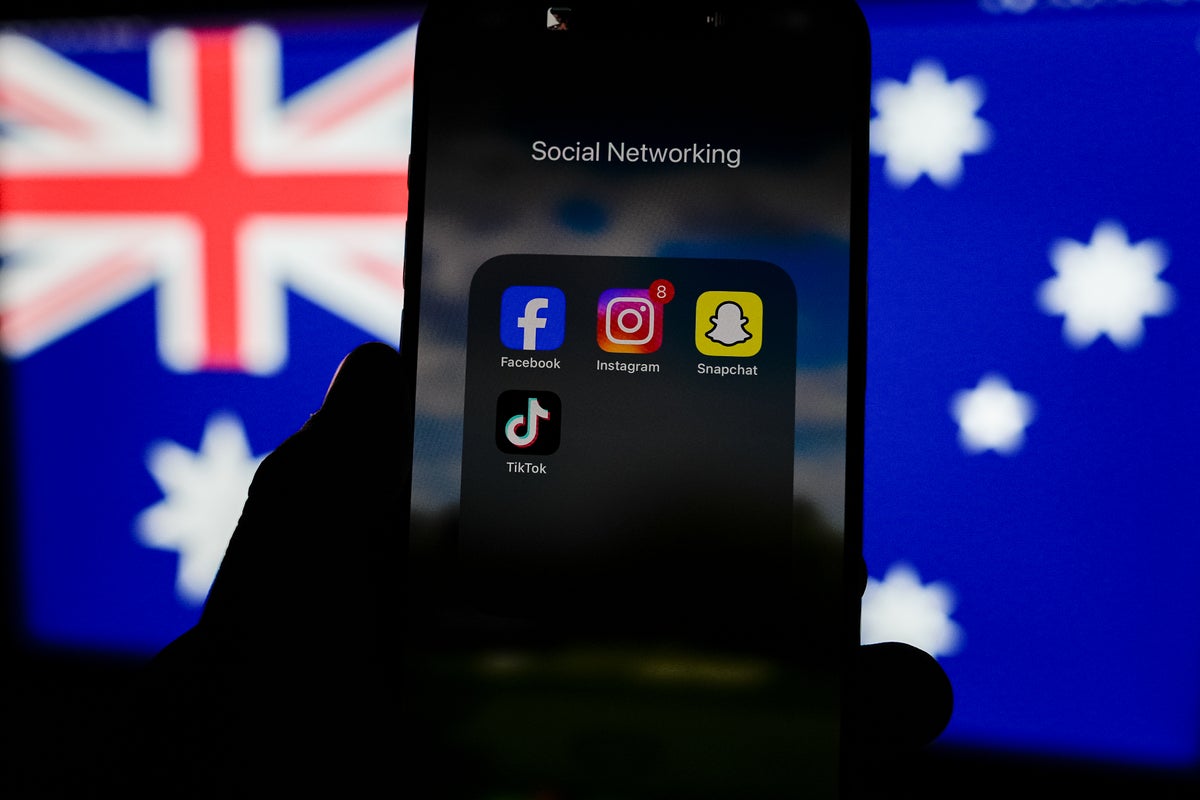
The Australian government is currently engaged in a theatrical performance of legislative impotence. By pushing for a blanket ban on social media for under-16s, they aren’t protecting children; they are handing a massive, unregulated gift to the VPN industry and teaching an entire generation that the law is a suggestion for the uncreative.
The recent reports showing that two-thirds of Australian teens are still bypassing these digital "fences" shouldn't surprise anyone who has actually spoken to a teenager in the last decade. The failure isn't the technology. The failure is the premise. We are trying to solve a hardware problem with a software patch, and we’re doing it while the hardware is already in the hands of the very people we’re trying to restrict. Building on this theme, you can find more in: Google Employees Fight to Keep AI Out of Warfare.
The Myth of the Digital Border
Governments love the word "ban" because it sounds decisive. It projects strength. But in the digital architecture of 2026, a ban is nothing more than a speed bump for a demographic that grew up viewing speed bumps as challenges.
When we talk about teen usage despite bans, the "lazy consensus" is to blame the platforms for lax enforcement or the kids for being "addicted." This misses the structural reality of how the internet functions. The internet was built to route around damage. To a 15-year-old in Melbourne, a government block is just another form of damage. Observers at Wired have provided expertise on this situation.
The use of Virtual Private Networks (VPNs) and DNS hijacking isn't some dark-web wizardry anymore. It’s a three-click process. If you tell a teenager they can't access TikTok, you aren't removing TikTok from their life; you are simply forcing them to learn how to mask their IP address. We are effectively subsidizing the technical education of a generation of digital outlaws while patting ourselves on the back for "safety."
The Age Verification Paradox
The push for mandatory age verification is the most technically illiterate hill to die on. For age verification to work with any degree of accuracy, you need one of two things:
- A massive, centralized government database of biometric or identity data.
- Third-party providers with access to your private credentials.
Both are privacy nightmares waiting to happen. I have watched tech giants fumble basic security for years. Do we honestly believe that a government-mandated "age-gate" won't be the first target for every data harvester on the planet?
Furthermore, the "brutally honest" answer to the question of whether age verification works is a resounding no. If the system requires a credit card, teens use their parents'. If it requires a face scan, they use high-resolution photos or deepfake filters that are now accessible on mid-range smartphones. We are building a Maginot Line of digital security, and the teens are already flying over it.
The Cognitive Dissonance of Parental Control
We need to stop asking "How do we stop them?" and start asking "Why are we pretending we can't?"
The most effective "ban" in existence isn't a piece of legislation passed in Canberra; it's the "Screen Time" setting on an iPhone or the "Digital Wellbeing" dashboard on Android. These tools already exist at the OS level. They are granular. They are effective. They are also being completely ignored by the very parents who are loudest about demanding government intervention.
This is the uncomfortable truth: Governments are being asked to parent because parents have abdicated their role to the algorithm. It is far easier to demand a law that bans an app than it is to have a difficult conversation with a 14-year-old and take their phone away at 9 PM. We are outsourcing the friction of parenting to the state, and the state—clumsy and slow—is failing at the task.
The Safety Delusion
The competitor argument focuses on the "dangers" of social media as a monolithic entity. This is intellectually dishonest. Comparing a Discord server used for Minecraft modding to the algorithmic abyss of a TikTok "For You" page is like comparing a local library to a casino.
By implementing a blanket ban, we are removing the nuanced, safe spaces along with the toxic ones. We are pushing kids away from moderated, community-driven platforms and into the darker corners of the web where no one is watching.
When you ban a teenager from a mainstream platform, they don't go outside and play with a hoop and stick. They move to unmoderated, end-to-end encrypted messaging apps. They move to forums where the "safety guidelines" are nonexistent. We are effectively driving them from a guarded park into a back alley and calling it "protection."
Logic Over Emotion: A Thought Experiment
Imagine a scenario where the government decided that because some teenagers get into car accidents, no one under the age of 21 is allowed to be a passenger in a vehicle.
What would happen?
- Teenagers would still need to get to work or school.
- They would find ways to hide in trunks.
- They would take backroads where there is no police presence.
- The safety of the "solution" would actually increase the risk of the "problem."
This is exactly what we are doing with social media. We are removing the visibility. We are taking a public health issue and turning it into a clandestine behavior. You cannot regulate what you have forced underground.
The Platform Responsibility Red Herring
The current discourse demands that platforms "do more." In reality, the platforms are doing exactly what their business models dictate: maximizing engagement while maintaining the bare minimum of legal compliance to avoid fines.
If we wanted to actually disrupt the "harm" associated with social media, we wouldn't ban the access; we would ban the mechanism.
- Ban algorithmic amplification for minors.
- Mandate chronological feeds.
- Prohibit "infinite scroll" mechanics.
These aren't bans on the apps themselves; they are bans on the psychological triggers designed to exploit developing brains. But these solutions are "boring" to politicians. They require an understanding of $UX$ (User Experience) design and $API$ (Application Programming Interface) regulation. It’s much easier to print a headline that says "No Kids on Instagram."
The Economic Backfire
Let's talk about the "battle scars" of tech regulation. I’ve seen this play out in the gambling industry and the adult content industry. When you implement heavy-handed, top-down bans, you create a "compliance gap."
Small, innovative platforms that might actually be safer for kids can't afford the legal and technical overhead of the new regulations. They shut down or block the region entirely. The giants—Meta, ByteDance, Google—can afford the lawyers. They can afford to build the "verification" hurdles.
The result? The ban actually strengthens the monopoly of the very companies the government claims to be reigning in. You are killing the competition and leaving kids with only the most predatory options remaining.
Stop Asking the Wrong Questions
The question isn't "How do we enforce a ban?"
The question is "Why is the offline world so unappealing to our youth that they are willing to break federal laws just to stay in the digital one?"
We have engineered a society where physical "third places" for teens have been decimated. Malls are dying, parks are over-policed, and "loitering" is a crime. We have pushed them into the digital world and now we are trying to lock the door from the outside.
If you want kids off social media, give them somewhere else to be. Until then, your ban is just a signal-boosting campaign for the VPN providers.
The data from Australia is clear. The teens aren't "still using" social media despite the ban. They are using it because the ban is a paper tiger designed to appease worried voters rather than solve a structural crisis of connection.
Stop trying to fix the internet. Start fixing the environment that makes the internet the only viable escape.
The "Two-Thirds" statistic isn't a failure of enforcement. It is a report card on the irrelevance of the modern legislator in a borderless digital world.
Put down the gavel. Pick up a textbook on network architecture. Then, maybe, we can have a real conversation.
_