Every two years, the exact same script plays out across cable news, op-ed pages, and breathless digital dispatches. Millions of Americans head to the polls for the midterm elections, and an army of pundits immediately declares the entire enterprise broken. They point to lines around the block, partisan gridlock, or depressed turnout compared to presidential years, sighing that something simply "needs to change."
They are wrong. Dead wrong.
The lazy consensus in political journalism treats voter apathy, partisan friction, and low midterm turnout as bugs in the American operating system. Having spent fifteen years inside political data war rooms and campaign strategy sessions—watching consultants burn tens of millions of dollars on ineffective "get out the vote" gimmicks—I can tell you the uncomfortable truth. Those features are not bugs. They are the exact shock absorbers the system was engineered to deploy.
When critics say the midterm process "needs to change," they usually mean one of two things. Either they want frictionless, hyper-convenient voting that maximizes raw headcount regardless of civic engagement, or they want a parliamentary-style mandate where one party sweeps into power and passes sweeping legislation without resistance. Both impulses misunderstand the foundational mechanics of American governance.
The Myth of the "Broken" Turnout Metric
Let's dismantle the obsession with raw turnout first. In almost every midterm cycle, roughly 40 to 50 percent of eligible voters show up, compared to 60 percent or more during a presidential year. Journalists treat this drop-off like a civic tragedy. They run man-on-the-street interviews outside precincts in Ohio, Pennsylvania, and Nevada, quoting frustrated citizens who say they feel disconnected from Washington.
Here is the reality nobody in the consultant class wants to admit out loud: low-information voters sitting out a midterm election improves policy stability.
Think about what a midterm electorate actually looks like. The people who show up in November of a non-presidential year are disproportionately older, more rooted in their local communities, and significantly more attentive to policy details than the casual voters who only tune in every four years for the presidential reality show. Political scientists like Angus Campbell established decades ago in The American Voter that peripheral voters—those drawn to the polls only by high-stimulus presidential campaigns—cast ballots based largely on short-term emotional cues, celebrity appeal, or vague economic moods rather than structural policy preferences.
When you artificially inflate midterm turnout through hyper-aggressive ballot harvesting, automatic registration sweeps, or relentless social pressure, you do not create a wiser electorate. You simply dilute the signal of engaged citizens with the noise of people who couldn't name their House representative if you offered them a thousand dollars.
I have sat in post-mortem meetings after cycle after cycle where field directors bragged about knocking on two million doors to drag reluctant voters to the polls. When we cross-tabulated the precinct data afterward, those exact low-propensity voters had the highest rates of undervoting—leaving down-ballot judicial, municipal, and congressional races completely blank—or voting straight-ticket based purely on viral misinformation they saw on their phones forty-eight hours earlier.
Why Friction at the Ballot Box Is a Feature
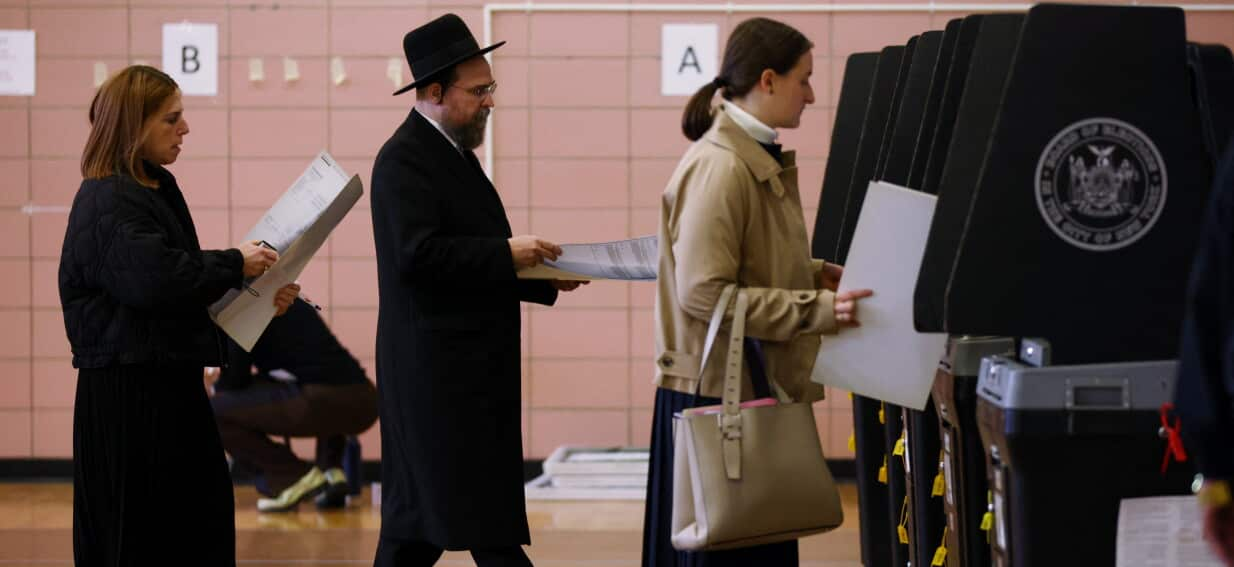
Whenever a line forms at a polling station in a battleground state, the immediate media reaction is outrage. A two-hour wait in Atlanta or Phoenix becomes an instant viral crisis, framed as a systemic failure that "needs to change."
Nobody enjoys standing in line. Poll worker shortages and poorly allocated precinct machines are real logistical headaches that county clerks should fix. Yet the broader crusade to eliminate every ounce of effort required to cast a ballot rests on a flawed premise: that voting should be as effortless as ordering takeout.
Behavioral economics gives us a clear framework here. Richard Thaler and Cass Sunstein popularized the concept of "sludge"—friction that discourages people from completing a task. In commercial contexts, sludge is predatory. In civic life, a modest threshold of effort acts as a natural filter for intent.
Consider what happens when a society removes all friction from democratic participation:
- Impulse replaces deliberation. A ballot cast while rushing through an app or filling out a mail-in form weeks before the final debates misses critical late-breaking information.
- Local accountability vanishes. When elections become mass-volume national referendums, voters ignore city council races, school boards, and state legislatures—the exact offices that control property taxes, zoning, and public safety.
- Post-election legitimacy erodes. Complex, decentralized mail-in systems with weeks-long counting windows create an information vacuum. Regardless of how secure the tabulations actually are, delayed results breed suspicion among the losing side, fueling endless legal challenges.
Compare that to a defined Election Day window with reasonable early voting days and strict, transparent chain-of-custody rules. A small amount of inconvenience forces a voter to make a conscious choice: Does this matter enough to me to rearrange my Tuesday? If the answer is no, having that person abstain is not a crisis for democracy. It is self-selection working as intended.
What People Get Wrong About Midterm Gridlock
Another staple of the "needs to change" narrative is hand-wringing over divided government. Almost every midterm election since the mid-twentieth century has punished the sitting president's party. Voters hand the White House to one party, get buyer's remorse twenty-four months later, and hand the House or Senate to the opposition.
Pundits call this paralysis. They lament that nothing gets done in Washington for the next two years.
Good. Nothing should get done when the country is split down the middle.
If you look at the major legislative disasters of the past fifty years—from bloated, deficit-exploding spending bills to poorly drafted regulatory overhauls—almost all of them passed during brief windows of unified single-party control. When one party holds the House, the Senate, and the White House, internal party discipline overrides careful scrutiny. Leadership rams 2,000-page bills through committees at midnight because they know they have the raw votes to force them into law.
Midterm gridlock slams the brakes on that hubris. When an opposition party captures even one chamber of Congress, the legislative process reverts to its proper default setting: veto power over bad ideas.
James Madison laid this out explicitly in Federalist No. 51. Ambition must be made to counteract ambition. The American constitutional architecture was never designed for speed, efficiency, or frictionless majoritarian rule. It was built to frustrate temporary majorities and force compromise before federal power can be brought to bear on thirty-three million businesses and three hundred million individuals.
When voters split their tickets or flip Congress in a midterm, they are not expressing confusion. They are deliberately installing a guardrail. They are telling the executive branch to slow down, negotiate, or sit on its hands until a broader consensus emerges.
The Real Reason Voters Are Frustrated
If you listen closely to the voters standing outside those polling stations—the ones quoted in every "needs to change" news piece—their anger rarely stems from how ballots are cast or how often elections happen. Their frustration comes from a fundamental mismatch between what federal politicians promise and what the federal government can actually deliver.
Every midterm cycle, congressional candidates run on issues completely outside their constitutional lane. House candidates promise to lower gas prices, fix local crime, or overhaul school curricula. None of those things are controlled by a freshman representative from a suburban district.
Meanwhile, the things Congress does control—federal spending, entitlement solvency, regulatory creep, and foreign entanglements—are largely ignored because both parties benefit from keeping the fiscal spigot open.
Imagine a scenario where we actually implemented all the structural reforms the pundit class demands. Suppose we instituted mandatory voting like Australia, abolished the Electoral College, moved to ranked-choice voting nationwide, and flooded every household with automatic mail-in ballots. Would congressional approval ratings suddenly jump from 18 percent to 75 percent? Would partisan polarization evaporate?
No. You would get the exact same incumbents, funded by the exact same donor networks, arguing over the exact same cultural wedge issues, only with higher administrative costs and even noisier campaigns.
The Downsides of the Status Quo (Because Nothing Is Free)
Defending the structural friction of the American midterm system does not mean pretending it has zero flaws. Any honest strategist will admit the current setup carries real costs:
- Primary radicalization. Because general election districts are heavily sorted—both geographically and through redistricting—the only competitive race for 85 percent of House seats happens in the party primary. Low-turnout primaries reward ideological purists and punish pragmatists, leaving general election voters with a choice between two extremes.
- Permanent campaign fatigue. Two-year House terms mean members start fundraising the morning after they are sworn in. Governing takes a backseat to dial-time in call centers blocks away from the Capitol.
- Hyper-nationalization of local races. State legislative candidates now run on national cable news talking points rather than state budgets, starving local journalism and municipal oversight of oxygen.
These are legitimate structural headaches. Yet notice that none of them are solved by lowering the bar to vote or complaining about partisan gridlock. In fact, many modern "reforms" make primary radicalization and nationalization worse by turning every local precinct into a proxy war for national fundraising platforms like ActBlue and WinRed.
How to Actually Fix Your Relationship With Midterm Elections
If you want to stop feeling like the system is broken every two years, stop looking to Washington to reform itself and change how you engage with the ballot.
- Invert your ballot attention. Spend 80 percent of your research time on the bottom half of the ticket. Your county commissioner, district attorney, state representative, and school board members have ten times more direct impact on your daily life, taxes, and safety than your U.S. Senator.
- Ignore nationalized fundraising pleas. If a candidate for a state legislature seat or a congressional district three states away is texting you for money, delete it. Nationalized money destroys local accountability. Only fund or volunteer for candidates who actually represent your zip code.
- Embrace split governance. Stop viewing a divided Congress as a failure of civic will. Treat it as a healthy check on executive overreach. When neither party has a blank check, your wallet and your liberties are measurably safer.
- Accept the friction. Show up on Election Day, bring your ID, stand in line for twenty minutes if you have to, and talk to your neighbors while you wait. Civic participation is supposed to feel like a tangible act, not a background app running silently on your phone.
The next time a news anchor stares into the camera on election night and sighs that the American midterm system "needs to change," recognize that sentiment for what it really is: impatience with a design that refuses to give any single faction unchecked power. The lines, the split verdicts, and the sudden halts to sweeping agendas are not signs of a dying republic. They are proof that the brakes still work.