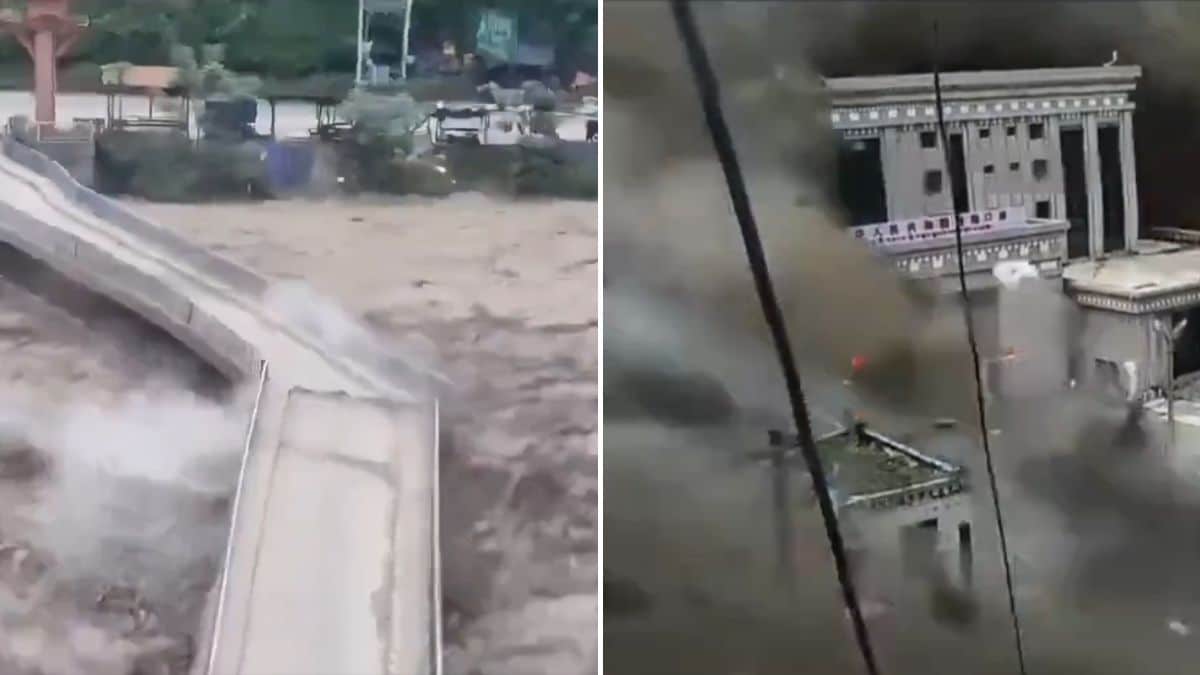
Whenever a wall of water obliterates a Himalayan valley, the script writes itself. Headlines instantly pivot to a lazy consensus: global warming melts the glaciers, a glacial lake bursts, and nature exacts its inevitable toll. It is neat, it is media-friendly, and it completely misses the geological reality on the ground.
The catastrophic flash floods tearing through the Nepal-Tibet border along the Bhote Koshi and Lhende river systems are routinely filed under generic climate catastrophe. That narrative is comfortable because it externalizes the blame. It makes a complex structural crisis sound like an unavoidable act of atmospheric godhood.
The truth is far more mechanical, far more localized, and far more indicting of human engineering hubris.
The Seismic Shell Game
Let us look at the actual data rather than the punditry. The United States Geological Survey and international seismological agencies noted a distinct seismic signature during the disaster. What was initially logged as a minor tectonic jolt was actually the acoustic and physical footprint of a catastrophic mountain collapse—a massive 5.2-magnitude equivalent slope failure of rock and ice.
A mountain flank gave way, dumping millions of tons of debris into a restricted gorge. This created a textbook natural dam. Water pooled behind this unstable rubble wall for minutes before hydrostatic pressure shattered the barrier, sending a hyper-accelerated debris flow roaring downstream into settlements like Timure and Gyirong port.
This was not a slowly accumulating glacial lake outburst flood overflowing its banks due to seasonal melt. This was a sudden, high-energy structural failure of a high-altitude cliff face. Conflating every single Himalayan water disaster with broad climate trends obscures the immediate physical triggers that engineering and warning systems could actually account for.
The Engineering Blind Spot in the High Gorges
I have spoken with infrastructure developers who treat Himalayan river corridors like alpine real estate waiting to be monetized. They look at narrow, high-gradient gorges and see prime locations for hydropower stations, cross-border trade hubs, and tourist tracks.
They build concrete monoliths, bridges, and staging grounds right inside the hydraulic bullseye. When a river bed is naturally prone to clearing itself out via massive debris torrents every few decades, building permanent concrete structures directly in the runout zone is an exercise in geological denial.
The Friendship Bridge at Rasuwagadhi has been rebuilt repeatedly, only to be smashed to splinters because planners insist on treating a dynamic, mobile debris chute like a stable municipal riverbank. No amount of carbon tax policy or international climate summitry is going to stop a vertical cliff face from shedding rock when gravity and tectonic stress do their work.
The Real Vulnerability Multiplier
If you want to understand why these events turn into absolute human tragedies with hundreds missing, stop looking at the sky and look at regional land-use planning.
The concentration of human activity in these constricted trans-Himalayan corridors is a ticking clock. Tour groups funneling toward sacred sites in Tibet, heavy freight trucks idling at border customs checkpoints, and sprawling construction camps for multi-megawatt hydro projects are all jammed into spaces where the valley floor is measured in meters, not miles.
When a debris flow travels down a steep gradient at highway speeds, a three-minute warning window is functionally useless. Sirens do not save lives when the infrastructure itself is anchored in a transit hazard zone.
We do not have an unpredictable water crisis; we have an intolerable exposure crisis. Until regional authorities stop treating high-risk gorges as permanent industrial and tourist zones, every seasonal shift will trigger the same cycle of surprise, sorrow, and misdirected blame. Stop waiting for the climate to stabilize. Move out of the way.