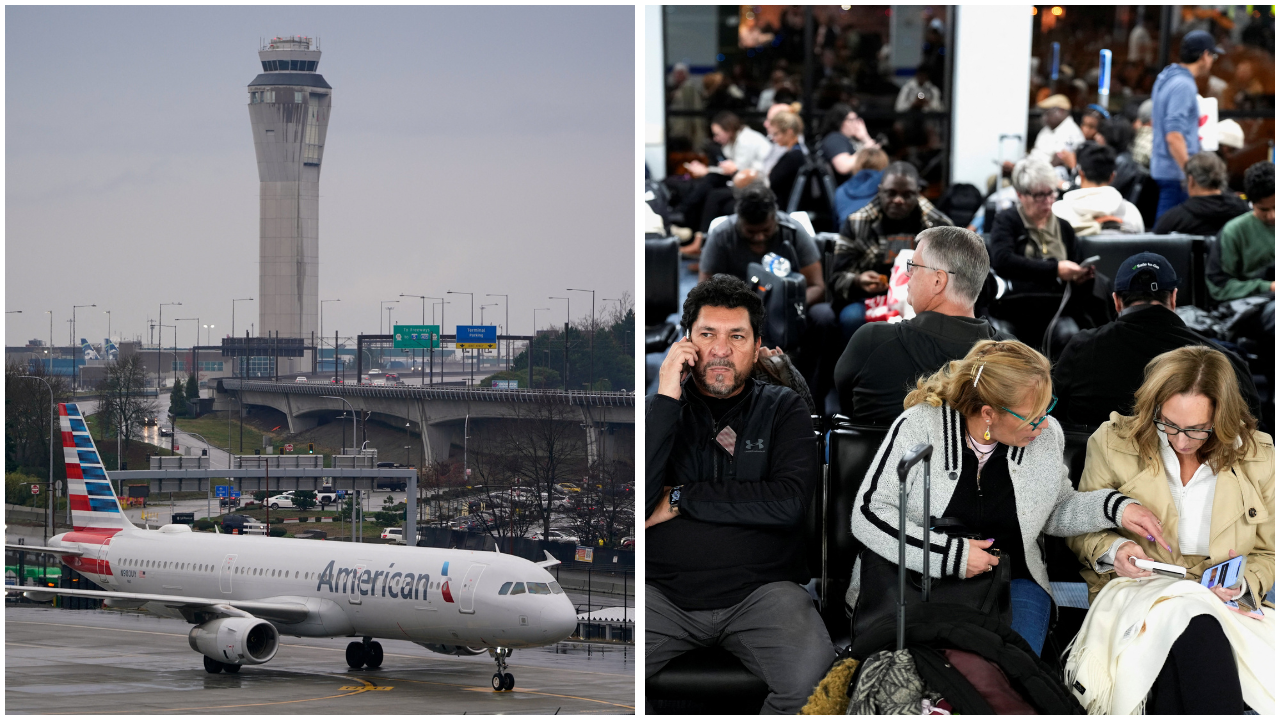
Every time the Federal Aviation Administration issues a nationwide ground stop, the media industrial complex runs the exact same playbook. They send camera crews to Terminal B at O'Hare. They interview exhausted parents sleeping on luggage carousels. They run breathless headlines screaming about "flight chaos," obsolete government mainframes, and bureaucratic incompetence.
They want you angry at the regulator. They want you pointing fingers at air traffic control towers.
They are looking at the wrong target entirely.
When the FAA halts take-offs across the country, it is not a failure of aviation safety. It is the exact opposite. A nationwide ground stop is the ultimate proof that the strictest, most unforgiving safety architecture in human history is working precisely as designed. The real culprit behind the stranded thousands, the cascading cancellations, and the multi-day meltdowns isn't the government agency pulling the emergency brake. It is the fragile, over-leveraged, hub-and-spoke business model that commercial airlines have spent forty years optimizing to squeeze every last cent out of your ticket.
The Myth of the Fragile System
To understand why a two-hour computer outage or a localized severe weather event paralyzes North American airspace for four days, you have to understand what a ground stop actually is.
In aviation parlance, a Ground Stop (GS) is an air traffic management initiative that requires aircraft meeting specific criteria to remain on the ground. It is distinct from a Ground Delay Program (GDP), which simply meters traffic into a congested airport by assigning delayed departure times. A ground stop is a hard freeze. When a critical safety system—like the Notice to Air Missions (NOTAM) database, which alerts pilots to closed runways, flock migrations, and military airspace restrictions—goes dark, flying blind is not an option.
I have spent two decades sitting in airline operations centers and consulting on aerospace infrastructure. I have watched carriers burn tens of millions of dollars in a single afternoon because a legacy database choked on a corrupted file. Every single time, the public narrative blames the tech stack.
Yes, the FAA runs on aging architecture. The transition to the Next Generation Air Transportation System (NextGen) has been plagued by budgetary whiplash from Congress and shifting technical mandates. Nobody in the industry defends the clunky, 1980s-era code still lurking in the basement of federal aviation facilities.
Yet blaming the software for the ensuing travel apocalypse is like blaming a smoke detector for burning down your house. The detector did its job. It screamed before the roof caved in. The reason your house burned down is that you built it out of dry kindling and stacked boxes of fireworks in the hallway.
In commercial aviation, those boxes of fireworks are called aircraft utilization rates and hub-and-spoke scheduling.
Why Airlines Break When the Clock Stops
If you want to know why your Tuesday morning flight to Denver was canceled because of a glitch in Washington, D.C., look at how commercial airlines schedule their fleets.
An airplane sitting on the tarmac makes zero dollars. Worse, it bleeds money in gate fees, crew salaries, and lease payments. To stay profitable in a razor-thin margin industry, major U.S. carriers operate on a hyper-tight point-to-point or banked hub-and-spoke schedule.
In a banked hub system—perfected by legacy carriers like Delta, American, and United—dozens of flights arrive at a mega-hub (like Atlanta, Dallas/Fort Worth, or Chicago) within a 45-minute window. Passengers sprint across concourses, bags are furiously sorted, and within 60 to 90 minutes, all those planes push back in a massive outbound wave.
This model maximizes connection options. It also eliminates all slack from the system.
Consider the domino effect when the FAA hits pause for just ninety minutes:
- The Crew Legality Cliff: Under Federal Aviation Regulation (FAR) Part 117, pilots and flight attendants have strict, non-negotiable limits on flight duty periods. The clock starts ticking the moment a crew reports for duty, not when the wheels leave the runway. If a ground stop holds a plane at the gate for two hours, that crew might "time out" mid-flight. An airline cannot legally fly that plane without a fresh crew.
- Aircraft Misalignment: That Boeing 737 stuck in Charlotte was supposed to fly to Newark, turn around to Orlando, and finish the night in Houston. If it misses its Newark slot, the Orlando and Houston flights don't just get delayed—they cease to exist because the physical metal isn't there.
- Gate Gridlock: Airports do not have infinite parking spaces. When outbound flights are frozen at the gates, inbound flights that are already airborne have nowhere to park once they land. Passengers sit trapped on the tarmac for three hours, burning fuel and blowing past federal tarmac-delay limits, which forces further cancellations.
The FAA didn't cancel your flight three days after a system glitch. The airline's complete lack of operational buffer did. Carriers deliberately run at 98% capacity during peak travel windows because carrying spare aircraft and reserve crews costs money. You get cheaper base fares in October because the airlines refuse to pay for redundancy in July and November. When an inevitable disruption hits, you pay the hidden cost in terminal floor sleepovers.
Dismantling the Worst Travel Advice on the Internet
Whenever these meltdowns dominate the news cycle, travel blogs and mainstream outlets rush to publish "survival guides" filled with terrible advice. If you follow the conventional wisdom, you will end up at the back of a 400-person customer service line.
"Should I wait at the airport to speak to a gate agent?"
Never. This is the single biggest mistake stranded flyers make. Gate agents during a nationwide ground stop have no secret inventory of seats, and their terminal computers are running the exact same overloaded reservation software that you can access on your phone. Worse, a single agent has to process two hundred panicked people one by one. The moment a ground stop is announced, do not get in line. Pull out your phone, open the airline's app, and rebook yourself digitally while everyone else is queuing up at the podium. If the app crashes, call the airline's international support line—specifically the Canadian, UK, or Australian customer service numbers via Wi-Fi calling. They route to agents with full system access and zero hold times compared to the jammed U.S. domestic lines.
"Will the airline pay for my hotel and meals during a ground stop?"
Almost certainly not, and demanding it at the counter will only waste your breath. Under U.S. Department of Transportation (DOT) rules, airlines are only required to compensate you or provide vouchers for controllable delays—such as mechanical failures or crew scheduling errors within the airline's control. An FAA ground stop, whether triggered by weather, airspace congestion, or a federal agency outage, is classified as an uncontrollable event (force majeure). The airline is legally off the hook for your hotel room. If you don't carry a travel credit card with built-in trip delay insurance, you are paying out of pocket.
"Is it safer to book the cheapest basic economy ticket and just buy travel insurance?"
Third-party travel insurance is largely a high-margin scam for domestic flyers. Most policies have massive exclusions for "known events" and require mountains of bureaucratic documentation from the airline—documentation that carriers routinely drag their feet on providing during a meltdown. Furthermore, Basic Economy tickets put you at the absolute bottom of the standby and rebooking priority list. When an airline's computer algorithm automatically rebooks a canceled flight, elite status holders and full-fare main cabin passengers get the remaining seats on the next flight. Basic Economy passengers get pushed to Thursday.
The Uncomfortable Truth About Aviation Safety
Let's examine the alternative that critics implicitly demand when they scream about FAA "overreactions."
Imagine a scenario where a critical federal data feed goes down, or severe convective weather blankets the Eastern Seaboard, and the FAA decides to keep traffic moving to avoid bad press and angry travelers. Controllers start manually routing jets using backup paper strips and voice radio alone. Pilots take off without real-time updates on closed taxiways, broken runway lights, or military airspace activation.
In that scenario, your flight leaves on time. And the probability of a catastrophic runway incursion or mid-air collision spikes exponentially.
The United States operates the most complex, densely packed airspace in the world. On any given day, the FAA manages over 45,000 flights and 2.9 million passengers across 29 million square miles of airspace. Since the 2009 Colgan Air crash near Buffalo, New York, U.S. commercial airlines have operated with a safety record so astonishingly clean that the public has become dangerously complacent. We treat hurtling through the stratosphere at 550 miles per hour in a pressurized aluminum tube as casually as riding a city bus.
We owe that safety record to an uncompromising culture of redundant defense-in-depth, championed by institutions like the National Transportation Safety Board (NTSB) and the Flight Safety Foundation. Every rule in the Federal Aviation Regulations is written in blood. When an anomaly occurs in the system—whether it is a corrupted database file, a radar blind spot, or an unverified software patch—the system is explicitly engineered to fail safe.
Failing safe in aviation means putting every single wheel on the concrete until 100% of the data integrity is verified.
The Downside of the Fortress Mentality
To be entirely fair, defending the FAA's safety-first trigger finger does not mean excusing its glacial pace of modernization. There is a massive, legitimate flaw in how the federal government manages airspace infrastructure, and it creates real economic pain.
Because aviation regulators are terrified—rightfully so—of introducing a bug that could cost lives, the FAA suffers from extreme institutional paralysis. Adopting proven, off-the-shelf cloud architecture or modernizing air traffic control centers takes decades because every single line of code must undergo exhaustive, multi-year certification processes. Meanwhile, the agency is funded through erratic congressional appropriations rather than a predictable, user-fee-based corporate structure like Nav Canada, which runs Canada's civil air navigation system as a private, non-profit corporation.
Because Nav Canada operates independently of political budget battles, it was able to deploy space-based ADS-B surveillance across the North Atlantic years ahead of the United States. The FAA, trapped in federal procurement red tape, remains vulnerable to single-point-of-failure bottlenecks in its legacy ground systems.
When those bottlenecks snap, the FAA slams the brakes. And because U.S. airlines have stripped every ounce of spare capacity out of their schedules to maximize quarterly shareholder returns, that sudden stop shatters the entire domestic travel network for days.
How to Actually Beat the System
You cannot fix congressional aviation funding, and you are not going to convince major carriers to park ten spare Boeing 737s at every hub just in case a server crashes in Virginia. If you fly regularly, you have to stop treating air travel like a guaranteed utility and start treating it like a high-risk logistics operation.
- Book the first flight of the morning. Delays in the U.S. airspace system are cumulative. At 6:00 AM, the planes are already sitting at the gates from the night before, the crews are rested, and the airspace is empty. By 3:00 PM, minor morning delays have compounded into missed connections and crew timeouts. Morning flights have the lowest cancellation rates in the industry, period.
- Eliminate connections at all costs. Every connection you add to an itinerary does not double your risk of getting stranded—it squares it. Paying $120 extra for a nonstop flight is infinitely cheaper than losing two days of work and paying $400 for an airport hotel in Charlotte.
- Never check a bag during peak travel windows. If your flight gets canceled during a nationwide meltdown and your suitcase is in the belly of the plane, you are tethered to that airline. You cannot jump ship to a rival carrier or rent a car and drive four hours home without abandoning your belongings to a baggage claim black hole that might take two weeks to untangle.
- Book directly with the airline. Third-party aggregators like Expedia or Kayak are great until a ground stop hits. When things go sideways, the airline will tell you to call the travel agency, and the travel agency will sit on hold with the airline for six hours while all the remaining seats disappear.
The next time a red banner flashes across your screen announcing that the FAA has halted take-offs nationwide, take a deep breath and skip the outrage cycle. The system isn't broken. The regulators are keeping you alive, the airlines are running without a safety net to keep your fares low, and the chaos you see in the terminal is simply the price of flying on the razor's edge. Book the 6:00 AM nonstop, pack a carry-on, and stop expecting a miracle from a business model built with zero margin for error.