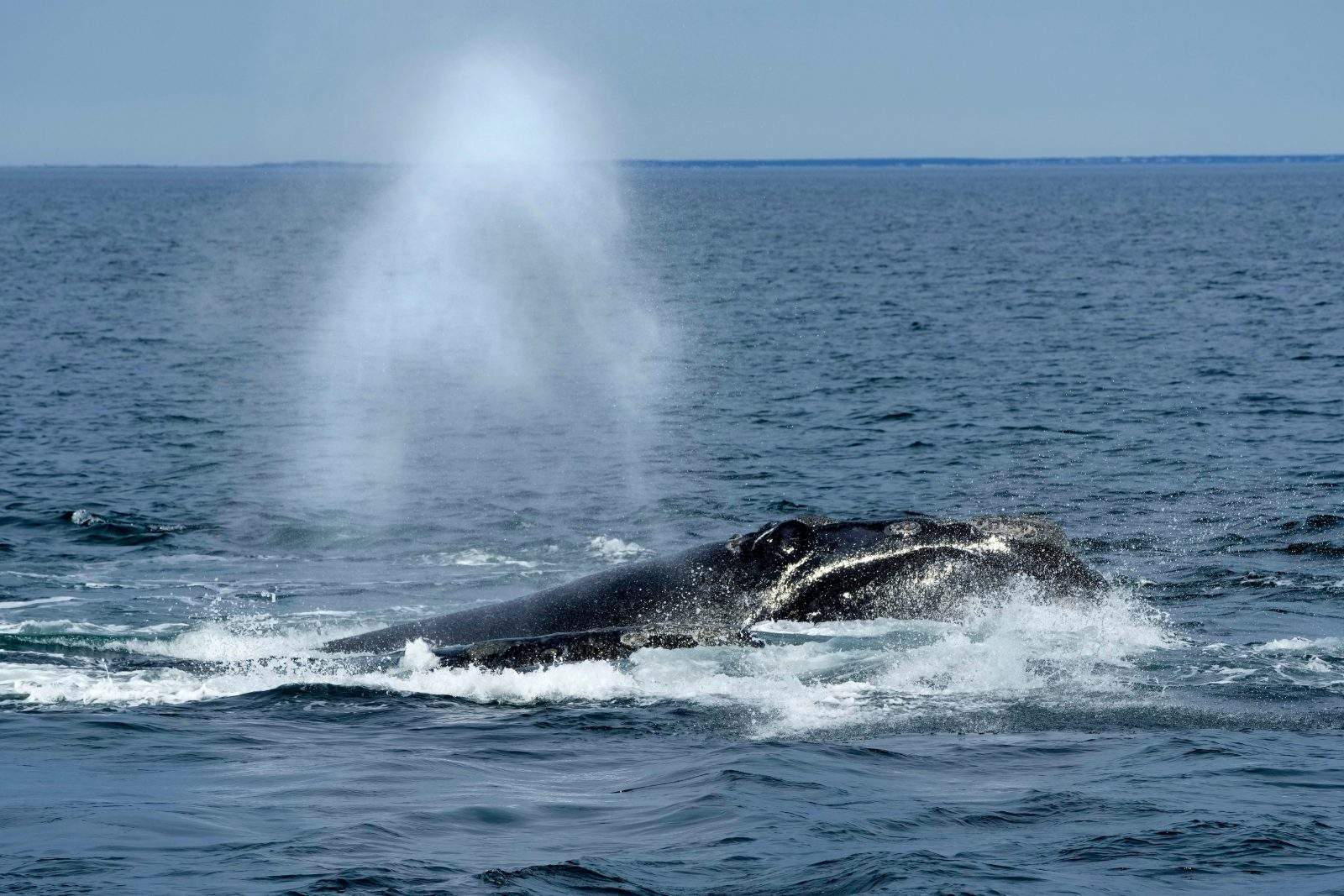
Another North Atlantic right whale has been spotted dragging heavy fishing rope through the Atlantic. Right on schedule, the environmental press releases are rolling out. The narrative is predictable, pre-packaged, and dead wrong.
If you read the standard coverage of a North Atlantic right whale entanglement, you get a neat, tidy morality play. There is a villain—commercial fishermen using vertical trap lines—and a victim—a critically endangered species with fewer than 370 individuals remaining. The proposed solution is always the same: shut down the fisheries, ban traditional rope, and force working-class coastal communities to adopt experimental technology overnight.
That is the lazy consensus. It makes for great fundraising copy for conservation non-profits, and it completely ignores the economic, ecological, and mechanical reality of the ocean.
I have spent over a decade analyzing maritime regulatory frameworks, supply chain economics, and marine conservation data from New England to the Canadian Maritimes. I have watched multi-million-dollar regulatory schemes collapse under the weight of their own unintended consequences. When regulators and journalists treat whale conservation as a simple matter of pointing fingers at commercial trap fisheries, they miss the actual mechanics driving this crisis—and they guarantee that more whales will die.
The Myth of the Simple Villains
The mainstream framing of any right whale entanglement treats the ocean like a static room where fishermen recklessly leave tripwires lying around. It ignores why those ropes are there, who demands the product at the end of them, and what happens when you arbitrarily rip the economic engine out of coastal towns.
First, let us define what we are actually talking about. Fixed-gear trap fishing—primarily for American lobster and snow crab—relies on vertical buoy lines connecting weighted traps on the seafloor to surface floats. When a right whale swims through the water column with its mouth open to filter-feed on copepods, it cannot see thin polypropylene or nylon rope. The line catches in the whale's baleen plates or wraps around its flippers and tail stock.
This is a brutal, slow way for an animal to die. Chronic entanglement drains a whale's blubber reserves, prevents females from reaching the caloric threshold required to calve, and causes lethal infections. Nobody disputes the physics of rope cutting into whale tissue.
What the standard narrative conveniently omits is geopolitical and ecological displacement.
For decades, the Gulf of Maine and the waters off Massachusetts were the epicenter of the right whale's feeding grounds. Then, the ocean warmed. The Gulf of Maine began heating up faster than 99 percent of the world's oceans. Copepods—the tiny, lipid-rich crustaceans that make up the right whale's primary diet—shifted north into the Gulf of St. Lawrence in Canada.
The whales followed their food. They moved into a region that had zero historical framework for right whale protection, intersecting directly with the massive Canadian snow crab fishery and high-volume international shipping lanes. In 2017 alone, 17 right whales were found dead, largely in Canadian waters, triggering an Unusual Mortality Event that continues today.
Blaming a third-generation lobsterman in Stonington, Maine, for a macro-climatic shift in zooplankton distribution is absurd. Yet, U.S. regulatory policy—led by the National Oceanic and Atmospheric Administration (NOAA) and spurred by relentless litigation from groups like the Center for Biological Diversity—has repeatedly targeted American trap fisheries with sweeping seasonal closures and gear mandates, even when the data shows those specific waters have drastically reduced whale residency during peak fishing months.
The Vessel Strike Blind Spot
Here is the uncomfortable truth that rarely makes the front page when an entangled whale makes the news: rope is not the only thing killing them, and focusing solely on gear lets massive corporate shipping off the hook.
According to necropsy data compiled by NOAA Fisheries and the New England Aquarium, the two primary human-caused drivers of right whale mortality are fishing gear entanglements and vessel strikes. While entanglements garner the most emotional outrage because aerial photos of whales dragging buoys are visceral and tragic, blunt-force trauma and propeller cuts from massive cargo ships, tankers, and cruise liners are equally lethal—and vastly under-policed.
Think about the asymmetry of power here.
When a coalition of environmental groups sues the federal government over right whales, it is much easier to crush a fragmented industry of independent boat captains than it is to disrupt global container shipping. Global supply chains are sacred. Amazon deliveries, imported electronics, and international crude oil do not stop for endangered species.
Consider the reality of Seasonal Management Areas (SMAs) and Dynamic Management Areas (DMAs). Federal rules mandate that vessels 65 feet and longer slow down to 10 knots or less in designated zones during specific times of the year. In practice, compliance with voluntary Dynamic Management Areas—triggered when whales are spotted outside standard zones—is abysmal. Big shipping companies treat speed restrictions as optional suggestions because the financial penalties for missing a port window outweigh the risk of a federal fine.
Meanwhile, a lobsterman faces total loss of livelihood if his buoy markings do not match a 400-page federal compliance manual. If journalists actually cared about saving the species rather than writing easy clickbait, every headline about an entangled whale would be paired with an investigation into how many trans-Atlantic container ships blew through a right whale nursery at 18 knots that same week.
Why "Ropeless" Gear Is a Regulatory Fantasyland
Whenever an entanglement hits the news, pundits immediately demand the immediate adoption of "ropeless" or on-demand fishing gear. On paper, it sounds brilliant. Instead of leaving a vertical line suspended in the water column 24 hours a day, the rope and buoy sit coiled in a cage on the ocean floor. When the fisherman returns to haul the trap, they send an acoustic signal from their boat, releasing the buoy to the surface.
No vertical line in the water means zero chance of whale entanglement. Problem solved, right?
Wrong. Pushing mandatory on-demand gear as an immediate, universal fix is a classic case of Silicon Valley-style techno-optimism colliding with the violent reality of the North Atlantic.
Let us look at the actual operational failures of current on-demand systems:
- Cost Asymmetry: A traditional surface buoy and length of rope costs roughly $15 to $30. A single acoustic release unit costs between $2,500 and $4,000. A typical commercial lobsterman fishes 600 to 800 traps, usually rigged in trawls of 10 to 20 traps per end-line. Outfitting just one boat with acoustic gear costs upwards of $100,000 to $200,000—before accounting for deck retrofits, hull-mounted acoustic transducers, and replacement costs when units inevitably fail.
- Gear Conflict and Seafloor Chaos: Surface buoys serve a vital purpose beyond marking traps for the owner: they tell other fishermen where gear is sitting. Without surface markers, a mobile-gear dragger towing a bottom trawl net cannot see where fixed traps are set. The result? The dragger tears right through thousands of dollars of invisible acoustic traps, destroying the gear and leaving ghost traps on the seafloor that continue catching and killing marine life indefinitely.
- Acoustic Interference and Failure Rates: The North Atlantic is not a quiet swimming pool. Tide rips, thermoclines, engine noise, and rough seas degrade acoustic signals. In field trials conducted by researchers at the Woods Hole Oceanographic Institution and various state marine agencies, acoustic releases have suffered failure rates that would bankrupt a commercial operation. If a fisherman presses a button and a $4,000 unit fails to surface in 10-foot swells, that money—and the catch—is gone forever.
The technology is improving, and organizations like the Ropeless Consortium are doing legitimate engineering work. However, mandating unfinished hardware across an entire multi-billion-dollar industry before the geolocation software and acoustic reliability are bulletproof is regulatory malpractice.
The Questions Nobody Asks
When a whale is spotted entangled, the public naturally asks a set of predictable questions. Almost all of them are built on flawed premises.
"Why don't fishermen just use weaker rope so whales can break free?"
They already do—and it is a double-edged sword. Regulations in both the U.S. and Canada now mandate weak links or fully engineered weak rope designed to break at 1,700 pounds of force. The theory is that an adult right whale can easily snap a 1,700-pound line, whereas a fisherman only needs a few hundred pounds of tension to haul a trawl.
The flaw in this logic is biological. Juveniles and calves—the exact demographic the species needs to survive to reproductive age—often lack the mass and strength to generate 1,700 pounds of breaking force before the rope becomes deeply embedded in their flesh. Furthermore, weak rope has lower tensile strength, meaning it parts more easily during storms. When a storm snaps a weak line, the fisherman loses the buoy, creating untraceable "ghost gear" drifting through the water column—which is even more dangerous to whales than anchored gear.
"Can't we just track every whale in real time with satellites and drones?"
Imagine a scenario where we deploy a fleet of autonomous underwater gliders, thermal imaging drones, and acoustic listening buoys across the entire Eastern Seaboard from Florida to Nova Scotia. Even with unlimited funding, you cannot track an animal that spends 80 percent of its life beneath the surface, travels thousands of miles, and produces no predictable vocalizations when silently feeding.
Passive acoustic monitoring (PAM) only works when whales make noise. Aerial surveys are grounded by fog, high winds, and winter darkness. Satellite tags rarely stay attached to a whale's blubber for more than a few weeks before the animal's immune system rejects the implant. We are managing an invisible population in a massive, opaque ocean. Pretending we have omnipresent surveillance capability leads to rigid, misplaced closures that protect empty water while leaving actual whale aggregations exposed.
"If the lobster industry is worth billions, why can't they absorb the cost of conservation?"
This reveals a fundamental ignorance of how seafood economics work. The "$1.5 billion" economic impact figure thrown around by politicians represents the entire downstream supply chain—processors, wholesalers, truckers, restaurants, and tourist shops. The guy standing on the wet deck of a 42-foot boat is a price-taker. He does not set the boat price for lobster; global market demand and processor inventories dictate it. When bait prices double, fuel spikes, and regulatory compliance costs soar, the captain cannot simply raise the price of his catch. He absorbs the loss until his margins hit zero and he sells his permit to a private equity-backed consolidator.
The Unintended Consequence of Regulatory Overreach
There is a dark irony at the heart of extreme marine conservation policies: if you regulate local, sustainable fisheries out of existence, you do not save the ocean. You outsource ecological destruction.
The American lobster fishery is widely recognized by the Marine Stewardship Council and independent marine biologists as one of the most sustainable, strictly managed fisheries on earth. Lobstermen throw back oversized breeders, throw back egg-bearing females (notching their tails to protect them for life), and use escape vents in traps so juvenile lobsters swim free.
When overly aggressive, unscientific closures force New England fishermen out of business, consumers do not stop eating seafood. Retailers simply import cheap, unregulated protein from countries with zero environmental oversight, rampant human rights abuses on fishing vessels, and devastating bycatch rates. You trade a hyper-regulated local fishery that accidentally interacts with a whale once in a blue moon for foreign industrial fleets that strip-mine the ocean floor.
Furthermore, crushing the economic viability of commercial fishermen destroys the single best data-gathering network on the water. Right now, fishermen cooperate with scientists to test new gear, report whale sightings, and deploy oceanographic sensors. Turn them into enemies through punitive, top-down mandates, and that cooperation evaporates overnight.
What Actually Works (And Why Nobody Wants to Do It)
If the goal is actually preventing right whale deaths rather than scoring political points or raising donor money, we need to abandon the theatrical outrage over every single rope sighting and execute a ruthless, data-driven strategy.
First, shift the burden of proof onto shipping and offshore wind development. Right now, massive offshore wind projects are being fast-tracked right through critical right whale migration corridors along the Atlantic coast. The pile-driving noise, increased vessel traffic, and potential disruption to local oceanographic currents that concentrate copepods represent a massive, unquantified threat to the species. Yet, wind developers receive Incidental Harassment Authorizations from the federal government with a fraction of the scrutiny applied to a guy hauling 400 lobster traps. Apply the exact same precautionary principle to industrial shipping and offshore energy that is currently weaponized against fishermen. Enforce mandatory, non-negotiable 10-knot speed limits for all vessels over 35 feet whenever acoustic buoys detect a whale, backed by automatic satellite-tracked fines that actually hurt a shipping conglomerate's bottom line.
Second, stop subsidizing half-baked gear and fund real engineering. Instead of forcing fishermen to buy $3,000 acoustic units that fail in heavy weather, the federal government should put up a $50 million XPRIZE-style bounty for an engineering firm to develop a biodegradable, time-release or galvanic-corroding sub-surface buoy system that costs under $100 per unit and integrates seamlessly with existing chartplotters. Until the unit economics work, mandatory adoption is a fantasy.
Third, implement dynamic, hyper-local closures based on real-time prey density, not arbitrary calendar dates. Whales do not read calendars. Closing massive swaths of ocean for four months because a whale was spotted there five years ago is lazy governance. Use continuous autonomous glider monitoring to track copepod concentrations. When prey density spikes in a specific grid square, close that exact square for 14 days. When the plankton disperses, reopen the water immediately.
The Hard Truth About Extinction
I will admit the glaring flaw in my own argument: time is not on our side.
With fewer than 370 North Atlantic right whales left, and fewer than 70 reproductively active females, the species has zero margin for error. Every single entanglement—even a non-lethal one that prevents a female from calving for two years—pushes the population closer to functional extinction. Waiting five years for engineers to perfect a cheap acoustic buoy might be five years too late. The conservationists are not crazy for panicking; the math is genuinely terrifying.
However, panic is not a strategy.
Passing emotionally satisfying regulations that bankrupt coastal communities, fail to stop cargo ships from running over whales, and ignore climate-driven shifts in prey distribution will not save a single animal. It will only ensure that when the last North Atlantic right whale disappears from the ocean, we will have destroyed a sustainable American industry along with it.
Stop reading outrage bait about fishing rope. Look at the shipping lanes, look at the warming water, and look at the economics. Until we fix the incentives driving the entire Atlantic ecosystem, we are just rearranging deck chairs while the species goes under.