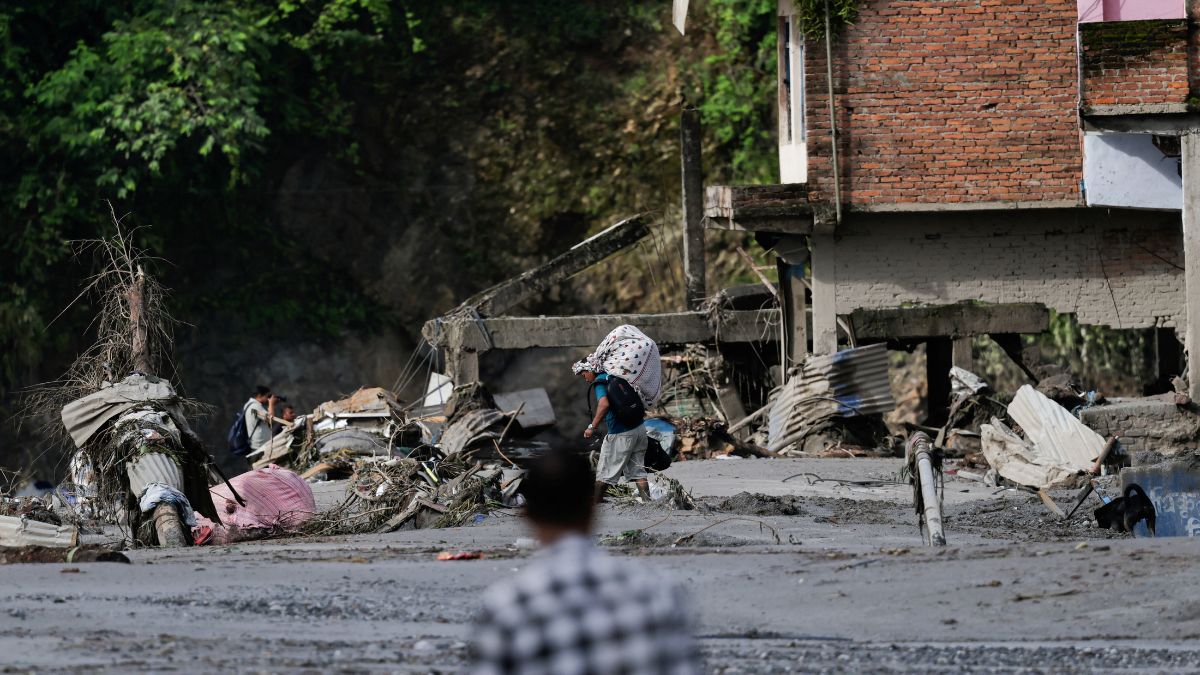
Every monsoon season, the headlines write themselves. Terrified pilots recounting walls of brown water. Passengers stranded on tarmac islands. Drone footage showing roof-deep torrents sweeping through settlements like matchsticks. The media laps it up. They frame it as a wrathful act of an angry planet, an unpredictable meteorological assault that catches civilization off guard.
It is a convenient lie.
I have spent two decades analyzing disaster response and infrastructure placement across South Asia. I have watched billions of dollars vanish into reactionary relief funds while the root cause remains untouched. What we call a natural disaster in Nepal is almost always a human-engineered catastrophe. When a pilot describes five-meter waves tearing through river valleys, they are not reporting an act of God. They are witnessing the bitter invoice of decades of reckless zoning, unscientific road carving, and institutional cowardice.
The lazy consensus is that extreme weather is the sole culprit. More rain, more runoff, more tragedy. This narrative lets everyone off the hook. It absolves municipal planners who rubber-stamped concrete expansion over ancient floodplains. It pardons politicians who traded environmental impact assessments for ribbon-cutting ceremonies.
Let us dismantle the core premise everyone accepts without blinking.
The Myth of the Unpredictable Deluge
We treat heavy monsoon downpours as statistical anomalies. They are not. They are predictable, seasonal certainties as old as the subcontinent itself. The failure is never the volume of water falling from the sky; the failure is our refusal to give that water anywhere to go.
Over the last thirty years, the expansion of haphazard rural roads—the infamous Dozer Culture—has destabilized entire mountain watersheds. Unregulated earth-moving dumps millions of tons of loose debris directly into river gorges. When heavy rains hit, this loose sediment creates natural, highly unstable dams. When those temporary dams burst, they unleash the catastrophic five-meter surges that catch aviation crews and villagers entirely by surprise.
It is physics, not bad luck. Yet, every single year, the mainstream discourse focuses entirely on the rescue rather than the root cause. We praise the pilots pulling people from rooftops while ignoring the fact that those rooftops never should have been built in a dynamic alluvial zone.
Disaster management in South Asia has devolved into a multi-million-dollar theater of reaction. We spend fortunes pulling bodies out of torrents, but pennies on stopping the construction that puts them there in the first place.
Why Current Flood Mitigation is Broken
Ask any standard disaster response expert what the solution is, and they will parrot the same tired playbook: better evacuation drills, higher levees, and more sophisticated radar warnings.
These measures are architectural bandaids on a compound fracture.
Building higher levees along volatile Himalayan-fed rivers creates a false sense of security that actively encourages more downstream development. As sediment builds up behind these barriers, the riverbeds actually rise higher than the surrounding land. When a breach finally happens—and history proves it always does—the resulting flood is vastly more destructive than it would have been naturally.
We are engineering our way into bigger catastrophes.
Imagine a scenario where a municipal government halts all new construction within one kilometer of major river channels for five years, redirecting that capital entirely into reforestation and slope stabilization. The outcry would be deafening. Real estate speculators would scream. Local politicians would panic. But it would be the first honest attempt to solve the problem rather than manage the symptoms.
The Economics of Catastrophe
There is a perverse financial incentive keeping this cycle alive. Crisis brings international aid. Aid brings contracts. Contracts bring patronage. Nobody gets rich by quietly enforcing strict zoning laws in rural districts. Everyone gets funding when the helicopters fly in and cameras roll.
We must shift our focus from emergency logistics to spatial discipline.
- Ban Unengineered Road Construction: Local governments must outlaw unmonitored heavy machinery excavation on fragile mountain slopes immediately.
- Enforce Hard Setbacks: Move human settlement away from active flood zones, regardless of the political cost. Nature does not negotiate property deeds.
- Redistribute Relief Budgets: Tie municipal disaster funding performance metrics directly to pre-disaster mitigation compliance rather than post-disaster rescue speed.
Stop treating every monsoon like a surprise attack. We know where the water goes. We just refuse to get out of its way.