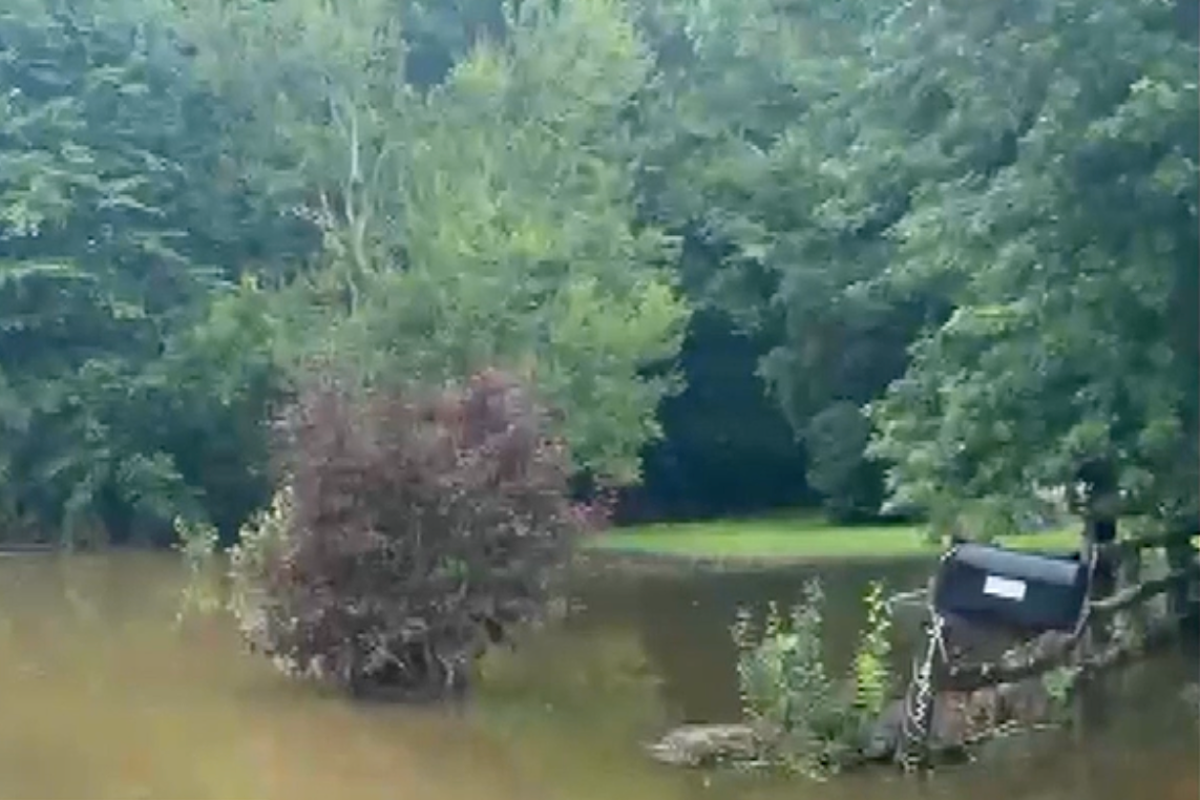
Mainstream news outlets love a good disaster narrative. When flash floods ripped through Missouri and left campers clinging to treetops, the media quickly deployed its standard playbook. They painted a picture of helpless humans victimized by an unpredictable, raging Mother Nature. It is a comforting lie. It removes human agency and shifts the blame onto the clouds.
The lazy consensus insists these events are entirely unavoidable anomalies. They are not. The uncomfortable truth is that the disaster in Missouri was not a failure of weather forecasting; it was a failure of fundamental outdoor literacy and systemic infrastructure reliance. We have conditioned a generation of outdoor enthusiasts to trust glowing screens over basic topography, and it is costing lives.
The Myth of the Unpredictable Flash Flood
Every major report on the Missouri floods focused heavily on the suddenness of the deluge. "The water rose out of nowhere," the headlines screamed.
Let us dismantle the physics of a flash flood. Water does not appear from thin air to submerge a campsite. It follows the path of least resistance, governed strictly by gravity and terrain geometry. Missouri’s Ozark region is characterized by karst topography—dissolved limestone surfaces featuring steep valleys, sinkholes, and tight drainage basins. When a massive volume of rain hits this specific geology, the ground cannot absorb it. The water rushes down the hillsides and funnels directly into the valley floors.
If you pitch a tent at the bottom of a V-shaped valley next to a pristine river in a karst region, you are not a victim of a freak accident when it floods. You have voluntarily parked your bed inside a giant drainage pipe.
The media focuses on the sky. The real danger is the dirt. Campers regularly ignore the physical layout of their surroundings because their weather app gave them a green light three hours prior.
The Deadly Reliance on Digital Safety Nets
I have spent two decades tracking wilderness safety metrics and analyzing search and rescue operations. The biggest threat to modern campers is the illusion of connectivity.
People march into the backcountry armed with smartphones and satellite messengers, believing these devices function as invisible shields. They assume that if conditions deteriorate, a push of a button will summon a helicopter within minutes. This digital dependency breeds reckless decision-making.
Consider the mechanics of a flash flood. The transition from a dry riverbed to a raging torrent can happen in under ten minutes. Even the most elite rescue teams cannot mobilize, navigate washed-out roads, and deploy swift-water technicians in that timeframe. When you are stuck in a tree in the middle of the night, your satellite communicator is nothing more than an expensive paperweight that lets people know where your body might be.
True outdoor survival is preemptive, not reactive. It relies on situational awareness, not a cellular signal.
Dismantling the PAA: "How do you survive a flash flood while camping?"
The internet is filled with deeply flawed advice on this topic. Standard search queries return checklists telling you to "climb a tree" or "swim diagonally with the current."
This advice is actively dangerous.
- Climbing trees is a desperate last resort, not a strategy. Floodwaters undermine root systems. Large trees collapse constantly during flash floods. If you are in the tree when it goes down, your chances of survival drop to near zero.
- Swimming is a fantasy. Flash floods carry boulders, dislodged logs, and sharp debris moving at twenty miles per hour. The blunt-force trauma will incapacitate you long before you can execute a textbook defensive swim stroke.
The only real answer to surviving a flash flood while camping is brutally simple: Do not be there. If the forecast calls for a 30% chance of thunderstorms and you are camping in a low-lying riparian zone, you cancel the trip or move to high ground. A 30% chance across an entire region means a 100% chance of a catastrophic deluge if that cell happens to park over your specific watershed.
The Flaw in Designated Campgrounds
We are told that staying in designated, managed campgrounds is the safest way to experience the outdoors. The Missouri incident exposed this lie completely. Many of the people rescued were staying in established sites.
State parks and private campgrounds are often designed for aesthetic appeal and convenience, not tactical safety. People want to camp right next to the water. They want flat, cleared ground near the riverbank. To satisfy consumer demand, campgrounds place sites directly in the historical floodplain.
Just because a park authority put a picnic table and a fire ring on a patch of dirt does not mean that dirt is safe from the laws of hydrology. Government certification does not override physics.
The Contrarian Playbook for Wet-Weather Camping
If you refuse to let rain ruin your itinerary, you must abandon standard camping etiquette and adopt an aggressive, counter-intuitive approach to site selection.
1. Ignore the Flat Ground
Human instinct looks for flat, smooth clearings. In a storm, flat ground means pooling water or a future river channel. Look for sloped ground for your actual tent setup, ensuring your sleeping position uses the natural incline. Better yet, seek out micro-elevations—small ridges or benches even ten feet above the main valley floor can be the difference between a dry night and a helicopter rescue.
2. Read the Vegetation, Not the Map
Maps do not tell you where the water went last year. The trees do. Look for the "debris line" on tree trunks—clumps of dead grass, dried mud, and sticks caught in the bark several feet above the ground. If you see debris in the branches six feet up, that entire area is a historical flood zone. Move out.
3. The Ten-Minute Evacuation Rule
Every time you set up a camp in a dynamic environment, you need an immediate egress route that does not involve driving. If you wake up at 2:00 AM to rushing water, you cannot waste time packing gear or trying to start an SUV that might already be frame-deep in mud. You grab your shoes, your headlamp, and you walk uphill on foot immediately. If your camp does not have a clear, unblocked walking path to high ground, the site is a trap.
The True Cost of Wilderness Arrogance
There is a downside to taking this ultra-cautious, contrarian approach. It is inconvenient. It means your camp will often be windy, uneven, and far away from the picturesque riverbank where everyone else is taking photos for social media. It means you will cancel trips that you spent months planning, enduring the mockery of friends who tell you that "it's just a little rain."
But nature does not grade on a curve, and it does not care about your vacation days.
The Missouri disaster should be a wake-up call, but it won't be. The media will continue to blame the erratic climate, campers will continue to trust their phones over their eyes, and state parks will continue to rent out campsites inside drainage basins.
Stop looking at the sky for permission to be safe. Look at the ground beneath your feet. If you find yourself climbing a tree to escape rising water, you didn't get hit by bad luck. You ignored the architecture of the earth.