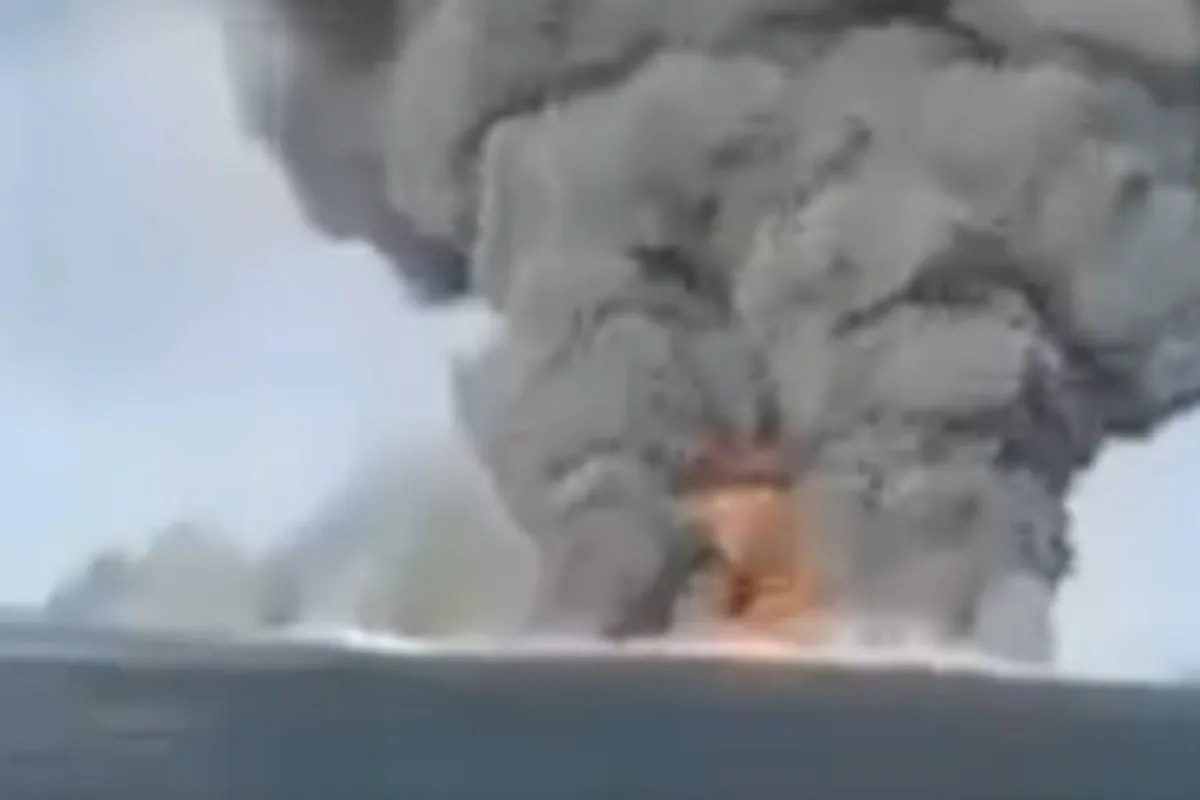
Every single time a crude carrier takes a hit near Qeshm Island, the mainstream reporting defaults to the exact same lazy script. Two loud bangs echo across the Persian Gulf, a plume of thick black smoke billows into the sky, and wire services immediately rush to print headlines about floating sea mines waiting to snap commercial supply chains.
It is a convenient narrative. It requires zero structural analysis, feeds neatly into pre-existing geopolitical anxieties, and offers editors a ready-made apocalyptic hook. It is also fundamentally backward.
When a multi-million-barrel Very Large Crude Carrier gets breached at the waterline, pointing at rudimentary naval explosives is the analytical equivalent of blaming a lightning strike for a burning warehouse while ignoring the guy standing there with a gasoline can. The real threat vector in these chokepoints is rarely an autonomous contact mine drifting aimlessly with the tide. The reality involves targeted asymmetric engagement, electronic warfare spoofing, and precision sabotage carried out by actors who understand maritime insurance markets better than naval strategy.
Let us look at how maritime traffic actually operates through these narrow corridors. The Strait of Hormuz handles roughly a fifth of the world's petroleum consumption. It is not an open ocean; it is a heavily monitored shipping lane split into inbound and outbound separation schemes monitored by regional vessel traffic services. Planting a traditional anchored contact mine in the middle of these commercial separation zones without being detected by radar sweeps, patrol craft, or commercial sonar arrays is practically impossible unless you have state-level clearance and complete disregard for international surveillance.
Yet tankers still take damage. Why? Because surface-level attribution focuses on the wrong physics.
A floating explosive device leaves distinct signature patterns on a steel hull—massive localized deformation, catastrophic buckling, and immediate structural flooding that tends to sink ships rather than just punch neat holes in ballast tanks. Modern commercial vessels are built with double hulls specifically designed to absorb minor impacts and navigational errors. When an explosion disables propulsion or compromises cargo containment without destroying the entire vessel, you are not looking at a dumb mechanical mine. You are looking at a shaped charge delivered by high-speed low-profile watercraft or directed kinetic impact.
The media loves the word mine because it evokes WWI imagery of silent iron globes bobbing in the dark. It personalizes the danger. It frames shipping lanes
Why Every Oil Tanker Blast Near Qeshm Is Actually A Calculated Smoke Screen
news
The headlines scream about floating metal scrap and panicked state media blaming underwater mines off Qeshm Island. Everyone rushes to repeat the same stale narrative about shipping lanes, maritime choke points, and inevitable escalation. It is lazy, predictable theater designed to distract the market while actual geopolitical mechanics shift beneath the surface.
Look closer at the physical reality of the Strait of Hormuz. A commercial oil tanker is not a fragile glass ornament. Bouncing off a mine in narrow shipping channels rarely results in a catastrophic commercial write-off unless the structural integrity was already compromised or the blast vector was meticulously engineered. When state mouthpieces instantly point fingers at maritime ordnance, your default reaction should not be shock. It should be skepticism.
Every single maritime incident in this corridor serves a distinct domestic or diplomatic bargaining position. If a vessel takes a hit near Qeshm, do not ask who planted the explosive. Ask who benefits from spiking insurance premiums on regional crude transit.
Shipping companies operating in the Persian Gulf have normalized a staggering level of cognitive dissonance. They treat these events as freak accidents of geography. They are not accidents. They are calculated pressure tactics executed with surgical precision. The lazy consensus assumes an uncontrolled spiral into total maritime warfare. History proves otherwise. Both state and non-state actors operating in these waters understand the hard boundaries of economic self-preservation. Total closure of the strait starves everyone, including the actors attempting to exert leverage.
The real story is not the minor hull breach or the recycled statements from regional ministries. The real story is how quickly global commodities traders swallow the official script, driving up futures contracts based on phantom threats while physical supply lines remain entirely operational.
Next time an explosion makes the breaking news ticker, ignore the smoke. Follow the capital. Stop buying the narrative that a handful of drifting mines can spontaneously paralyze global energy logistics. The infrastructure is far more resilient than the theater suggests.
Do not panic. Position against the overreaction.


