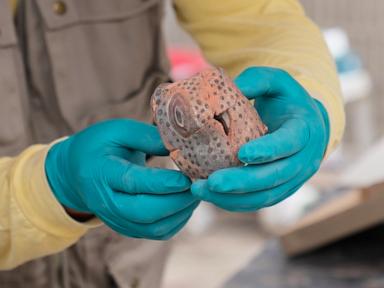
Every time an excavation crew brushes dirt off a skeleton in Peru, the media dusts off the exact same lazy script. Bones in Lima? Must be a ritual offering. Someone buried near an adobe wall three centuries ago? Oh, clearly a terrified human sacrifice to appease angry mountain gods.
It is time to stop projecting modern horror movie tropes onto pre-Hispanic societies just because it sells newspaper clicks.
The recent headlines out of Peru celebrating the unearthing of skeletal remains as a supposed ritual sacrifice expose a profound intellectual laziness in modern archaeology and science journalism. Whenever researchers find human remains outside of a manicured, modern cemetery plot, they default to the supernatural. They bypass practical urban sanitation, historical plague management, and basic civic logistics in favor of sensationalist mysticism.
Archaeologists should know better. The public deserves better.
The Lazy Consensus of Ancient Macabre
The standard narrative goes something like this: unearth a skeleton in an unusual position, attach words like "grim," "grisly," and "ritualistic," and let the imagination run wild. This trope relies on a patronizing view of ancient Andean civilizations. It frames them as superstitious primitives governed entirely by bloodlust and constant divine terror, rather than sophisticated urban planners, pragmatic traders, and complex engineers.
Let us look at the actual data. Major pre-Hispanic centers like Lima and the broader central coast were densely populated, highly urbanized zones. They sustained large populations for centuries. Cities of that scale face a constant, unglamorous crisis: waste management and body disposal.
When a community experiences a sudden demographic collapse due to introduced pathogens, environmental shifts, or political upheaval, graveyard space runs out fast. People do not pause to carve out neat, standardized caskets when a crisis hits. They bury their dead where they can—under floors, behind retaining walls, or in abandoned civic structures.
Calling these emergency or ad-hoc burials "sacrificial offerings" is like a future historian unearthing a pandemic mass grave from 2020 and declaring it an esoteric cult ritual because the bodies were interred hastily without proper headstones.
The Engineering Reality Behind the Dirt
To understand why these skeletal finds are so routinely misinterpreted, you have to look at how pre-Hispanic urban architecture worked. Sites in Lima, such as Huaca Pucllana or Maranga, are built out of millions of hand-made adobe bricks. These structures were not static monuments; they were dynamic, living architectural projects that expanded, underwent ritual closing events, and were repeatedly capped with new layers.
When a builder alters a huaca, they frequently encounter older burials. Conversely, during periods of structural decay or abandonment, these spaces naturally became convenient locations for quick interments.
Imagine a scenario where a local community faces a severe El Nino event. Crops fail. Water is scarce. Disease spreads through the tightly packed neighborhoods. Deaths spike. The municipal leadership does not perform an elaborate, state-sponsored sacrifice of healthy young individuals to fix the weather. They manage an urgent public health catastrophe. They bury the dead quickly in existing structural voids to prevent scavengers and disease vectors from running rampant through the city.
Yet, when modern excavators hit bone in these exact strata, the context gets stripped away. The structural utility is ignored. The immediate assumption defaults to ritual slaughter.
The Egos Driving the Headlines
Why does this persistent myth survive? Follow the incentives.
Academic funding is competitive. Museum attendance relies on spectacle. Media outlets thrive on clickbait headlines about ancient blood rituals. Saying "researchers find evidence of municipal crisis management in a 500-year-old rubbish dump" does not generate viral social media traffic. Saying "archaeologists uncover a dark, blood-soaked ceremony" keeps the grants flowing and the clicks rolling.
I have watched institutions burn millions of dollars chasing sensationalist narratives while ignoring mundane, unsexy stratigraphy that tells a much richer, more human story. We sanitize history by turning complex human beings into cartoonish cultists.
When you define an entire culture by its supposed penchant for human sacrifice, you miss out on how they actually solved problems. You miss their brilliant irrigation engineering, their vast trade networks spanning from the high Andes down to the Amazon basin, and their resilient social safety nets.
What the Data Actually Shows
Let us look at actual bioarchaeological markers. True ritual sacrifices—when they did occur in the Andes—often bear very specific osteological signatures. We are talking about sharp-force trauma applied in precise patterns, peri-mortem modifications, or specific demographic profiles consistent with captive-taking or elite dedication rites.
Standard urban excavations in Lima frequently reveal mixed demographics: infants, the elderly, individuals with chronic degenerative joint diseases, and people who clearly died of natural or pathological causes. These are normal populations. They are cross-sections of everyday neighborhoods.
Labeling a grandmother with arthritis who was buried beneath a domestic patio a "ritual offering" is not just bad science; it is historical malpractice. It strips these individuals of their actual identities. It reduces a real human life, with all its struggles and community ties, into a prop for a Sunday afternoon adventure story.
The Uncomfortable Downside of Skepticism
Adopting a rigorous, skeptical approach to archaeology comes with its own intellectual cost. It is exhausting. It requires admitting that we often lack enough context to know why a body was placed in a specific spot.
True science demands intellectual honesty. It requires saying "we do not know" instead of inventing a cinematic narrative to fill the gaps in our data.
When researchers default to "ritual sacrifice," they are taking the lazy way out. They are choosing the path of least resistance because mystery sells books and secures tenure.
Dismantling the Myth Once and For All
The next time a breathless news report drops about a terrifying discovery in Lima’s ancient ruins, look past the adjectives. Check the excavation reports. Ask for the osteological profile. Look for the mundane markers of urban life, disease, and structural maintenance.
Stop looking at the ancient world through the lens of a Hollywood horror franchise. Our ancestors were not bloodthirsty caricatures waiting around to sacrifice their neighbors every time the rain stopped. They were builders, survivors, and problem-solvers dealing with the exact same messy realities of urban existence that we face today.
It is time to bury the sacrifice myth for good.