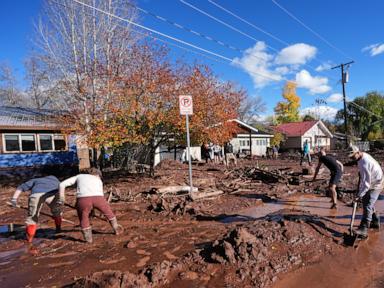
Every time heavy monsoon rains hammer the American Southwest, the national press runs the exact same tragedy script. Cameras pan across brown mud caking suburban living rooms. Anchors shake their heads at the "unprecedented fury of nature." Local officials stand in front of washed-out culverts, promising to rebuild stronger than before.
That narrative is a lie. And it is bankrupting taxpayers while guaranteeing the next catastrophe. Meanwhile, you can read related developments here: Asymmetric Disruption in European Aviation How Unverified Bomb Threats Weaponize Protocol.
When floodwaters recede in Arizona, New Mexico, Nevada, or Southern California, the sea of mud left behind is rarely an act of God. It is the predictable, engineered result of pouring millions of tons of impermeable concrete over natural desert drainage systems, then subsidizing the insurance policies of people who buy homes in dry riverbeds. Calling these events natural disasters lets developers, municipal zoning boards, and federal underwriters off the hook. You cannot blame the rain for drowning a subdivision built inside an alluvial fan.
The Myth of the "Freak" Desert Storm
Mainstream coverage treats Southwest flooding as an exotic anomaly—a shocking collision between dry dirt and sudden water. Anyone who actually understands arid hydrology knows the desert is defined by violent hydrological extremes, not gentle, steady precipitation. To explore the full picture, check out the recent analysis by The New York Times.
Desert soils are notoriously poor at absorbing rapid rainfall. High clay content, shallow bedrock, and a crusty surface layer called caliche—a hardened natural cement of calcium carbonate—act like a sheet of slate during a cloudburst. Add wildfire burn scars to the mix, and the ground becomes hydrophobic, meaning baked organic compounds literally repel water like wax on a car hood. Instead of soaking into the earth, rainwater sheets off mountain slopes at terrifying speeds, funneling into dry washes and arroyos that have carried flash floods for ten thousand years.
Yet, if you look at urban expansion across Phoenix, Las Vegas, Albuquerque, and the Inland Empire over the last four decades, builders treated those dry washes like cheap, flat real estate.
I have sat in municipal planning meetings where civil engineers presented clear 100-year floodplain models—which, to clarify a massive public misunderstanding, does not mean a flood happens once a century, but rather that an area has a 1% annual chance of flooding every single year, translating to roughly a 26% chance over a standard 30-year mortgage. Developers routinely counter those models by proposing narrow concrete channels to "tame" the wash, freeing up adjacent acreage for cul-de-sacs. The city council approves the variance because new rooftops mean immediate property tax revenue. Twenty years later, a storm drops four inches of rain in two hours, the concrete channel clogs with boulders and uprooted mesquite trees, and the water reclaims its historic path straight through brand-new tract homes.
Then the reporters show up and call it a freak storm.
Concrete Doesn't Cure Flooding—It Accelerates It
The lazy consensus after every muddy cleanup is that cities simply need bigger drains, taller levees, and more concrete retention basins. This is the classic civil engineering trap known as the levee effect, a phenomenon extensively documented by geographers like Gilbert F. White as far back as the 1940s. When you build structural flood defenses, you create a false sense of security. That perceived safety attracts dense, high-value development right behind the wall. When a storm inevitably exceeds the design capacity of the concrete channel, the resulting damage is orders of magnitude worse than if the land had been left alone.
Even worse, paving over desert scrubland fundamentally alters the physics of runoff.
In an undisturbed Sonoran or Mojave desert ecosystem, creosote bushes, ironwood trees, and undulating sandy washes slow water down. Friction spreads the flow, allowing some water to percolate into deep aquifers while buying downstream communities precious hours to react. Replace that landscape with asphalt streets, tile roofs, and compacted subdivision pads, and you eliminate friction. Water moves faster. Peak discharge volumes spike.
Imagine a scenario where a 500-acre desert watershed upstream from a mid-sized Arizona town is converted into a master-planned community. Before construction, a heavy summer monsoon storm takes three hours to drain through the main wash, peaking at a manageable flow rate. After the roads and roofs go in, that exact same rainfall hits the main channel in forty-five minutes at triple the velocity. The mud doesn't just rise; it detonates into downstream neighborhoods, carrying pulverized decomposing granite that turns into a thick, destructive slurry.
Follow the Subsidized Money
If the hydrology is so obvious, why do people keep building and buying in Southwest flood zones? Because federal policy shields everyone involved from the true financial risk.
For decades, the National Flood Insurance Program (NFIP)—administered by FEMA—priced policies using outdated, backward-looking maps rather than forward-looking actuarial risk. Even after FEMA rolled out Risk Rating 2.0 to align premiums closer to actual property risk, political blowback immediately triggered caps on annual rate increases. Meanwhile, massive loopholes persist:
- LOMR Manipulation: Developers routinely haul in truckloads of fill dirt to elevate building pads a few feet above the base flood elevation, then apply for a Letter of Map Revision (LOMR). Once approved, the property is officially removed from the high-risk floodplain designation, exempting buyers from mandatory flood insurance—even though the surrounding streets turn into raging rivers during a storm and the fill dirt itself displaces water onto neighboring properties.
- Post-Disaster Bailouts: When uninsured homeowners in desert washes get wiped out by mudslides and flash floods, federal disaster declarations unlock low-interest SBA loans and FEMA Individual Assistance grants. While modest on paper, these payouts normalize the expectation that Washington will soften the blow of reckless land use.
- Municipal Moral Hazard: Cities collect the upfront impact fees and ongoing property taxes from floodplain sprawl, while the state and federal governments absorb the lion's share of emergency response and infrastructure repair bills when the mud hits.
The industry truth nobody wants to print is simple: flooding is a real estate monetization model. Developers privatize the profits of cheap desert land, municipalities harvest the short-term tax bump, and federal taxpayers socialize the catastrophic losses.
Why "Building Back Better" Is Financial Suicide
Look closely at what happens in the weeks after the mud dries out. Homeowners gut soaked drywall, rip out ruined flooring, max out insurance claims or disaster loans, and put the house right back together on the exact same slab.
That is insanity.
Once a home in a desert alluvial zone takes on two feet of mud, the structural and financial math changes permanently. Silt and decomposing granite infiltrate wall cavities, HVAC ductwork, and electrical conduits. Even after professional remediation, the property carries a permanent stigma on disclosure forms, slashing resale value while insurance premiums climb steadily every year.
To be fair, the contrarian alternative—managed retreat and aggressive floodplain buyouts—comes with brutal, undeniable downsides. Telling a working-class family that their home shouldn't be rebuilt destroys generational equity overnight. Municipal governments hate buyouts because converting flooded subdivisions back into open desert washes erases taxable real estate from their ledgers forever. Furthermore, FEMA's hazard mitigation buyout programs move at a glacial pace, often taking two to four years to close on a single property, leaving families stuck paying mortgages on uninhabitable shells while they wait for a check.
Yet, continuing to pour repair money into indefensible locations is far crueler. We are trapping homeowners in depreciating assets guaranteed to flood again.
Answering the Questions Homeowners Actually Need to Ask
Most people searching for news about Southwest flood recovery are asking the wrong questions—usually focused on when the roads will reopen or how to file a standard claim. If you own property, develop land, or manage municipal budgets in the arid West, here is the unvarnished reality behind the questions that actually determine your financial survival.
Does standard homeowners insurance cover flood damage or mudslides in the Southwest?
No. Standard policies exclude rising surface water and earth movement. Even worse, standard NFIP flood insurance distinguishes between a mudflow (a river of liquid and flowing mud, which is covered) and a mudslide or landslide (the physical shifting of a slope, which is generally excluded). In steep desert terrain where flash floods trigger bank collapses, insurance adjusters routinely fight policyholders over which phenomenon destroyed the house, leaving homeowners stranded in legal limbo.
Are FEMA flood maps accurate enough to tell if a desert home is safe?
Not even close. Standard FEMA maps focus primarily on riverine flooding from major waterways. In the Southwest, the deadliest and costliest damage comes from pluvial flooding (sheet flow across flat desert plains during intense localized downpours) and alluvial fan flooding, where water jumps channels unpredictably as sediment piles up. Millions of properties sitting in Zone X—designated as "minimal flood hazard"—flood regularly because the maps ignore local storm-drain bottlenecks and upstream paving.
What should cities do instead of building larger concrete storm drains?
Stop fighting water velocity with smooth concrete and start using green stormwater infrastructure scaled for arid climates. Tucson, Arizona, has proven this works on a practical level through aggressive water-harvesting ordinances and curb-cut bioswales that divert street runoff into sunken desert tree basins before it ever reaches major washes. Instead of rushing water downstream to overwhelm neighboring communities, smart desert cities treat stormwater as a localized groundwater recharge asset.
If my home flooded once, should I repair it or walk away?
Run the cold numbers before signing a contractor's bid. If repair costs exceed 40% of the home's pre-flood market value, or if the property sits downstream from newly approved uphill subdivisions that haven't even been built yet, rebuilding is throwing good money after bad. Push immediately for a municipal hazard-mitigation buyout or sell the land at a discount to a cash investor rather than sinking retirement savings into a repeat loss property.
The Real Cleanup Starts at the Zoning Board
Mud is easy to shovel. You hire skid-steer loaders, haul the silt to a landfill, pressure-wash the stucco, and pretend everything is back to normal until the next El Niño cycle or summer monsoon rolls through.
Shoveling out broken zoning laws is infinitely harder. Until Southwest cities impose strict moratoriums on alluvial fan development, eliminate LOMR fill-dirt loopholes, and force developers to pay the full lifecycle cost of upstream runoff, the cycle will repeat on schedule.
Stop staring at the storm clouds for someone to blame. Look at the plat maps.