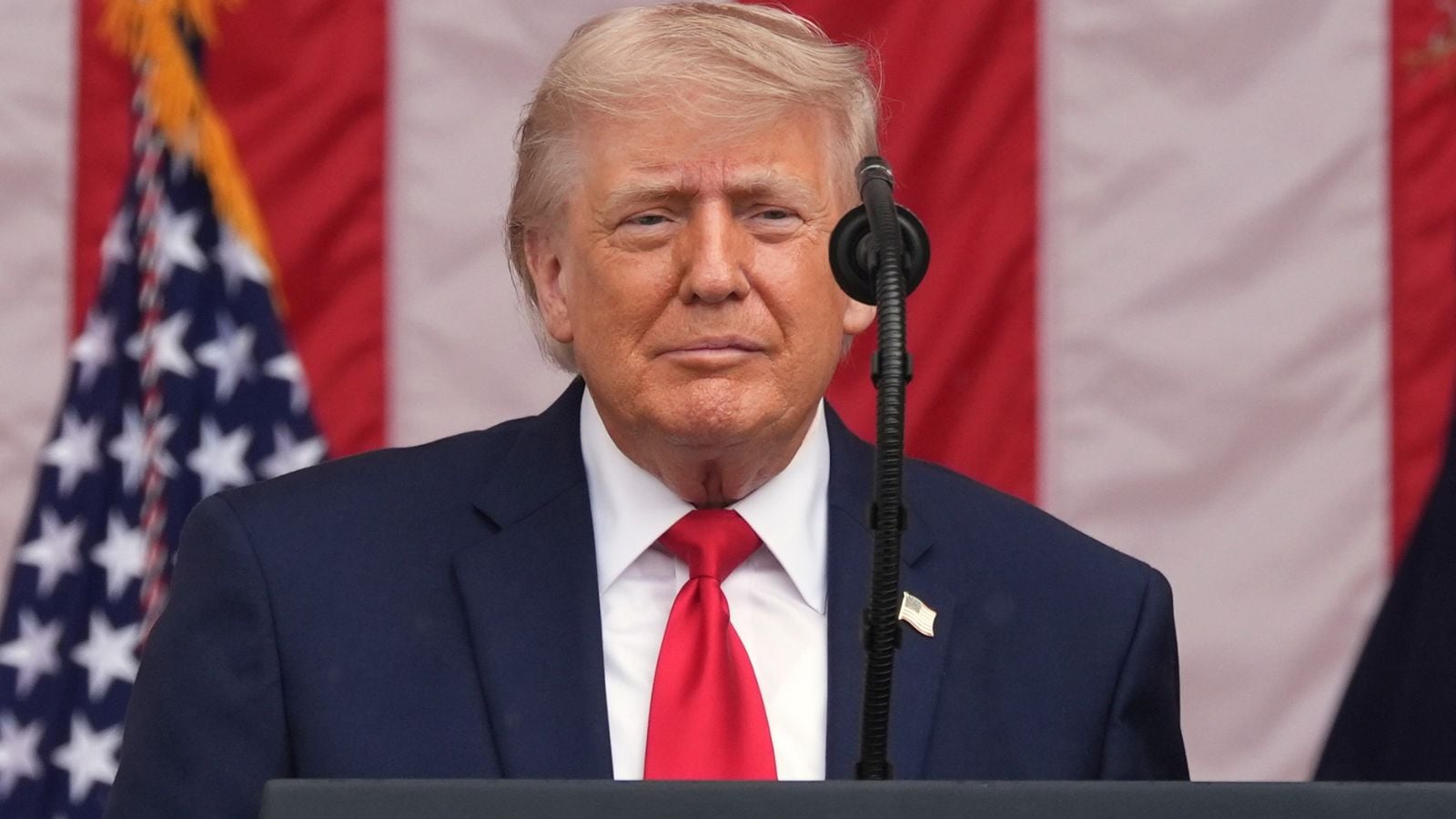
The foreign policy establishment is running its favorite play again. They are looking at the current friction in the Middle East, dusting off their legacy vocabulary, and declaring a "stalemate." They compare the current confrontation with Iran to Vietnam, talk about a "shattered international order," and lament that the United States is stuck in a costly headline rollercoaster that yields no decisive victory.
They are fundamentally misreading the board.
The legacy media and think-tank circuit suffer from a terminal misunderstanding of modern leverage. They believe the goal of an international intervention is a clean, signed treaty followed by a formal press conference. They think an open-ended conflict is a failure of strategy.
I have spent decades watching corporate boardrooms and geopolitical actors make the exact same analytical error: assuming your opponent is playing for a resolution when they are actually playing for volatility. Donald Trump is not stuck in a stalemate. He has engineered a state of perpetual, managed tension because friction—not peace—is the ultimate economic and political asset for a nationalist administration.
The Lazy Consensus of the "Stalemate"
The current mainstream narrative rests on a deeply flawed premise: that a prolonged conflict with no clear end date stings the White House. Critics point to the fluctuating ceasefire, the sudden exchanges of fire in the Strait of Hormuz, and the $50 billion price tag of the military footprint as definitive proof of an administration trapped by its own hubris. They quote legacy diplomats who claim the administration has "no grand strategy."
This is pure intellectual laziness.
A classic stalemate implies that both sides are burning resources to achieve an identical objective—total submission—and failing to get there. But the U.S. is not trying to occupy Tehran, nor is it trying to rebuild a regional security architecture. The administration is using targeted, erratic pressure to achieve three distinct, non-military objectives that a formal peace treaty would instantly destroy:
- Sustained Commodity Pricing: Keeping oil prices in a tight, profitable band ($95–$110 a barrel) that keeps domestic energy infrastructure highly profitable while starving adversaries who rely on predictable, high-volume shipping.
- The Global Risk Premium: Artificially inflating the value of the U.S. dollar through geopolitical anxiety, ensuring capital flees unstable European and Asian markets to find refuge in U.S. Treasuries.
- Complete Disruption of Multilateral Alliances: Forcing NATO allies and Gulf partners to navigate bilateral, transactional relationships with Washington rather than hiding behind collective defense agreements.
When you look at the mechanics of the intervention through this lens, the "excursion" isn't a failure. It is an optimized ecosystem of controlled instability.
The Volatility Premium: How Wall Street Understands What Diplomats Miss
Foreign policy elites view a fluctuating currency or a spiking Brent crude chart as a sign of chaos. A market realist views it as opportunity.
When the administration launches a localized strike or announces a sudden initiative like "Project Freedom" to guide ships through a contested waterway, the immediate reaction from the Council on Foreign Relations is panic. They argue that the U.S. is failing to project stable deterrence.
They miss the economic feedback loop. Every time a headline breaks about a breakdown in negotiations, the dollar enjoys stronger macroeconomic support. Hot inflation data and sticky interest rates are cushioned by a global flight to safety.
Imagine a scenario where the U.S. signs a comprehensive, multi-lateral peace deal tomorrow. The immediate result? A massive drop in the global risk premium. Oil drops to $65 a barrel, decimating domestic shale production. Capital flows out of the dollar and back into emerging markets. The institutional leverage vanished overnight.
The administration understands a fundamental truth of modern statecraft: peace is a deflationary event. For a government focused on domestic industrial revival and protecting a high-interest-rate environment, a clean diplomatic resolution is an economic liability.
Dismantling the "People Also Ask" Fictions
The public, fed a steady diet of establishment analysis, continuously asks the wrong questions about this intervention. Let us address them with brutal honesty.
Is Iran Trump’s Vietnam?
No. This comparison reveals a total ignorance of military logistics and political objectives. Vietnam was an asymmetric land war that required massive domestic conscription, resulted in tens of thousands of American casualties, and aimed to preserve a collapsing proxy state. The current intervention is an offshore, automated, naval and tech-centric blockade. The U.S. isn't losing divisions in the jungle; it is deploying a fraction of its naval capability to choke off specific trade nodes while the treasury department manages secondary sanctions. The risk to domestic political stability is near zero.
Why won't the President just sign the peace agreement?
Because the proposed peace agreements are a terrible trade. The establishment laments that a deal would "get us back to where we started." Exactly. Why spend months building massive economic leverage through a blockade just to return to a status quo that benefits globalist supply chains? Signing a standard diplomatic text means surrendering the tariff and sanction mechanisms that keep foreign competitors on their heels.
Has the U.S. lost its deterrence capability?
The traditional definition of deterrence—preventing an adversary from taking any action whatsoever—is dead. It has been replaced by operational containment. Iran can launch sporadic drone strikes or threaten local shipping, but they cannot break the financial chokehold. Their internal economy remains severed from the global banking system. True deterrence in 2026 isn't stopping an enemy from firing a missile; it is ensuring that when they do, their currency drops another 10% against the dollar.
The High Cost of the Contrarian Game
To be absolutely clear, this strategy is not without severe downsides. It is a high-wire act that requires flawless execution and a stomach for permanent risk.
By bypassing traditional interagency processes and ignoring the advice of career diplomats, the administration runs the very real risk of a catastrophic miscalculation. A single misdirected kinetic strike could trigger a wider regional conflagration that even an optimized volatility strategy cannot contain.
Furthermore, treating international relations as a series of short-term, transactional plays destroys long-term institutional trust. When you tell Gulf states or European allies that you "don't care" about their long-term security architecture unless they pay immediate dividends, they stop planning for a future aligned with American interests. They build alternative pipelines, construct non-dollar payment systems, and look for alternative guarantors.
This strategy trades thirty years of systemic dominance for ten years of intense, localized leverage. It is a conscious burning of diplomatic capital for immediate economic returns.
Stop Waiting for the Victory Lap
The establishment media will keep writing the same article every month. They will watch the headlines bounce, observe the temporary ceasefires, and declare that the administration is stuck in the mud. They are waiting for a definitive surrender or a historic treaty that is never going to come.
The intervention is the strategy. The tension is the objective. The friction is the point.
The moment you stop looking for a conventional victory is the moment you realize the current status quo isn't a stalemate at all—it is a business model designed to project power without ever having to pay for a peace treaty.
The provided video offers an alternative perspective on the internal dynamics driving these decisions, highlighting how the administration's primary focus frequently centers on domestic political optics and personal prestige rather than traditional diplomatic frameworks: The Truth Behind What Really Rules Trump's Foreign Policy | Aaron David Miller