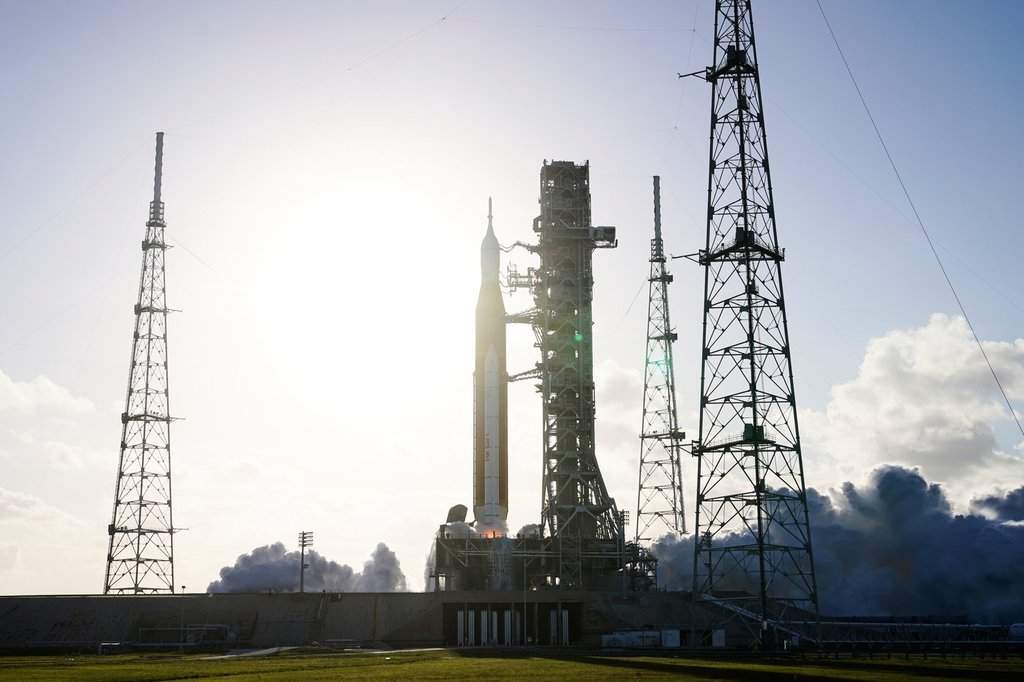
Another Canadian is heading to the International Space Station. Cue the flag-waving, the mandatory prime ministerial photo-ops, and the breathless media reports treating a routine ticket punch to low Earth orbit like we just discovered fire.
Let's get one thing straight right out of the gate. This isn't exploration. It's a high-altitude PR stunt masked as scientific progress.
Every time a Canadian astronaut straps into a Soyuz or a Crew Dragon, the public gets high on a collective rush of national pride. We act as though putting a body 400 kilometers above our heads translates to domestic innovation, economic dominance, or technological sovereignty. It doesn't. While we spend hundreds of millions of dollars buying seats and hardware packages from foreign launch providers, our domestic aerospace ecosystem is slowly starving under a mountain of bureaucratic red tape and a total lack of risk capital.
I have spent the better part of two decades watching aerospace startups in Montreal, Toronto, and Calgary burn through their cash runways waiting for a government procurement contract that moves slower than tectonic drift. I have seen brilliant engineering teams pack up their IP and move to Texas or California because the Canadian venture capital market treats hardware like a dirty word.
We love the halo effect of space flight. We refuse to fund the boring, messy work required to build an actual launch industry.
The Cult of the Flagpole
The lazy consensus in mainstream media coverage is simple: national representation in orbit equals a healthy space program. This is a comforting lie.
When Marc Garneau went up in 1984, it was a genuine milestone. It proved a Canadian could survive microgravity and operate a robotic arm. Fast forward four decades, and the narrative hasn't changed an inch. We are still measuring our technological maturity by the passport of the person floating inside the capsule rather than the origin of the rocket carrying them there.
Canada does not possess a sovereign orbital launch capability. Read that again. One of the largest landmasses on earth, a G7 nation with world-class engineering talent, relies entirely on American and Russian rockets to reach space. We are hitchhikers on someone else's highway, cheering from the back seat and occasionally paying for gas by building a mechanical arm.
The Canadarm is an engineering marvel. It is also a gilded crutch. It allowed us to carve out a niche as a specialized component vendor while completely abdicating the strategic imperative of sovereign launch infrastructure. Being the best handyman in the neighborhood does not mean you own the house.
What People Get Wrong About Orbital Economics
When critics ask why Canada doesn't build its own orbital rockets, the standard rebuttal from space agency bureaucrats is predictable: economies of scale. They will tell you it is cheaper to buy launches from SpaceX or Rocket Lab than to develop indigenous capability.
That argument is economically illiterate because it confuses cost with value.
Purchasing a flight slot is an operational expense that leaves zero residual domestic capability. It is cash flowing out of the country. Developing a domestic launch vehicle—even a small-sat launcher based in Nova Scotia or British Columbia—creates an entire supply chain of metallurgy, propulsion engineering, telemetry software, and hazardous material logistics.
Let us look at the numbers objectively.
The Canadian Space Agency operates on an annual budget that rounds to roughly four hundred million Canadian dollars. NASA's budget is over twenty-five billion US dollars. ESA sits around seven billion euros. We are playing in the major leagues with a minor league payroll, and instead of focusing those meager funds on high-leverage propulsion research or regulatory reform for private launch sites, we scatter our investments across fragmented academic grants and perpetual feasibility studies.
We are spreading peanut butter too thin on a stale slice of toast and calling it breakfast.
The Talent Drain Reality Check
You cannot talk about Canadian space ambitions without confronting the brutal truth about talent retention.
Our universities churn out world-class aerospace engineers, physicists, and software architects. Then graduation day arrives, and they look south. They look at companies like SpaceX, Blue Origin, Relativity Space, or a dozen venture-backed defense tech startups in the US that can write an offer letter with equity that actually means something.
In Canada, our aerospace sector is dominated by legacy defense contractors whose risk appetite matches that of a conservative credit union. They want ten years of experience for entry-level roles, offer glacial career progression, and operate under procurement cycles so bogged down by defense department oversight that innovation dies of old age before it ever hits a prototype bench.
Imagine a scenario where a twenty-four-year-old propulsion engineer in Waterloo designs a novel methalox engine cycle. In the United States, they can pitch an angel investor, secure a seed round, and rent a dilapidated warehouse in Hawthorne to start hot-firing within six months. In Canada, they spend six months filling out bureaucratic grant applications for the National Research Council, waiting for a committee of tenured academics to decide if their rocket engine is "environmentally sustainable" enough for a taxpayer subsidy.
We are suffocating brilliance with bureaucracy.
The Uncomfortable Trade-Offs of Contrarian Space Policy
Let me be entirely transparent about the downside of my position. Redirecting funds away from international station partnerships and human spaceflight quotas toward sovereign infrastructure sounds aggressive, and it is.
If Canada pulls back from its heavy financial commitments to crewed missions, we lose our seat at the table for international scientific collaborations. We lose the immediate PR victories that politicians use to justify science funding to taxpayers who don't know a thruster from a toaster.
I accept those losses. They are cheap prices to pay for reality.
Human spaceflight for a middle-power nation is a luxury good. It is the equivalent of buying a luxury sports car while your house's foundation is cracking. You can enjoy the drive on weekends, but eventually, the basement caves in.
We need to stop measuring our scientific prowess by how many Canadians have eaten freeze-dried ice cream in zero gravity.
The Real Work Begins Below the Karman Line
If we actually want to matter in the next century of aerospace, we need to execute a hard pivot.
First, modernize the regulatory framework for domestic launch sites. Companies like Maritime Launch Services have spent years wrestling with provincial and federal environmental assessments just to build a commercial pad in Canso. While regulatory rigor is necessary, weaponized bureaucracy designed to delay projects indefinitely is killing private enterprise.
Second, tie government space procurement strictly to domestic value creation. If tax dollars are funding satellite constellations or earth observation payloads, the primary manufacturing, integration, and testing must happen on Canadian soil, utilizing domestic supply chains. No more loophole-laden offshore outsourcing.
Third, embrace the unglamorous end of the sector. Stop chasing the glamour of astronauts. Focus intensely on suborbital sounding rockets, low-earth-orbit constellations, quantum encryption satellites, and advanced propulsion components. Build things the world cannot function without, rather than buying tickets for a ride we didn't engineer.
The next time an astronaut launches with a Canadian flag patch on their shoulder, don't cheer the flag. Ask who built the rocket, who paid for the seat, and what actual manufacturing capability stayed behind when they left the tarmac.
Until those answers change, we are just spectators in a game we used to know how to play.