The media is collectively losing its mind over a hypothetical scenario that was never going to happen, completely missing the multi-billion-dollar legal heist pulling off right in front of them.
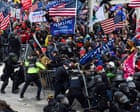
When President Trump refused to rule out using a proposed $1.776 billion "anti-weaponization" fund to compensate January 6 defendants who assaulted police, editorial boards and talking heads treated it as a terrifying glimpse into an authoritarian future. They parsed every single syllable of his "I wouldn't be inclined to say so, but I have to see it" non-answer to NBC News as if it were a binding policy directive.
It was brilliant theater. It was also an entirely irrelevant distraction.
While the public was busy screaming about "payout pots for punks," Acting Attorney General Todd Blanche walked into a House Appropriations Committee hearing and quietly declared that the Justice Department was abandoning plans to create the fund entirely. "We are not moving forward with the fund, period," Blanche testified. On Friday, DOJ lawyers filed formal submissions with US District Judge Leonie Brinkema arguing that the lawsuits against the fund are now completely moot because the account does not exist.
The corporate press treats this as a grand retreat—a victory for the rule of law and bipartisan outrage.
That narrative is laughably naive. The focus on the violent rioters was always a moral lightning rod designed to obscure the actual financial and legal machinery of the settlement. The real scandal isn't that a few hundred fringe actors might have processed administrative claims for damages against the government. The real scandal is the massive, unprecedented corporate and personal immunity package that remains completely intact, entirely untouched by the fund's public cancellation.
The Shell Game of Public Indignation
To understand how the public was misled, look at the anatomy of the lawsuit that birthed this entire controversy.
In January, Donald Trump, his sons, and the Trump Organization filed a $10 billion lawsuit against the Internal Revenue Service and the Treasury Department. The legal trigger was legitimate enough: a former IRS contractor, Charles Littlejohn, had illegally leaked Trump's tax returns.
Instead of litigating this case in open court, the administration settled with itself. The Department of Justice, led by Blanche—who happens to be Trump’s former personal criminal defense attorney—engineered a settlement. Out of that closed-door deal came the $1.776 billion "anti-weaponization" fund, ostensibly designed to compensate victims of politically motivated prosecutions.
The media took the bait instantly. They looked at the massive pot of unappropriated Treasury cash and started asking if it would go to high-profile political allies or January 6 defendants. Figures like former Proud Boys leader Enrique Tarrio openly bragged about applying. Bipartisan fury erupted, federal judges issued temporary injunctions, and the administration gracefully "backed down" by scrapping the fund.
It is a classic magician's force. While your attention was locked on the hand holding the $1.8 billion check for rioters, the other hand was signing away the federal government's right to ever audit the sitting president again.
What the Media Ignored in the IRS Deal
| Settlement Component | Public/Media Focus | Actual Legal Reality | Status After DOJ "Retreat" |
|---|---|---|---|
| The $1.776B Fund | Outrage over payouts to violent offenders and political cronies. | A loosely defined account drawn from the Treasury without congressional approval. | Scrapped. Declared defunct in court to render opposition lawsuits moot. |
| The Audit Ban | Mostly ignored or treated as a secondary administrative detail. | Permanent injunction prohibiting the IRS from auditing Trump, his family, or his business entities. | Active and Untouched. Blanche confirmed this provision remains fully operational. |
| The Blanket Liability Waiver | Entirely unmentioned in mainstream headlines. | Formal language that "releases, waives, acquits, and forever discharges" the entire Trump family from outstanding claims. | Active and Untouched. Reaches every Trump entity and trust globally. |
The Art of the Permanent Non Audit
When Todd Blanche confirmed to Representative Rosa DeLauro that the administration was killing the fund, he slipped in a massive caveat that went largely unreported. The Justice Department, Blanche noted, would continue granting complete immunity to Trump and his family members on outstanding tax matters.
"Nothing has changed with that," Blanche said.
Imagine a scenario where an ordinary corporate executive sues a regulatory agency over a data leak, and the settlement dictates that the executive, their children, their grandchildren, and every trust they own can never be audited again for the rest of their natural lives. It is entirely unprecedented in the history of American tax law. Former IRS officials have stated plainly that no similar agreement has ever been granted to a private citizen, let alone a sitting executive who oversees the very Treasury being constrained.
By focusing entirely on the moral outrage of January 6 payouts, critics allowed the administration to preserve the core financial objective of the lawsuit. The $1.776 billion fund was highly visible, highly volatile, and ultimately expendable. The permanent structural shield against the IRS is quiet, vastly more valuable to a global real estate empire, and perfectly preserved.
Furthermore, the legal language used in the May 18 settlement order does not just pause current investigations. According to legal analyses of the filing, the wording "releases, waives, acquits, and forever discharges" the plaintiffs from any claims that could have been asserted against them. This is not a standard legal settlement; it is a contractually codified, retroactive and prospective financial immunity blanket.
The Flawed Premise of the "Slush Fund" Debate
The public debate over this fund has been built on a completely broken premise. Commentators across the political spectrum have asked: How can the executive branch unilaterally distribute billions of dollars without an appropriation from Congress? They cite the Constitution’s Appropriations Clause and call the fund "outright theft."
This line of questioning treats the fund as an administrative policy innovation gone wrong. It wasn't. It was an aggressive use of the executive branch’s broad, historically unreviewable discretion to settle litigation.
The Justice Department has always possessed the authority to settle claims against the United States using the Judgment Fund—a permanent, indefinite appropriation passed by Congress to pay for judicial awards and settlements. When a federal agency gets sued and decides to settle, it doesn't need to ask Congress for permission to write the check.
The genius of the anti-weaponization strategy was framing a purely political asset-protection play as an exercise in standard tort settlement. By wrapping the creation of the fund inside the settlement of a high-dollar civil suit (the $10 billion IRS leak claim), the administration utilized an existing legal backdoor.
When critics screamed that this violated the separation of powers, they were playing right into the legal team's hands. The administration's response in court on Friday proved this explicitly: they argued that the entire dispute belongs to the "political process" and that courts have no business meddling in the "push-and-pull" of executive settlement decisions.
The fund was dropped not because the administration suddenly realized it was unconstitutional, but because it had already served its purpose as a shock absorber. It drew all the legal fire, took the injunctions, gave the administration a reason to declare the opposition's lawsuits moot, and left the tax immunity provisions completely insulated from judicial review.
The Unintended Consequence of Capitalizing on Outrage
There is a distinct downside to this style of hyper-focused adversarial journalism. By obsessing over the optics of Donald Trump's rhetorical games—like whether he would or wouldn't pay people who clashed with Capitol Police—the public misses the structural rewiring of the federal apparatus.
While the talking heads were celebrating the "death" of the fund on June 2, they missed the broader pattern of executive self-dealing occurring simultaneously. The Office of Government Ethics filings from the first quarter of this year alone show unprecedented financial maneuvers. We are seeing direct White House interventions preceding hundreds of millions of dollars in Pentagon loans to startups tied to family members, and thousands of personal stock trades executed right before major policy shifts.
The anti-weaponization fund was a masterclass in political misdirection. It created a loud, radioactive controversy that could be easily surrendered to protect a quiet, extraordinarily lucrative structural advantage. The fund is dead, but the victory belongs entirely to the people who designed it. They traded a controversial pile of cash they didn't need for a permanent exemption from the tax man that they absolutely did.