Everyone is mourning the stalled war crimes court in Liberia. They are wrong to mourn the court. They are asking the wrong question entirely.
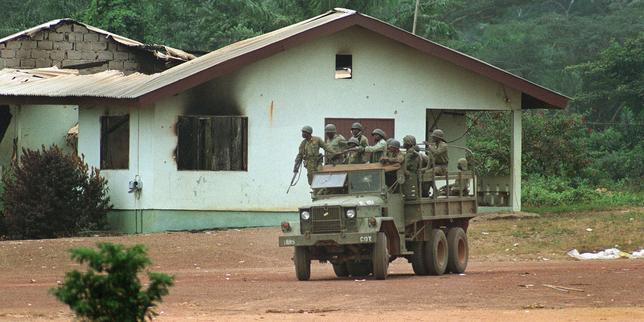
The lazy consensus goes like this. Liberia endured two brutal civil wars between 1989 and 2003. Roughly 250,000 people died. Child soldiers fought with rifles taller than their chests. Mass graves were dug across Monrovia and Nimba County. More than two decades later, the promise of a specialized war crimes tribunal—or a broader accountability mechanism—keeps hitting bureaucratic walls, political foot-dragging, and funding uncertainties. Observers read that stagnation and see moral failure. They see impunity winning. They see justice dying on the vine. Building on this topic, you can also read: Inside the Papal Cancer Diagnosis Crisis Nobody Is Talking About.
That reading is lazy. It confuses courtroom theater with political reality.
A specialized court is a gavel. A gavel has zero power if the people holding it are terrified of the men sitting in the dock, or if the real power brokers aren't even standing there. Obsessing over whether a war crimes tribunal in Liberia gets created on schedule misses the deeper structural rot: accountability mechanisms in post-conflict states do not fail because lawyers lack indictments. They fail when political incentives reward silence, when wartime networks rebrand as peacetime patrons, and when international backers treat a court building as a substitute for institutional spine. Experts at TIME have also weighed in on this matter.
I have spent years watching post-conflict justice projects burn through donor millions while the underlying power architecture stays untouched. I have seen foreign legal advisors fly into capital cities with glossy blueprints, host three-day workshops in air-conditioned hotels, draft statutes worthy of a law review, and leave behind a paper tiger. A tribunal is not a magic wand. Without domestic political leverage, witness protection that actually protects witnesses, and a judiciary that isn't for sale on a Tuesday afternoon, a court can easily become a political weapon or a very expensive monument to good intentions.
The Premise You Are Accepting Is Already Broken
When people search for updates on war crimes accountability in Liberia, their instincts are predictable. They ask if justice will ever come for the victims. They ask why politicians keep delaying the court. They ask whether international pressure can force Monrovia's hand.
Every one of those questions accepts a flawed premise: that a dedicated war crimes court is the primary—or even the most effective—engine of accountability right now.
Let's be precise about terms first. A war crimes court—whether a standalone hybrid chamber, a specialized domestic court, or a tribunal backed by international judges and prosecutors—is designed to adjudicate grave violations of international humanitarian law and gross human rights abuses committed during armed conflict. That includes war crimes, crimes against humanity, and related atrocity offenses. By contrast, broader transitional justice includes truth-seeking, reparations, institutional vetting, and ordinary or specialized criminal prosecution. People lump them together in casual conversation, then act shocked when legal mechanics collide with raw survival politics.
In a country where former faction leaders, commanders, and their political allies have spent years embedded in patronage networks, a court is not an abstract legal forum. It is an existential threat to people who control votes, streets, ministries, and loyalty. Politicians delay tribunals not necessarily because they hate law school, but because prosecuting wartime figures rearranges current political coalitions. Saying "they just lack political will" is a cop-out. They have plenty of will. Their will is pointed toward staying in power without triggering a backlash they cannot survive.
Consider a thought experiment. Imagine a scenario where an international donor deposits $80 million tomorrow into an escrow account to launch a special war crimes court in Monrovia next month, complete with foreign judges, bulletproof glass, and a shiny press room. On paper, the bottleneck is gone. In reality, what happens next? Witnesses who live three blocks away from former commanders receive late-night phone calls. Defense lawyers challenge jurisdiction for eighteen months. Local prosecutors face career ruin or physical danger. Meanwhile, the everyday courts handling land disputes, theft, and corruption remain under-resourced and clogged. You get high-stakes legal drama at the top and hollow institutions everywhere else.
Why "More Pressure" Usually Backfires
The standard prescription from outside commentators is always the same: turn up the heat. Threaten visa bans. Condition aid. Scold leaders in diplomatic communiques.
Sometimes external pressure helps. Often, it hands local actors a gift.
When foreign capitals demand a war crimes court in sharp, public terms, domestic opponents of prosecution can frame the entire project as foreign interference—neocolonial meddling dressed up in human rights language. That framing works. Even citizens who despise wartime atrocities can resent being lectured from abroad while dealing with potholes, hospital shortages, and youth unemployment. A court that looks like an externally imposed project starts with a legitimacy deficit before a single witness takes the stand.
There is also the sequencing trap. Legal scholars and transitional justice practitioners—people who have spent decades studying post-conflict transitions from Sierra Leone and Cambodia to the Balkans and Latin America—have long warned against treating prosecutions as a standalone fix disconnected from broader reform. When criminal accountability runs ahead of institutional capacity, or gets stuck in perpetual stalemate, public cynicism deepens. People stop believing in the law altogether. Not because justice is impossible, but because endless promises without delivery teach citizens that the state is all talk.
Even the "certainty vs. uncertainty" framing trips people up. In politics, nothing is permanently settled until it is executed and surviving. A stalled court in Liberia isn't necessarily dead forever; political windows open and close unexpectedly when alliances fracture or new leadership tests old boundaries. Treating today's uncertainty as permanent doom is just as sloppy as treating every diplomatic statement as a breakthrough.
What Happens If We Stop Pretending a Gavel Fixes Everything
Let's be honest about the downside of my own argument. If you tell people to stop treating a war crimes court as the center of gravity, some bad actors will cheer. Perpetrators love it when the public loses focus on atrocities. Impunity thrives on fatigue. If you lower expectations around formal trials too far, you risk signaling that mass violence comes with an expiration date.
That is a real danger. I am not arguing for amnesia. Forgetfulness is an insult to the dead and a danger to the living.
I am arguing for clear-eyed prioritization. If you care about real accountability and durable peace in Liberia, stop measuring progress solely by court filings and tribunal timetables. Measure it by what actually shifts power and protects people.
Here is what unconventional, grounded action looks like instead:
- Follow the money and patronage, not just the headlines. Wartime power rarely vanishes; it mutates into land grabs, resource concessions, state contracts, and political protection rackets. Tracking who holds leverage today reveals why certain prosecutions stall—and where real vulnerability exists.
- Protect witnesses and archives before chasing verdicts. Evidence degrades. Memories fade. Witnesses die or get intimidated. Building rock-solid investigative files, preserving archives, and establishing credible protection mechanisms creates leverage that outlasts any single election cycle or political deal.
- Fix the plumbing of everyday justice. A citizen who cannot get a fair hearing in a local magistrate court has little reason to trust a grand war crimes chamber. Strengthening basic legal aid, judicial independence, and anti-corruption enforcement builds the soil a specialized court needs to survive.
- Stop confusing diplomatic noise with domestic muscle. Press releases don't arrest anyone. Real change happens when domestic civil society, victims' groups, legal professionals, and political factions inside the country shift the cost of blocking accountability.
The Real Test Isn't the Courtroom
Courts are backward-looking institutions trying to settle accounts from the past using rules written for calmer times. They are essential tools when used well. They are terrible substitutes for structural reform.
Whether a war crimes court in Liberia moves forward or stalls again is a symptom, not the disease. The disease is a political order where violence and impunity still carry too little cost and too much reward. Fix the incentives around power, protect the truth while it can still be proven, and stop mistaking a courtroom for a conscience.