Every time a rusty hull takes shrapnel off the coast of Oman, the mainstream media dusts off the exact same worn-out panic script. Headlines scream about surging risks, shipping lines tremble, and analysts who have never smelled bunker fuel rush to declare that the chokepoints of global energy are about to seal shut.
It is lazy, terrified theater. You might also find this related story interesting: Why Blaming Houthi Airstrikes Misses the Real War.
The lazy consensus says that every isolated projectile near the Strait of Hormuz or the Gulf of Oman is a prelude to Armageddon, a structural break in maritime commerce that warrants hoarding barrels and hyperventilating over futures contracts. I have traded through enough geopolitical smoke bombs to know better. I have watched desk jockeys blow millions hedging against phantom blockades while the actual operators—the charterers, the insurers, and the naval attachés—shrug and adjust their risk premiums by a few cents.
The reality is far more clinical, and far less catastrophic, than the television pundits want you to believe. As extensively documented in recent reports by Associated Press, the results are worth noting.
The Geography of Noise Versus the Economics of Flow
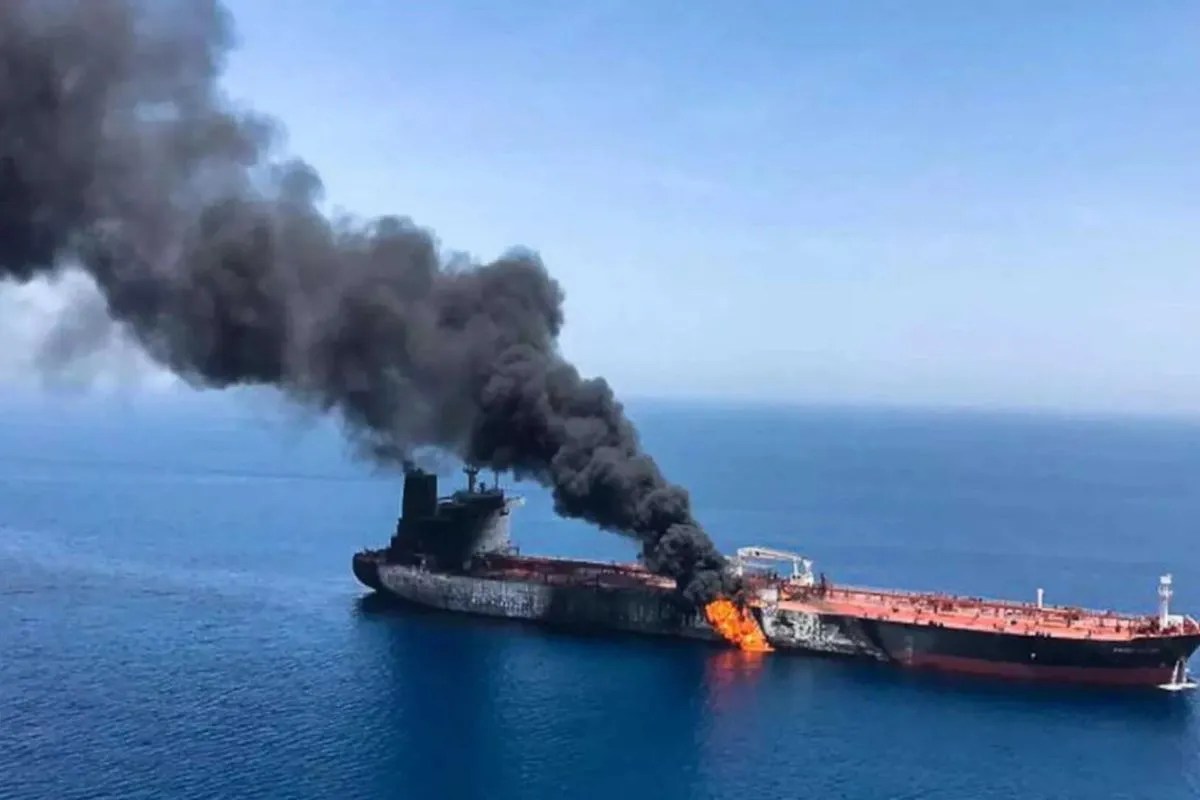
Let us look at the mechanics. The incident off Oman—where a tanker took a kinetic hit—was treated by the press as a systemic threat to global supply chains. That is a fundamental misread of how modern maritime logistics actually absorb shock.
A oil tanker is not a fragile vase. It is a massive, double-hulled fortress of steel designed to take structural damage and keep moving. When a minor strike occurs, the immediate reaction is panic, but the secondary reaction is calculation. Insurers adjust war-risk premiums. Charterers recalculate freight rates. The voyage continues.
Why? Because nobody in their right mind—not state actors, not regional proxies, not rogue factions—wants to actually shut down the Gulf.
The lazy narrative assumes that escalation is a slippery slope leading directly to a total embargo. It ignores the cold, hard calculus of economic self-preservation. The nations surrounding these waters export crude to survive. If the Strait of Hormuz closes, their fiscal lifelines are severed overnight. Every missile lobbed near an Omani port is calibrated theater, a political message sent at the absolute margin of risk, carefully engineered to stay well below the threshold of total war. It is high-stakes posturing, not a strategic choke.
When analysts hyperventilate about "growing threats," they are confusing tactical noise with strategic reality. The physical volume of crude moving out of the region has consistently shrugged off these headline-grabbing incidents.
The Insurance Illusion and the Cost of Bleeding
Let us talk about the real mechanism of control: marine insurance.
When a missile hits a vessel, the market does not collapse; it prices. Lloyd's of London and international underwriting syndicates do not panic. They run the numbers. They look at historical probabilities, hull values, and cargo loss ratios, and they adjust the war-risk surcharge.
During previous flare-ups in the region, war-risk premiums spiked from a fraction of a percent of a vessel's value to a few percentage points. For a multi-million-dollar cargo, that sounds like a fortune. In the grand scheme of a global energy market moving tens of millions of barrels a day, it is a rounding error. It is a toll booth, not a brick wall.
Shippers do not stop sailing because a drone or a missile rattles a bulkhead. They pass the cost down the line. Refiners absorb the pennies-per-barrel increase, gasoline prices at the pump twitch for a week on speculative momentum, and then the market normalizes because the oil keeps pumping.
If you are treating these strikes as structural breaks in the energy architecture, you are trading on emotion instead of math. I have seen junior analysts panic-buy futures contracts based on breaking news alerts, only to watch the market erase the entire risk premium within forty-eight hours once the physical liftings cleared customs without interruption.
Dismantling the Chokepoint Fallacy
People love to talk about chokepoints like the Strait of Hormuz or the Bab el-Mandeb as fragile glass necks waiting to be snapped. This is pure armchair geography.
Imagine a scenario where a total, sustained blockade actually occurs. What happens next? The narrative assumes global paralysis. The actual mechanics tell a different story. Floating storage fills up temporarily, alternative pipelines like the East-West pipeline in Saudi Arabia get maxed out, and global trade routes dynamically reroute. It is inefficient, yes. It costs more, absolutely. But it does not break the system.
More importantly, the actors capable of causing systemic damage are precisely the ones with the most to lose from an empty ledger. Energy exporters need revenue to fund state budgets, pay public sectors, and maintain internal stability. Cutting off your own revenue stream to make a tactical point is economic suicide. That is why every escalation is bounded. It is a controlled burn, designed to rattle nerves without burning down the house.
The media wants you to believe that we are perpetually one missile away from a 1970s-style oil shock. That ignores fifty years of supply chain hardening, strategic petroleum reserves, and the relentless evolution of risk management.
Stop Trading the Headline
If you are restructuring your portfolio, hoarding fuel, or panicking over every maritime security alert in the Gulf, you are playing a game you do not understand against players who are merely bluffing.
The threat in the Gulf is not growing because the physics of war have changed; it is growing because the volume of sensationalist reporting has scaled to feed an algorithm-driven panic economy. Every time a tanker gets grazed and everyone loses their minds, look past the flashing red banners on your screen. Look at the AIS trackers on the water. Look at the liftings out of Ras Tanura and Mina al-Fahal.
The ships are still moving. The crude is still flowing. The math still works.
Stop reacting to the noise.