Every pundit in Brussels is currently hyperventilating over Washington's latest rhetoric. The lazy consensus in financial circles dictates that Europe must tremble every time an American administration threatens to throttle diesel exports to tame domestic pump prices. Financial columnists breathlessly warn that reliance on transatlantic barrels leaves the continent exposed to the whims of the White House.
They have it entirely backwards.
The real threat is not that Washington will cut off the fuel supply. The real threat is that European leaders are using American bluster as a convenient smoke screen to hide their own structural incompetence. When politicians point a trembling finger across the Atlantic, they are hoping you will not look at the regulatory wreckage they engineered right here at home.
I have watched energy traders panic over headlines for over a decade. Every time a politician claims an external shock is forcing fuel prices to astronomical highs, a domestic policy failure is usually being covered up. Let us dismantle the myth of American diesel dominance and look at the brutal mechanical reality of the European energy market.
The Arithmetic Of Dependency Is A Choice
Europe does not import American diesel because it has no other option. It imports American diesel because European policymakers spent the last fifteen years systematically legislating their own refining capacity out of existence.
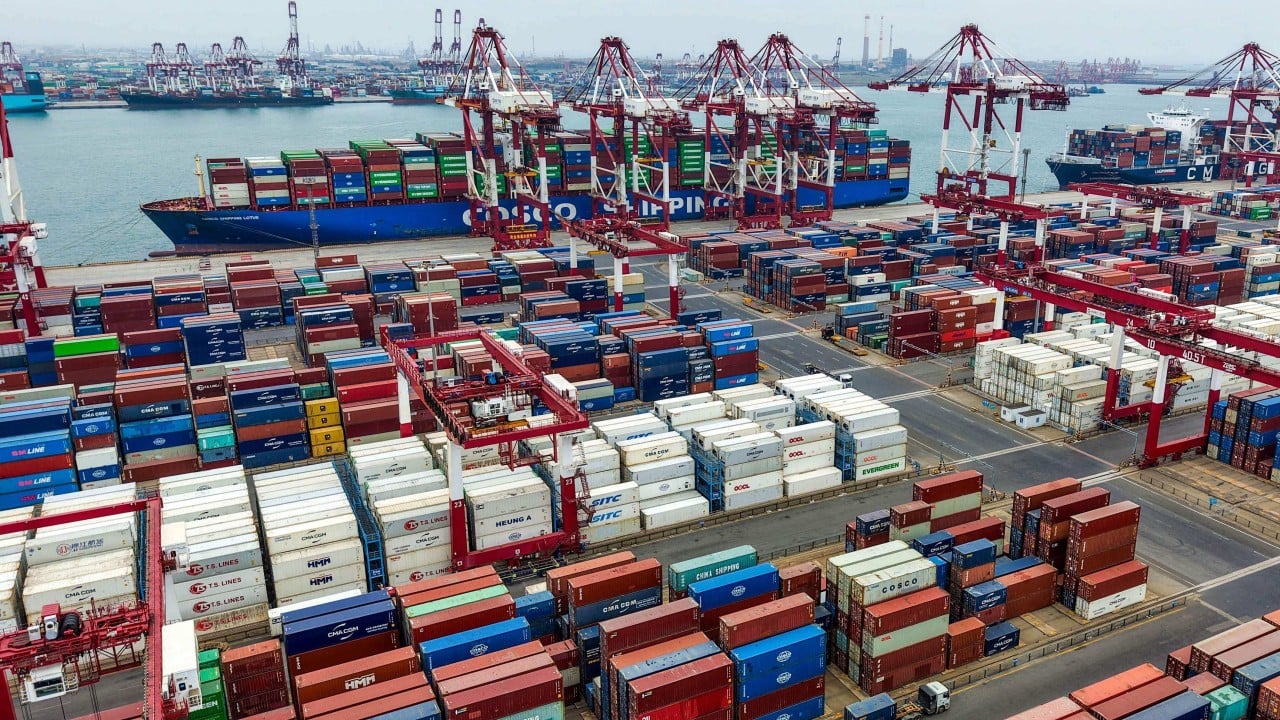
Consider the baseline data. Europe produces roughly seventy percent of the diesel it consumes domestically. That is not a fragile cardhouse; that is a functional baseline. The remaining deficit—hovering around thirty percent of its total needs—is heavily supplied by foreign refiners, with the United States acting as a major exporter.
When Washington floats a ninety-day restriction to appease domestic voters ahead of midterm elections, the knee-jerk reaction in European capitals is panic. Officials immediately scramble to tap emergency strategic reserves, as France and other International Energy Agency members recently proposed. They treat the symptom while ignoring the poison.
Why is Europe so vulnerable to a temporary American export squeeze in the first place? Because closures of major domestic refineries—such as Grangemouth and Lindsey in the UK, alongside continuous regulatory strangulation across continental processing plants—have hollowed out the midstream sector. Environmental mandates, carbon pricing mechanisms, and chronic underinvestment have turned European refining into a hostile business environment.
When you tax and regulate domestic refiners until they shut down, you do not eliminate the demand for diesel. You simply outsource your energy security to foreign ports. Complaining that an American president might restrict those exports is like cutting off your own feet and then suing the wheelchair manufacturer for charging high rates.
The Geopolitical Blame Game
The narrative that Europe is a helpless victim of American energy nationalism falls apart the moment you examine how these markets actually clear. Refiners do not ship fuel across the Atlantic out of charity; they do it because the margin makes economic sense.
Imagine a scenario where the White House actually clamps down on outbound fuel shipments. Global freight rates and regional arbitrage would shift overnight. Cargoes would reroute from the Middle East, India, and Asia. Prices would spike temporarily, yes, but the global market is a liquid pool, not a stagnant pond. To suggest that a sovereign continent of four hundred and fifty million people would simply run out of fuel because one supplier blusters is economic illiterate nonsense.
Yet, Brussels loves the drama. It gives European Commission officials a villain to point at. It justifies tapping emergency stockpiles that were meant for genuine physical supply disruptions, not for smoothing out a temporary price wobble caused by political posturing.
Italian Prime Minister Giorgi Meloni recently wrote to the Commission warning that current fiscal rules and inflation spikes are crushing national budgets under the weight of these energy costs. She is right about the pain, but wrong about the cure. Asking for more room under debt ceilings to subsidize high fuel prices is a structural doom loop. It props up fossil fuel consumption with debt while doing nothing to fix the underlying supply bottleneck.
What Real Energy Independence Looks Like
If Europe wants to stop dancing to Washington's tune, it has to stop waiting for Washington to behave predictably. That requires facing three hard truths that career bureaucrats refuse to utter in public.
First, stop treating domestic refining as a sunset industry. You cannot transition an entire economy away from hydrocarbons by aggressively choking off the infrastructure that refines the transitional fuels you still desperately need. Every time a domestic refinery closes, a piece of economic sovereignty dies with it.
Second, re-evaluate strategic reserves. Tapping emergency stockpiles every time a foreign leader tweets about export limits turns a tactical cushion into a consumable band-aid. Reserves are for war and physical blockades, not for shielding consumers from the natural consequences of chronic underinvestment.
Third, embrace the messy reality of global commodity flows. Protectionism breeds fragility. By attempting to insulate domestic markets through heavy-handed market interventions, European regulators create the very supply crunches they claim to prevent.
The next time you read a frantic report about American diesel bans threatening European transport, look past the geopolitical theater. The problem is not that Washington is turning off the tap. The problem is that Europe forgot how to build its own plumbing.
Stop taking the threats literally, and start holding your own policymakers accountable for the infrastructure they destroyed.