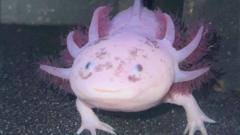
The internet has turned the axolotl into a victim of its own aesthetic. Between the viral TikTok clips and the pastel-colored infographics, a myth has emerged: that Ambystoma mexicanum is a delicate, high-maintenance diva that requires the logistical oversight of a nuclear power plant.
Owning twenty axolotls doesn’t make you an expert; it makes you a hoarder of anecdotes. Most "expert" guides are cluttered with neurotic over-parenting that actually stresses the animal more than it helps. If you are struggling to keep these creatures alive, you aren't failing because they are "tricky." You are failing because you are suffocating them with unnecessary interventions.
The Nitrogen Cycle is Not a Suggestion
The loudest voices in the hobby love to talk about "fridge therapy" and tea baths, yet they can't explain the basic chemistry of a biofilter. They treat symptoms instead of systems.
Most keepers obsess over water temperature while ignoring the fact that their tank isn't actually cycled. An axolotl is essentially a giant kidney with legs. It produces a massive amount of waste. If your ammonia levels aren't at zero, you don't have a "tricky pet"; you have a toxic environment.
Stop checking the pH every twelve hours. Stability matters more than "perfect" numbers. If your tap water is a consistent 7.4, leave it alone. Chasing a specific decimal point by dumping chemicals into the water creates a chemical seesaw that kills. The "lazy consensus" says you need a chemistry degree. The truth is you just need a massive sponge filter and the patience to let the bacteria do their job for six weeks before you buy the animal.
The Bare Bottom Tank Fallacy
The "bare bottom" tank trend is the ultimate example of over-correction. Every influencer screams about "impaction"—the idea that an axolotl will swallow gravel and die. While gravel is indeed a death sentence, the pivot to bare glass is a mistake.
Axolotls have no grip on glass. Imagine spending your entire life trying to walk on an ice rink. This constant slipping causes muscle fatigue and chronic stress.
- The Nuance: Use very fine, high-quality sand.
- The Logic: If the grain is small enough to pass through the digestive tract, it is safe.
- The Benefit: Sand provides grip, enrichment, and a massive surface area for beneficial bacteria.
Stop depriving your pet of traction because you’re afraid of a hypothetical grain of sand. If your husbandry is solid, their digestive system can handle a stray particle of silica.
Stop Fridging Your Pet
There is a bizarre subculture of keepers who put their axolotls in the refrigerator at the first sign of a fungus spot. This is the equivalent of putting a human in a walk-in freezer because they have a cold.
Fridging is a medical emergency procedure. It slows the metabolism to a crawl to buy time during a life-threatening infection. It is not a "reset button" for bad water quality. Every time you move an axolotl from a 18°C tank to a 5°C fridge, you are putting their immune system through a meat grinder.
The obsession with "treatment" is a distraction from the reality that 90% of axolotl illnesses are caused by heat stress or dirty water. If you keep the water under 20°C and the nitrates under 20 ppm, you will never need a fridge. If you can’t manage that, no amount of Tupperware in the crisper drawer is going to save you.
The Chiller Hoax
You’ll hear that you must spend $500 on a refrigerated chiller. This is a barrier to entry created by people who enjoy the elitism of expensive hobbies.
Unless you live in a literal desert with no air conditioning, you can cool a tank with basic physics. A $20 clip-on fan directed at the water surface facilitates evaporative cooling. In a standard room, this can drop the temperature by 3–4 degrees.
The industry wants you to believe that precision to the tenth of a degree is mandatory. It isn’t. In the wild, Xochimilco is not a climate-controlled laboratory. It has fluctuations. As long as you avoid the "death zone" above 22°C, the animal will thrive. Stop buying gear you don't need to solve problems that don't exist.
High Tech is High Risk
The modern axolotl tank is often over-engineered. High-flow canister filters are great for clear water, but they create a "washing machine effect." Axolotls hate high flow. Their gills are like sails; if they are constantly being blown around, the animal will stop eating and its immune system will collapse.
I have seen people spend thousands on high-output LED lighting and CO2 systems for "aesthetic" planted tanks. Axolotls have no eyelids. They hate your $300 light bar. They want darkness, some PVC pipes to hide in, and a low-flow sponge filter that looks ugly but works perfectly.
The Overfeeding Epidemic
We are breeding a generation of obese axolotls. The "cute" round shape you see on Instagram is often a sign of hepatic lipidosis—fatty liver disease.
Adult axolotls do not need to eat every day. Their metabolism is slow. Feeding them high-protein pellets or bloodworms daily is a fast track to a short lifespan. Once they reach maturity, two or three solid meals of nightcrawlers a week is more than enough.
Bloodworms are the "junk food" of the aquatic world. They are mostly water and chitin. If that’s the staple of your pet's diet, you are raising a malnourished animal that looks full but lacks the nutrients for long-term health.
The Truth About Breeding
"I have 20 axolotls" usually means "I didn't separate my males and females and now I'm overwhelmed."
The hobby is currently flooded with poor genetics because every amateur with a 40-gallon tank thinks they should raise a clutch of eggs. Axolotls are prone to severe inbreeding. If you don't know the lineage of your pair back four generations, you are contributing to a genetic bottleneck that produces animals with weak immune systems and shortened lives.
Stop encouraging "accidental" clutches. It isn't cute; it’s irresponsible husbandry that devalues the species.
The Bare Minimum is More Than Enough
The secret to a healthy axolotl isn't a complex array of additives or expensive equipment. It is the discipline to do less.
- Water Changes: 20% every week. No excuses.
- Temperature: Keep it steady, not necessarily freezing.
- Diet: Earthworms. Period.
- Observation: If the gills are forward and the tail is curled, check your ammonia, not your fridge.
Stop trying to "hack" their biology. These animals have survived for millions of years in a very specific, very simple niche. They don't need your minerals, your salt "tonics," or your designer lighting. They need clean water and to be left alone.
The complexity is a lie sold to you by people who prefer buying gadgets to understanding biology.