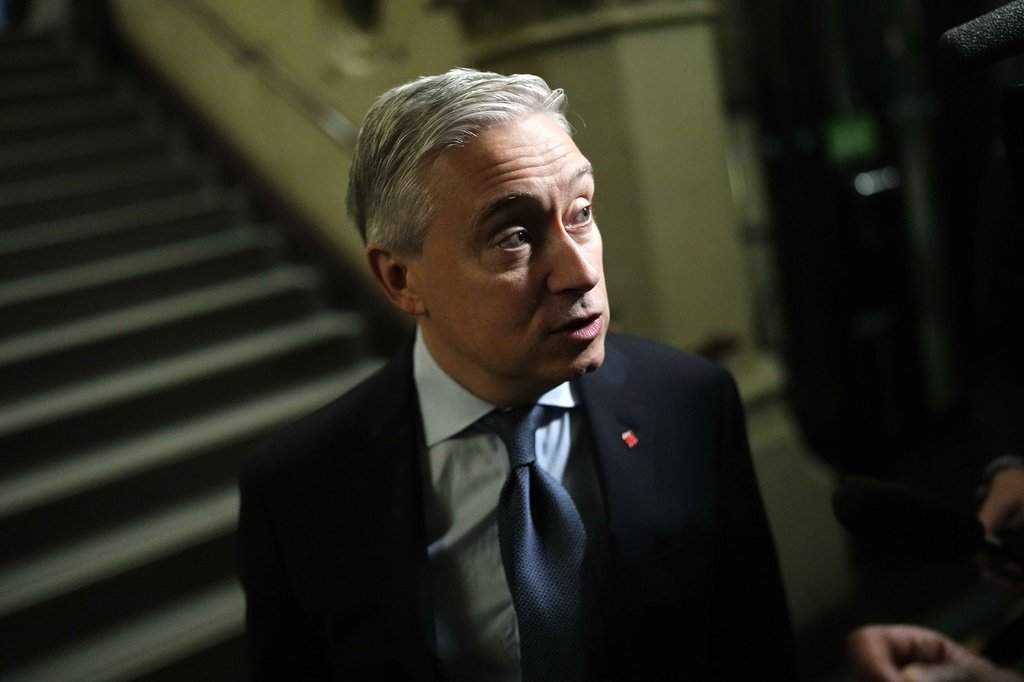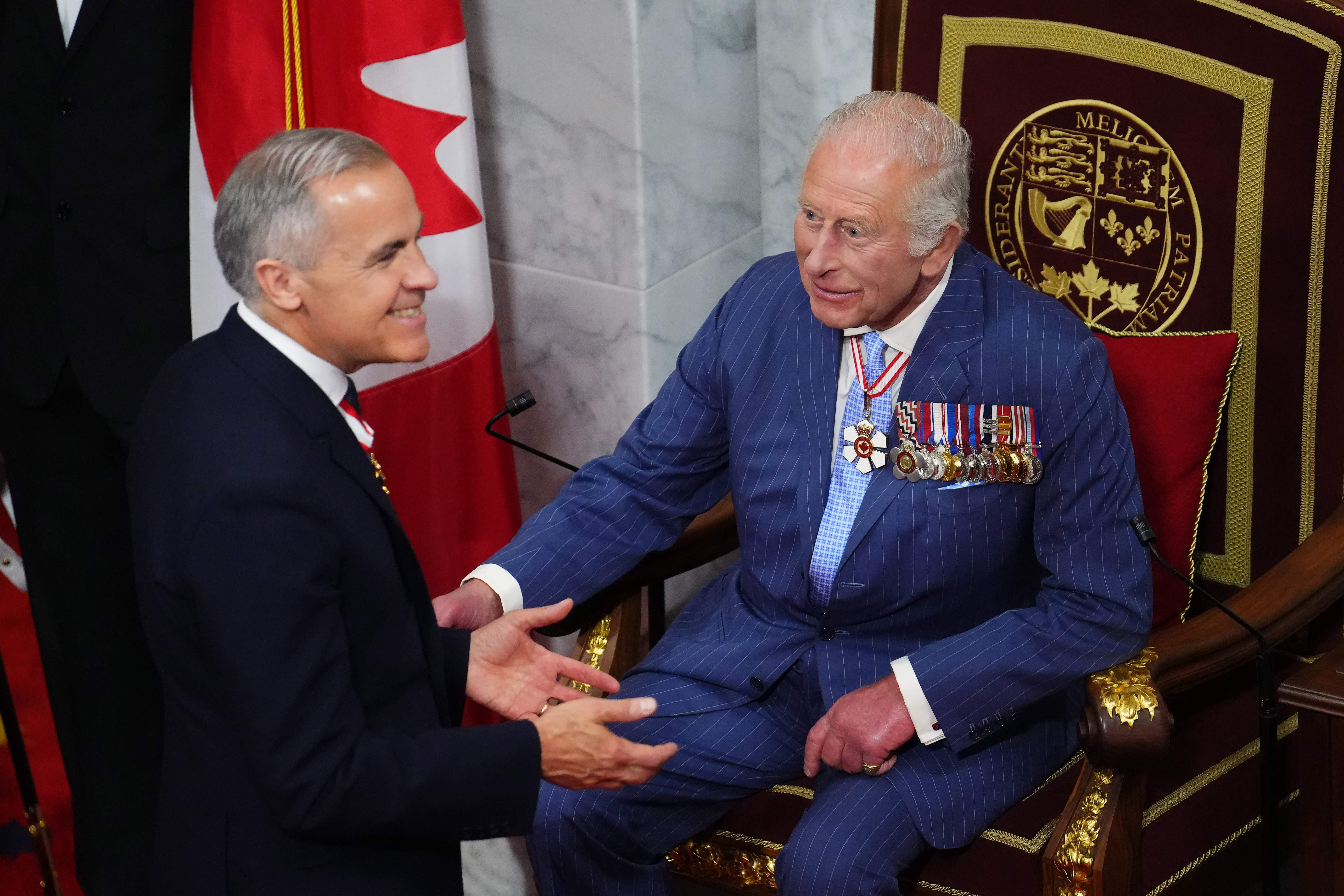
Mainstream political coverage of Mark Carney meeting with King Charles III and Commonwealth heads of government reads like a press release from 1953. Journalists love the pageantry. They frame these summits as ceremonial photo opportunities, polite diplomatic tea parties, and symbolic nods to a fading colonial past.
That consensus is dangerously naive. If you found value in this post, you should read: this related article.
If you look at a former Governor of both the Bank of Canada and the Bank of England sitting down with the British monarch and the leaders of 56 nations and only see royal protocol, you are missing the most aggressive geopolitical capital reallocation strategy of the decade. This is not about nostalgia. It is about survival in a fracturing global economy.
The Lazy Consensus Around Commonwealth Diplomacy
Every time a high-profile Canadian or British financial architect steps into Buckingham Palace or a Commonwealth Heads of Government Meeting (CHOGM), the commentary follows a predictable script. Critics call the Commonwealth an anachronism—a toothless club held together by shared cricket rules and a monarch on bank notes. Supporters defend it with vague platitudes about "shared democratic values" and "historical ties." For another look on this story, check out the latest update from The Guardian.
Both sides are looking at the wrong scoreboard.
I have spent twenty years watching sovereign wealth funds, central bankers, and trade ministers operate behind closed doors. Publicly, they talk about heritage and friendship. Privately, they talk about supply chain chokepoints, sovereign debt restructuring, and regulatory arbitrage. When Mark Carney enters a room with King Charles and Commonwealth leaders, the conversation is not about the Crown. It is about building an alternative economic bloc that bypasses Washington's protectionism and Beijing's debt traps.
Why the "Ceremonial" Label is a Smokescreen
Let us define what the Commonwealth actually represents on a balance sheet. Forget the flags and the anthems. Look at the hard numbers:
- Population: 2.7 billion people, roughly a third of the human race, with a median age significantly younger than the G7 average.
- Resources: Massive reserves of critical minerals—lithium, cobalt, uranium, potash, and rare earths—concentrated across Canada, Australia, and Southern Africa.
- Financial Infrastructure: Two of the world's premier capital markets hubs (London and Toronto) paired with high-growth emerging markets like India, Nigeria, and Malaysia.
Calling a coalition with those assets "ceremonial" is like calling a central bank clearinghouse a post office. The royal branding is useful precisely because it lowers the geopolitical temperature. A formal trade alliance between Canada, the UK, India, and African resource states would trigger immediate retaliatory tariffs from the United States and aggressive economic pushback from China. Under the banner of the Commonwealth, that exact same coordination happens in plain sight without triggering a trade war.
What Carney and King Charles Are Actually Building
To understand why Mark Carney is the linchpin in this room, you have to strip away his political ambitions and look at his specific technical skillset. Carney does not do small talk. His entire career has been spent wiring global financial plumbing—first at Goldman Sachs, then steering Canada through the 2008 crash, then managing Brexit fallout at the Bank of England, and later leading the Glasgow Financial Alliance for Net Zero (GFANZ).
King Charles, meanwhile, has spent five decades building a parallel diplomatic network focused on sustainable markets, biodiversity, and transition finance. Long before ESG became a corporate buzzword—and long after Wall Street began abandoning it—Charles was convening CEOs and heads of state through initiatives like the Sustainable Markets Initiative.
Put those two men in a room with Commonwealth leaders, and a very specific thesis emerges.
The "Commonwealth Advantage" is Regulatory Arbitrage
Economists who study intra-Commonwealth trade point to a measurable phenomenon known as the Commonwealth Advantage. Empirical research consistently shows that bilateral trade costs between Commonwealth countries are roughly 19% to 21% lower than between non-member states, even without a formal free trade agreement.
Why? Because they share common law legal systems, English as a working language of commerce, and compatible accounting and governance standards.
When a Canadian mining firm or a London-based infrastructure fund deploys capital in Kenya, Singapore, or Guyana, they do not have to rebuild their legal frameworks from scratch. The contract law is familiar. The corporate governance is legible.
Carney’s presence signals an effort to weaponize that legal compatibility for massive capital deployment. Emerging Commonwealth nations are sitting on trillions of dollars in infrastructure and energy transition needs, yet they face punitive borrowing costs on international bond markets. Western institutional investors, meanwhile, are desperate for yield and critical mineral supply chains outside Chinese control, but they are terrified of political and currency risk in developing markets.
The solution being hammered out in these meetings is blended finance—using sovereign guarantees, multilateral development banks, and royal-backed diplomatic cover to de-risk private institutional capital flowing from London and Toronto into the Global South.
Dismantling the Common Misconceptions
Whenever news breaks of high-level Commonwealth summits, the same flawed questions dominate public debate. Let us tear them down one by one.
"Isn't the Commonwealth dying as countries become republics?"
This question confuses the British monarchy with the Commonwealth of Nations. They are not the same thing. Barbados became a republic in 2021. Jamaica and others have signaled plans to follow. Yet not a single one of those nations left the Commonwealth.
In fact, countries with zero historical ties to the British Empire—Mozambique, Rwanda, Gabon, and Togo—have actively applied and joined the organization in recent decades. Why would Francophone and Lusophone African nations lobby to join a supposedly "dying colonial relic"? Because membership buys them a seat at a table with G7 economies, access to preferential trade networks, and diplomatic insulation against larger regional bullies. Removing King Charles as head of state in Kingston or Bridgetown does nothing to weaken the economic club; it actually removes the last political stigma keeping certain nations from integrating deeper into it.
"Can a loose network really compete with the US or China?"
It does not need to replace Washington or Beijing. It only needs to provide leverage.
Middle powers like Canada, the UK, and Australia are currently caught in a brutal vise. The United States has embraced aggressive industrial policy and tariff threats regardless of who occupies the White House. China dominates global mineral refining and clean-tech manufacturing. If Canada negotiates alone with Washington or Beijing, it gets crushed. If the UK negotiates alone, it gets marginalized.
By operating as a coordinated Commonwealth bloc, middle powers gain collective bargaining weight. Imagine a scenario where Canadian uranium and potash, Australian lithium, British financial clearing, and Indian manufacturing scale are aligned under shared regulatory standards. Suddenly, Washington has to offer better trade terms to keep those resources in the Western orbit, and Beijing loses its monopoly pricing power over raw materials.
"Is this just another climate virtue-signaling exercise?"
If you think this is about saving polar bears, you are not paying attention to energy security.
For developing Commonwealth nations in the Caribbean, the Pacific, and sub-Saharan Africa, climate volatility is an immediate fiscal crisis—hurricanes and droughts wipe out double-digit percentages of GDP overnight, triggering sovereign defaults. For developed members like Canada and the UK, energy transition is an industrial survival race. Carney and King Charles use the language of sustainability because it unlocks trillions in mandated pension and sovereign wealth capital. Underneath the green rhetoric is cold, hard industrial policy: securing grids, locking down critical mineral supply chains, and keeping capital flowing through London and Toronto rather than Shanghai or Dubai.
The Brutal Truth Nobody Admits About This Strategy
As compelling as this geopolitical play is, pretending it has no fatal flaws would be dishonest. I have watched enough grand multilateral frameworks collapse under their own weight to know where the fracture lines sit.
First, India is the elephant in the room. India accounts for more than half of the Commonwealth’s total population and is its fastest-growing major economy. Yet New Delhi views the Commonwealth strictly transactionally. India buys discounted Russian oil, maintains border tensions with China, clashes diplomatically with Canada over domestic political issues, and refuses to be lectured by London on governance or emissions targets. Without India’s active buy-in, any Commonwealth economic strategy hits a hard ceiling.
Second, domestic politics in Western capitals are hostile to foreign capital deployment. Try explaining to a struggling voter in Ontario or the Midlands why their pension fund or taxpayer-backed development bank is underwriting grid infrastructure in West Africa while domestic housing and healthcare are in crisis. Populist movements across Canada and the UK thrive on attacking "globalist elites" who spend more time at international summits than in their own constituencies. Carney carries that exact political vulnerability every time he steps off a plane in London.
Third, the Commonwealth Secretariat is chronically underfunded. Its annual budget is smaller than that of a mid-sized municipal school board. Expecting a tiny bureaucracy in Marlborough House to coordinate trade policy across 56 vastly different economies—from micro-states like Nauru to G7 powers—is a fantasy unless major member states put real treasury muscle behind it.
How Smart Operators Should Read These Meetings
Stop reading the headlines about royal protocol, seating charts, and diplomatic handshakes. When you watch Carney, King Charles, and Commonwealth leaders convene, track the second-order signals instead:
- Watch the central bank and sovereign wealth attendees, not the prime ministers. Heads of government give speeches for the cameras. Governors of central banks, heads of export credit agencies, and pension fund CEOs cut the actual deals in the side rooms.
- Track cross-border regulatory harmonization. Look for quiet announcements around mutual recognition of professional credentials, digital trade standards, and carbon credit verification. Those boring technical agreements are the real plumbing of trade diversion.
- Follow the mineral offtake agreements. Whenever a summit coincides with bilateral deals between Canadian or Australian miners and British or Asian refiners, you are watching the real agenda unfold.
The pundits writing obituaries for the Commonwealth are fighting the last war. They are obsessed with symbols while the architects in the room are quietly redrawing the map of global capital flows. Ignore the crown on the letterhead and watch where the money moves.