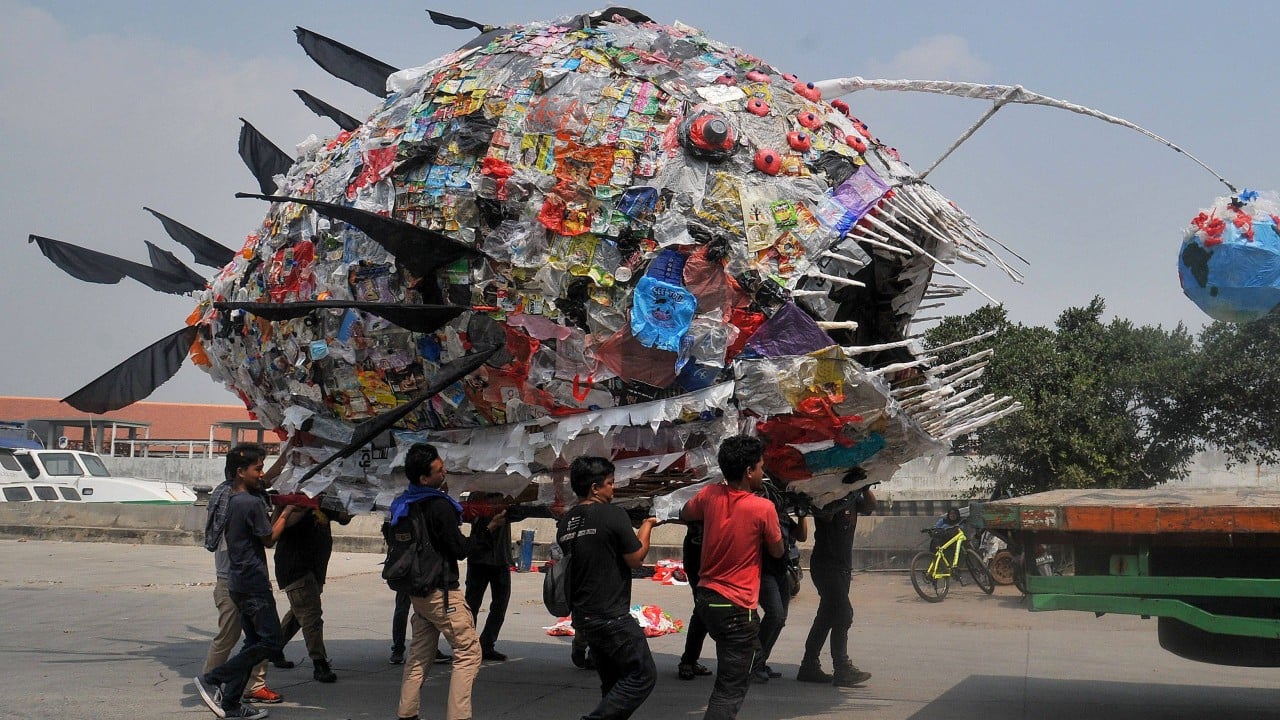
The global environmental establishment has a script for Indonesia’s plastic crisis, and it reads like a predictable tragedy. The narrative goes like this: poor enforcement, lax policies, and rogue fishing fleets leave ghost nets to choke pristine marine habitats while local governments stand by helplessly. It is a comforting story for Western donors because it suggests the solution is simply more regulation, better enforcement, and more international oversight.
It is also completely wrong. For a different view, see: this related article.
The assumption that top-down policy failure is the root cause of marine plastic pollution ignores basic economic reality. I have spent years analyzing supply chains and waste management logistics in developing economies. I have watched well-meaning NGOs dump millions of dollars into high-tech tracking systems and legislative advocacy, only to see the plastic pile up exactly as before.
The crisis in the Indonesian archipelago is not a failure of law enforcement. It is a failure of economics. Until we stop treating plastic pollution as a moral failing and start treating it as a mispriced commodity, every policy enacted will slip straight through the cracks. Related insight on this matter has been shared by Associated Press.
The Myth of the Regulatory Fix
Mainstream commentary loves to point fingers at legislative loopholes. They argue that if Indonesia just tightened its maritime policing and strictly penalized abandoned, lost, or otherwise discarded fishing gear (ALDFG), the oceans would heal.
This view completely misunderstands the operational reality of small-scale and industrial fishing in Southeast Asia.
Imagine a scenario where a mid-sized fishing vessel catches its net on a jagged coral reef in the Banda Sea. The net is snagged tight. The crew can either spend twelve hours risking their lives trying to untangle a ruined asset while burning expensive fuel, or they can cut the line, replace the net for a fraction of the cost, and keep fishing.
If you pass a law criminalizing that cut line, you do not stop the captain from cutting it. You just ensure he never reports it. You turn an environmental issue into an underground economy.
Why Enforcement Scale is an Illusion
Indonesia is an archipelago of over 17,000 islands spanning more than 5,000 kilometers from east to west. To put that in perspective, that is wider than the continental United States.
- The Math of Maritime Patrols: To effectively police every vessel across three million square kilometers of marine zone, you would need a naval budget that exceeds the country’s entire GDP.
- The Bureaucratic Bottleneck: Local maritime agencies are underfunded, understaffed, and task-saturated with combating illegal geopolitical incursions and piracy. Chasing down a discarded nylon net is, rationally, their lowest priority.
Relying on state enforcement to stop ghost nets is like trying to police every dropped cigarette butt in a megalopolis with a squad of three officers. It cannot work, it will not work, and continuing to fund it is a waste of capital.
The Real Culprit: The Zero-Value Loop
The real reason plastic, including fishing gear and consumer packaging, blankets Indonesian coastlines is simple: it is worth more to throw away than to keep.
Nylon and high-density polyethylene (HDPE) are highly recyclable materials. Yet, the current maritime waste ecosystem offers zero incentive for a fisherman to bring a damaged net back to shore. Port infrastructure in remote regions like Sulawesi or Maluku rarely includes dedicated plastic processing facilities. If a captain brings tons of damaged netting back to a small island port, he is often charged a disposal fee.
Let that sink in. The current system actively penalizes fishers for doing the right thing.
[Damaged Net on Vessel]
       │
       ├──► Cut Line & Abandon ──► Cost: $0 (Immediate return to fishing)
       │
       └──► Bring to Port ───────► Cost: Lost Fuel + Port Disposal Fees
We do not have a policy problem; we have a backward incentive structure. The "lazy consensus" demands that we punish the fisherman. The rational alternative demands that we buy the net.
Dismantling the "People Also Ask" Delusions
When people search for solutions to ocean plastic, the questions they ask reveal how deeply they have bought into flawed premises. Let us dismantle the most common ones.
Can ocean cleanup technology save Indonesian reefs?
No. High-profile ocean cleanup initiatives focus on the open ocean or major river mouths using massive, capital-intensive barriers and automated vessels. While visually impressive for marketing campaigns, these technologies are wildly inefficient when applied to an archipelagic environment.
A localized coral reef ecosystem damaged by ghost nets cannot be reached by a massive cleanup ship. It requires manual, labor-intensive removal. Relying on tech-bro engineering solutions to scoop up plastic from the surface ignores the fact that the most destructive gear sinks, breaks up, and embeds itself into the marine topography long before a cleanup drone can find it.
Why don't local communities just recycle more?
Because recycling is a manufacturing business, not a civic virtue. For recycling to exist, you need cheap electricity, reliable transport infrastructure, and proximity to end-buyers who want recycled flake.
When a remote island community lacks dependable 24-hour electricity and relies on expensive inter-island shipping vessels to move goods, exporting low-value plastic waste to a processing plant in Java is financially impossible. The shipping costs alone dwarf the market value of the plastic. Expecting impoverished coastal communities to subsidize the recycling desires of Western brands is peak economic blindness.
The Hard Truth About Biodegradable Alternatives
The latest trend among international donors is funding research into biodegradable fishing nets and packaging. It sounds brilliant on paper: if a net gets lost, it simply dissolves.
In practice, it is a disaster.
First, the tensile strength required for commercial fishing means these "biodegradable" polymers must be incredibly resilient. They do not dissolve in cold, deep water over weeks; they take years. During those years, they ghost fish just as effectively as traditional nylon.
Second, introducing bio-plastics into an already fragile recycling stream completely ruins the batch. If a batch of high-quality nylon or PET is contaminated with even a small percentage of bio-plastic, the entire load becomes structurally useless for industrial re-manufacturing. By introducing these materials, well-meaning innovators are actively destroying the economic viability of the actual recycling markets we desperately need to build.
Turn Waste Into a Currency
If you want to clear plastic from Indonesian waters, you must stop trying to regulate behavior and start funding the trash itself. We need to establish an undeniable, immediate floor price for recovered marine plastic at the point of origin.
Instead of funding another round of policy workshops in Jakarta hotels, international capital should be deployed to establish decentralized, solar-powered processing hubs at secondary and tertiary ports.
The Reverse Tariff Infrastructure
Every port should operate a guaranteed buy-back program for marine plastic, no questions asked.
- Volume Pricing: Pay fishers by the kilogram for recovered nets and ocean-bound plastic at a rate that exceeds the opportunity cost of their time and fuel.
- On-Site Processing: Use basic, low-tech machinery—shredders and balers—to reduce the volume of the plastic immediately on-site, cutting down shipping costs by up to 80%.
- Direct Supply Integration: Tie these hubs directly to domestic industrial sectors, such as Indonesia's massive textile and automotive manufacturing industries, which can consume recycled nylon pellets at scale.
When a ghost net becomes a valuable commodity, fishermen will not leave them on the reefs. They will actively hunt for them. Local coastal residents will become the most efficient cleanup crew on earth because doing so directly feeds their families.
The downside to this approach is obvious: it requires immense upfront capital, and it forces Western organizations to give up the illusion of easy, stroke-of-a-pen regulatory victories. It requires getting mud on your boots and dealing with the brutal realities of archipelagic logistics. It means accepting that cash, not conscience, moves the needle in developing supply chains.
Stop waiting for the Indonesian government to enforce unenforceable laws across three million square kilometers of ocean. Stop printing policy briefs that nobody reads. Put a price tag on the plastic, pay the people who are already on the water, and let greed clean up the ocean.