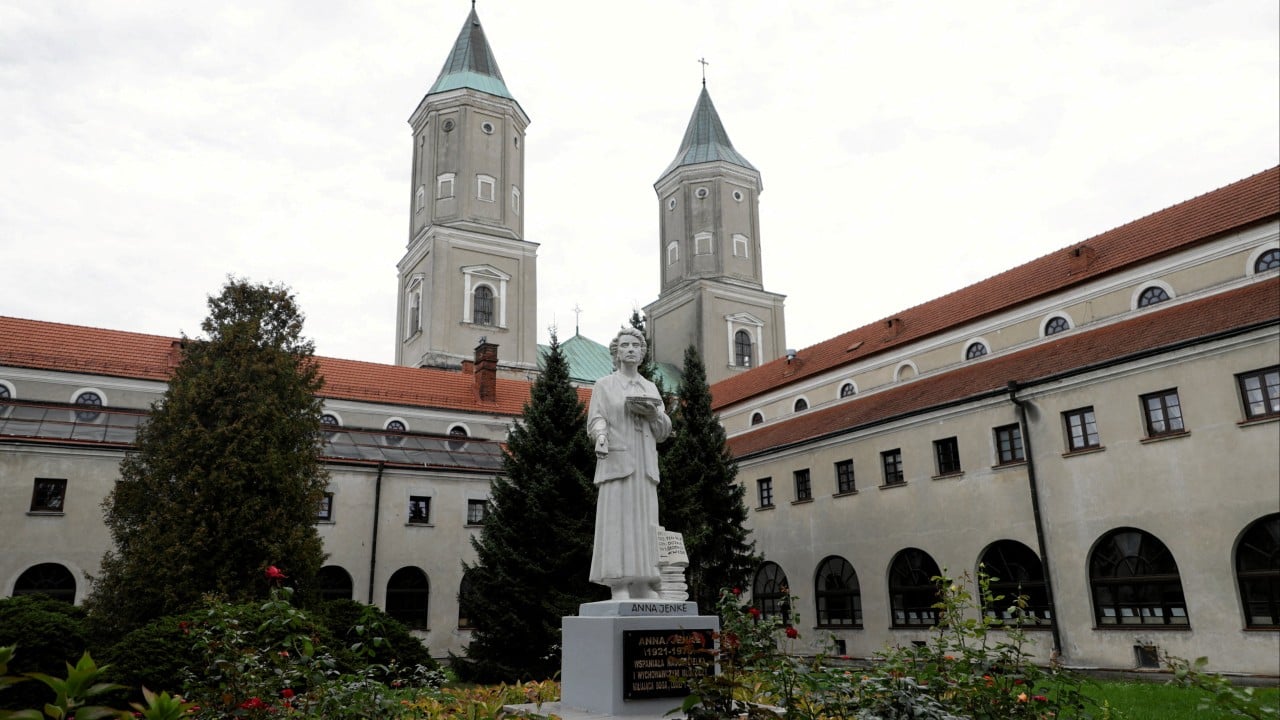
Another headline breaks. Another ancient European abbey becomes a crime scene. A knifeman walks through doors meant for contemplation, takes a priest's life, injures four others, and leaves a nation staring at its shoes in stunned silence. Within minutes, the machinery of modern commentary kicks into gear. The pundits arrive with their pre-packaged scripts. One side demands immediate metal detectors, armed guards, and iron gates around every monastery from Krakow to Lisbon. The other side blames institutional failure, societal decay, or whatever political scapegoat happens to poll well this week.
Both reactions are intellectually bankrupt. Both miss the core reality of why these tragedies happen and what they actually reveal about the modern relationship with sacred space.
For decades, I have watched security analysts, institutional administrators, and cultural commentators misdiagnose violence. They treat every shocking breach as a logistical failure rather than a symptom of a deeper, rotting cultural disconnect. When an attack happens in a Polish abbey, the knee-jerk public reflex is to choose between two equally lazy extremes: retreat into a paranoid fortress mentality or engage in hollow, performative hand-wringing about tolerance and peace.
Neither approach saves lives. Both ensure the rot continues.
The Dangerous Myth of Inviolable Ground
The first and most pervasive misconception is that ancient institutions possess some inherent metaphysical shield against secular violence. People look at centuries-old stone walls, stained glass windows, and quiet cloisters, and they mistake architecture for armor. They assume that because a place has stood for five hundred years offering sanctuary, it operates outside the brutal physics of the modern world.
This is a dangerous delusion. History is littered with the blood of the pious. Monasteries were never utopian zones immune to human malice; medieval and early modern history saw countless sacks, raids, and internal violence within holy orders. Yet, modern society developed a collective amnesia. We convinced ourselves that Western civilization had evolved past the point where a knife-wielding assailant would target men of cloth in a house of prayer.
When reality shatters that illusion, the shockwaves are disproportionately violent because our baseline expectations are wildly naive. We treat these attacks as black-swan anomalies when they are actually the predictable byproduct of an increasingly fractured, isolated populace where desperate, unhinged individuals look for maximum symbolic impact.
If you design an institution based on the assumption that everyone entering its doors shares its moral code, you have built a greenhouse, not a sanctuary. But if you respond by turning every house of worship into a TSA checkpoint, you destroy the very spiritual utility that makes the space worth protecting in the first place.
The Security Theater Fallacy
Let us talk about the logistical panic that follows every one of these incidents. Local administrators start calling security firms. Politicians suggest grants for CCTV cameras, panic buttons, and reinforced iron doors.
Let me be brutally direct about this. If you turn a medieval abbey into a heavily guarded compound, you have already lost.
Security theater does not stop determined violence; it merely provides psychological comfort to people who cannot bear the weight of uncertainty. A man bent on murder or chaotic destruction does not care about perimeter alarms or security badges. Monasteries and abbeys are, by their very theological and cultural definition, porous. They welcome strangers, pilgrims, seekers, and the broken-hearted. The moment you lock the doors, install metal detectors, and demand government ID to enter a church, you have transformed a sanctuary into an administrative waiting room.
Furthermore, the economics of church security are a cruel joke. Most religious communities operate on razor-thin margins, sustained by volunteer labor, donations, and modest endowments. Telling a rural abbot in Poland or anywhere else that he needs to hire private security contractors and install biometric access controls is economically illiterate. It forces small, community-level institutions to choose between financial ruin and structural vulnerability.
The answer to a knife attack in a holy place is not more hardware. It is radical honesty about who walks through those doors and how society handles individuals who slip through the cracks of every institutional safety net.
The Media Autopsy and the Narrative Parasites
Look at how the digital news cycle digests a tragedy like this. Within an hour of the first police bulletin, digital columnists and cable anchors strip away the human tragedy to construct their preferred narrative.
For the nationalist fringe, the attack is immediately weaponized as proof of an impending civilizational collapse, turning the victims and survivors into props for an ongoing political war. For the progressive establishment, the incident is quickly downplayed or reframed through an abstract lens of systemic failure, avoiding any uncomfortable conversations about individual moral agency, religious targeting, or local policing blind spots.
Both sides are parasitic. They feed on the blood of the victims to nourish their existing ideological biases.
I have spoken with local law enforcement officials after major public disruptions. Do you know what they tell you off the record? They tell you that the vast majority of these high-profile knife attacks are driven by acute mental deterioration, personal grievances, social isolation, and copycat contagion amplified by 24-hour algorithmic feeds. They are not sophisticated tactical operations directed by shadow syndicates. They are acts of broken individuals acting out personal nihilism on a public stage.
When the media treats every unhinged assailant as a geopolitical combatant or a cultural symbol, they grant the attacker the exact posthumous notoriety they craved. They turn a localized tragedy into a recruiting poster for the next unstable mind sitting in a dark room scrolling through outrage forums.
The Real Systemic Failure
If we want to stop asking the wrong questions, we have to look at what actually fails before a blade is drawn in a holy place.
The breakdown does not happen at the abbey door. It happens years, months, and weeks prior in the community infrastructure designed to catch people before they hit rock bottom. Across Europe and the broader Western world, community mental health systems are stretched to the breaking point. Local parishes used to function as informal safety nets where troubled individuals were known, checked on, and integrated. Today, those informal networks have withered away, replaced by hyper-individualism and state-run bureaucratic health agencies that only intervene when someone becomes an acute, violent danger.
When a solitary man reaches the point where he decides to slaughter a priest and stab random worshippers, he has usually pinged multiple public systems—social services, local clinics, family networks—and been dropped by all of them.
Blaming the abbey for lacking armed guards is like blaming a tree for breaking when lightning strikes it. The failure lies in an atmosphere that produces so many lightning storms and leaves public spaces entirely undefended by social fabric.
Imagining a Different Kind of Resilience
Imagine a scenario where religious institutions stop pretending they are invulnerable and stop rushing to buy high-tech security cameras that only catch crimes after they happen. What does actual resilience look like?
It looks like radical situational awareness combined with deep community integration. It means monks, priests, and lay leaders discarding the naive notion that evil won't cross their threshold, while simultaneously refusing to surrender their hospitality to paranoia.
Training clergy and staff in basic threat recognition, de-escalation tactics, and physical situational awareness is not antithetical to a life of faith. Monasteries throughout history maintained defensive capabilities not because they loved violence, but because they understood human nature. The modern aversion to practical self-preservation among religious institutions is a luxury born of relative historical peace—a luxury that is rapidly expiring.
At the same time, religious communities must re-establish their connection to local security authorities and mental health networks, creating channels where erratic behavior can be flagged long before it turns lethal. This is not about turning priests into informants. It is about recognizing that pastoral care without practical discernment is negligence.
The Uncomfortable Truth About Open Doors
There is a heavy cost to keeping doors open to the public. Every church, abbey, and cathedral that refuses to lock its doors and bar its windows accepts a calculated risk. They invite the public in, knowing full well that humanity in all its brokenness will walk down the aisle.
That openness is either a profound act of courage or a reckless invitation to disaster.
The recent attack in Poland is a brutal reminder of that cost. But the response should not be to seal the doors and retreat behind concrete blast walls. Doing so means the attacker wins without firing another blow. They succeed in making us fear our neighbors, lock up our traditions, and turn our sacred spaces into cold, sterile fortresses.
We must accept the vulnerability of open doors without accepting the fatalism of unpreparedness. Stop demanding metal detectors. Stop weaponizing grief for political point-scoring. Stop pretending that ancient stone can protect you from modern despair.
Face the reality of the world as it is, keep the doors open for those who seek peace, and be prepared to meet those who bring violence with cold, clear-eyed resolve.