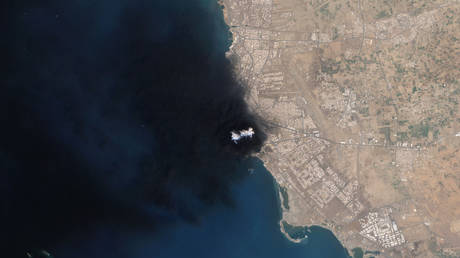
Every commodity desk in London and New York lost their minds when headlines flashed across terminal screens about Saudi Arabia halting crude shipments to Europe following a pipeline strike. Analysts rushed to dust off their 1970s playbook, screaming about supply shocks, panic buying, and impending energy rationing across the continent.
They are entirely wrong. Meanwhile, you can find other stories here: The Grocery List Lie That Protects Shoplifters.
Panic sells clicks, but it completely misses the quiet, calculating mechanics of modern petro-state strategy. Riyadh did not pull the plug on Europe out of sudden panic or logistical vulnerability. They did it because the old European market is a dying asset, and treating a localized pipeline disruption as a global emergency is the exact kind of lazy linear thinking that keeps investors poor. I have spent two decades watching Western institutions misread Middle Eastern energy policy because they refuse to look past short-term inventory draws.
Let us dismantle the hysteria. To explore the complete picture, check out the detailed analysis by CNBC.
The European Energy Trap Nobody Wants to Talk About
Look at the structural reality of European energy demand. Brussels has spent years legislating a rapid phase-out of fossil fuels, piling on regulatory penalties, and betting its industrial future on intermittent renewables and expensive American liquefied natural gas. From a producer's perspective, supplying Europe is increasingly becoming a low-margin, high-headroom headache filled with ideological compliance targets and slow-paying state utilities.
When a pipeline incident occurs, the consensus reaction is to lament the lost barrel volume. That assumes every barrel of crude holds equal economic value. It does not.
Saudi Arabia operates under a national transformation blueprint that requires maximizing revenue per barrel, not simply chasing volume. Pumping oil westward into a structurally shrinking, over-regulated market while Asian demand surges at exponential rates is terrible capital allocation. If a temporary pipeline disruption gives state planners an excuse to redirect flows, throttle legacy commitments, and optimize export routes toward higher-margin refining hubs in East Asia, that is not a crisis. That is an aggressive, opportunistic pivot disguised as a geopolitical accident.
Reframing the Supply Shock Myth
The conventional narrative insists that oil markets are fragile systems teetering on the edge of chaos. The reality is that global supply chains are far more elastic than scaremongers admit. Strategic petroleum reserves sit waiting for precisely these moments, and floating storage provides an immediate buffer.
Yet, the market obsessively focuses on the immediate supply loss while ignoring the structural gain. When European refiners are forced to scramble for replacement grades, Brent differentials widen, and marginal producers step in to fill the gap. Meanwhile, Saudi Aramco quietly secures long-term market share where it actually matters for the next thirty years: expanding Asian petrochemical complexes that turn crude into plastics and high-value materials rather than burning it in diesel engines.
If you are trading crude based on European pipeline headlines, you are fighting the last war.
The Downside Nobody Mentions
Of course, this aggressive realignment is not without risk. Playing hardball with legacy clients erodes political capital and accelerates regulatory hostility from Western governments already looking for excuses to slap carbon border adjustments on foreign goods. By starving Europe of reliable baseline volumes, Riyadh risks cementing its reputation as an unreliable supplier in capitals that still hold immense regulatory and financial leverage.
Furthermore, freight costs spike when tankers have to reroute on short notice, squeezing short-term margins. But energy conglomerates play multi-decade games, not quarterly spreadsheets. The short-term friction is the price of admission for long-term independence.
How to Trade the Noise
Stop listening to the pundits who think a pipeline incident dictates the future of global energy flows. The real story is the silent decoupling of Middle Eastern supply from European stagnation.
If you want to position your portfolio correctly, stop shorting equities based on supply panic. Watch where the tankers actually turn when they leave Red Sea ports. The future of oil is not being burned in a German sedan. It is being refined in a Chinese chemical plant.
The panic is manufactured. The shift is permanent. Deal with it.