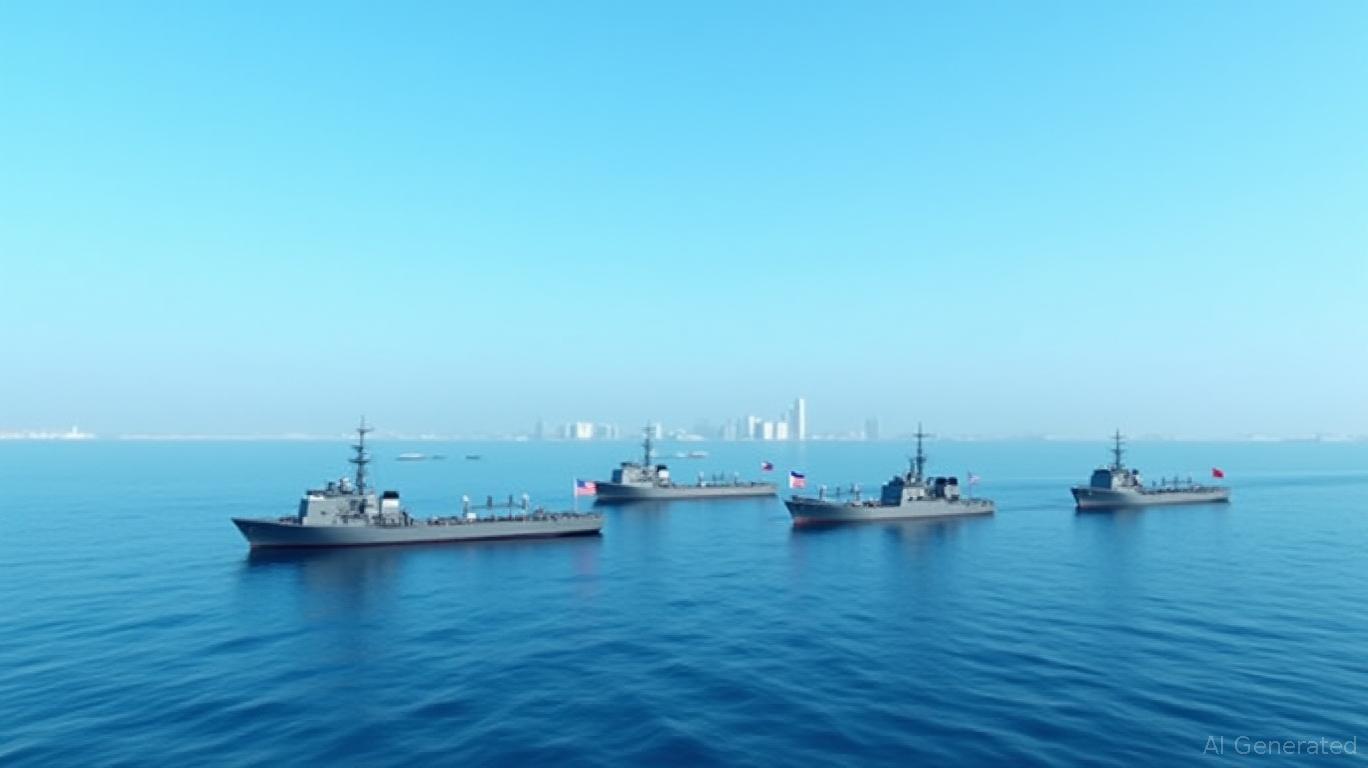
The seizure of the Iranian-flagged container ship Touska by the U.S. Navy on April 19 was not a routine enforcement of maritime law. It was a calculated detonation of the diplomatic bridge to Islamabad. By disabling the 294-meter vessel with kinetic fire into its engine room, the USS Spruance signaled the end of the "deterrence" phase and the beginning of an active naval blockade that effectively treats the Strait of Hormuz as a combat zone.
This escalation has dismantled the fragile ceasefire that had been the only thing keeping global oil markets from a permanent vertical spike. While Washington insists the Touska was a sanctioned asset evading a lawful blockade, Tehran views the boarding as "piracy" and a direct violation of the April 9 truce. The immediate fallout is the collapse of scheduled peace talks in Pakistan, where U.S. negotiators Steve Witkoff and Jared Kushner were expected to finalize a deal to de-escalate the conflict. Instead, the region is bracing for what comes when the ceasefire officially expires this Wednesday.
The Strategy of Disabling Fire
The use of disabling fire against a non-military cargo vessel marks a significant shift in U.S. Rules of Engagement. Standard interdiction usually involves bridge-to-bridge warnings and "shouldering" maneuvers. In this instance, CENTCOM confirmed that the USS Spruance targeted the Touska's propulsion system after a six-hour standoff. This was a message intended for more than just one ship captain; it was a demonstration to the Iranian leadership that the U.S. will no longer tolerate the "gray zone" tactics Iran has used to control the waterway since the war began on February 28.
For decades, the Strait of Hormuz has functioned on a precarious understanding of "innocent passage." That era is over. The U.S. is now enforcing a vetting process that mirrors the very restrictions Iran tried to impose on Western-aligned shipping earlier this year. We are witnessing the "Balkanization" of the high seas, where passage is determined by political alignment rather than international maritime treaties.
Nuclear Leverage and the Islamabad Impasse
The core of the failed negotiations isn't just about ships; it’s about the Highly Enriched Uranium (HEU) stockpile currently sitting in Iranian facilities. Before the Touska incident, the two sides were reportedly "very close" to a deal, according to White House statements. However, the definition of "close" was always optimistic.
- The Enrichment Gap: The U.S. demanded a 20-year pause on all enrichment; Iran countered with a 3- to 5-year window.
- The Stockpile Dispute: Washington wants a total removal of HEU from Iranian soil. Tehran has offered "down-blending" or moving only a portion of the material, likely to retain a "breakout" capability as a security guarantee.
- The Financial Hook: Negotiations were stalled over the unfreezing of roughly $20 billion in Iranian assets held in foreign banks.
The seizure of the Touska gave the Iranian hardliners, specifically the Islamic Revolutionary Guard Corps (IRGC), the ammunition they needed to scuttle the talks. The IRGC has long viewed the civilian leadership’s willingness to negotiate as a weakness. By forcing a military confrontation in the Strait, they have successfully shifted the narrative from diplomatic compromise to national defense.
Global Energy Markets and the $100 Barrel
The economic consequences were instantaneous. Brent crude surged 7% to $96.88 following the news, erasing weeks of downward movement based on hopes of a deal. The Strait of Hormuz carries approximately 20% of the world’s liquefied natural gas and oil. If the blockade and counter-blockade continue, $100 oil isn't just a possibility; it’s a floor.
The shipping industry is already reacting. Reports indicate that AIS (Automatic Identification System) counts in the Strait have dropped to single digits. Large tankers are now diverting to the port of Yanbu in the Red Sea or idling in the Gulf of Oman, waiting for naval escorts that the U.S. Navy has privately warned are "too dangerous" to provide for every commercial vessel.
The Infrastructure Threat
The rhetoric from Washington has turned increasingly apocalyptic. President Trump has publicly stated that if a deal is not reached, the U.S. is prepared to "knock out every single Power Plant and every single Bridge in Iran." This isn't just hyperbole; it’s a formalization of a "Maximum Pressure 2.0" strategy that seeks the total collapse of the Iranian state’s operational capacity.
Iran’s response is likely to be asymmetric. We have already seen reports of drone strikes on Bubiyan Island near the Iraqi border, targeting U.S. logistics hubs. If the ceasefire expires on Wednesday without a renewal, the "Tanker War" of the 1980s will look like a minor skirmish compared to the swarm drone and smart-mine capabilities now at the IRGC’s disposal.
The Intelligence Blind Spot
What remains unknown is the exact nature of the Touska’s cargo. While U.S. officials claim the ship was linked to a sanctioned network returning from a Chinese chemical-storage port, the haste and violence of the seizure suggest intelligence indicated something more sensitive was on board—perhaps dual-use technology or components for the very drone programs currently harassing U.S. bases in Kuwait.
The U.S. has committed to a blockade that it must now defend. To back down after seizing a ship with disabling fire would be seen as a total collapse of American credibility in the Gulf. To move forward is to invite a full-scale regional war that neither side can afford, yet both sides seem incapable of avoiding. The window for a "Pakistan Accord" hasn't just closed; it has been shattered by the sound of 5-inch guns in the Arabian Sea.
The next 48 hours will determine if the Strait of Hormuz remains a navigable waterway or becomes a graveyard for the global economy.