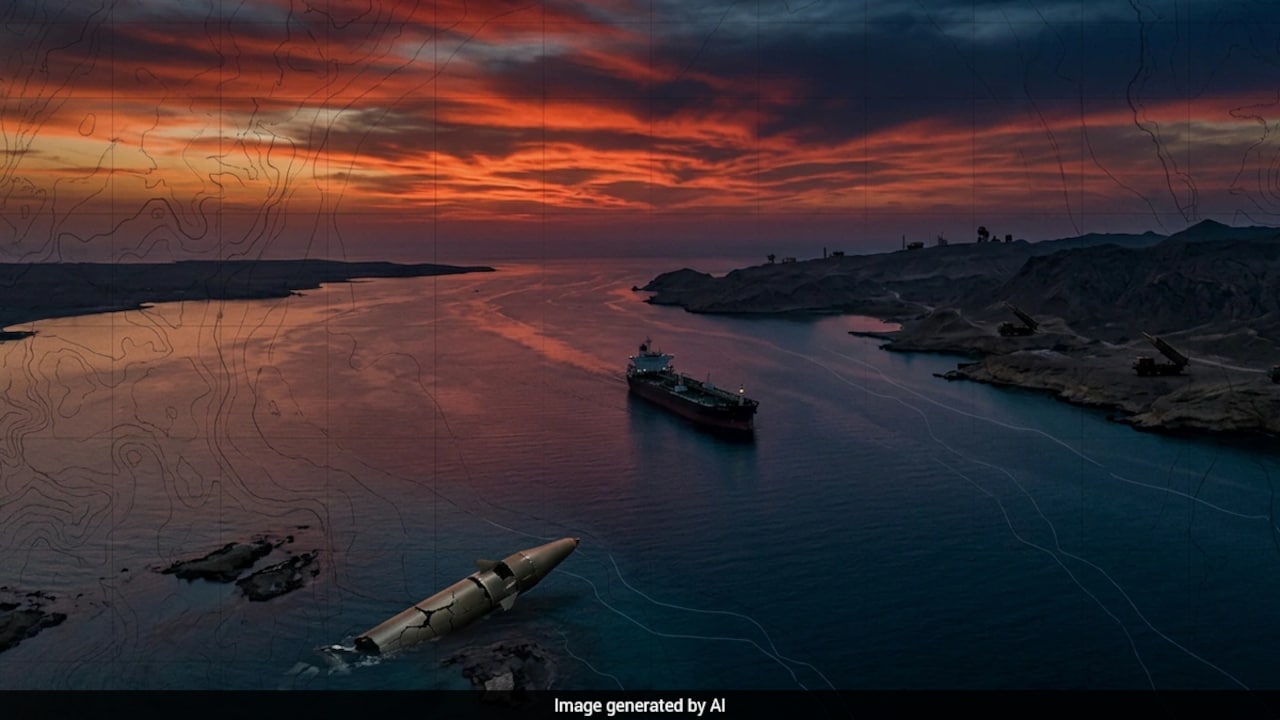
When Iran's Islamic Revolutionary Guard Corps (IRGC) announces they've halted three tankers in the Strait of Hormuz after vague "incidents," commodity traders don't wait for the details. They hit the buy button. Crude oil futures spike within minutes, maritime insurance premiums jump overnight, and shipping companies scramble to reroute vessels that are already burning thousands of dollars an hour in fuel.
If you're watching the headlines about the Strait of Hormuz tanker incident, you might assume we're on the brink of an immediate global fuel shortage. We aren't. Panic makes for great cable news ratings, yet it rarely reflects how maritime logistics actually function on the ground. You might also find this similar coverage insightful: The MAGA Civil War Is a Mirage That Legacy Media Needs to Survive.
I've spent years tracking maritime chokepoints and energy transit risks, and the pattern here is predictable. Every time Tehran flexes its naval muscles in the Persian Gulf, retail investors overreact to the immediate military theater while completely missing the structural economic leverage happening beneath the surface.
Let's break down what actually happens when tankers get stopped in this narrow waterway, why the terminology matters, and what the real-world fallout looks like for energy markets. As highlighted in recent coverage by NBC News, the results are notable.
Why the Strait of Hormuz Holds the Global Economy Hostage
Look at a map of the Middle East. Between Oman and Iran sits a curved channel of water that narrows down to just 21 nautical miles at its tightest point. The actual shipping lanes—two-mile-wide corridors for inbound and outbound traffic, separated by a two-mile buffer zone—are remarkably tight for supertankers carrying two million barrels of crude.
According to data from the U.S. Energy Information Administration (EIA), roughly 20% of the world's petroleum liquids pass through this single chokepoint every day. That translates to around 20 to 21 million barrels of oil, alongside about a fifth of the global liquefied natural gas (LNG) trade, primarily coming out of Qatar.
There's no easy detour. Saudi Arabia and the United Arab Emirates operate overland pipelines—like the East-West Pipeline to the Red Sea and the Habshan-Fujairah pipeline—that can bypass the strait. Still, their combined spare capacity only covers a fraction of the volume moving by sea. If traffic stops here, the global supply chain takes a direct hit to the jaw.
Reading Between the Lines of "Halted After Incidents"
State media announcements from Tehran are never accidental. When the IRGC states that three tankers were halted following "incidents," they're deliberately keeping the framing ambiguous.
In maritime law and naval strategy, language is everything. Calling an operation a "seizure" or a "blockade" triggers immediate military responses from the U.S. Navy's Fifth Fleet, which is headquartered right next door in Bahrain. Calling it a response to an "incident"—whether that's an alleged collision, a supposed environmental violation, or a disputed distress call—gives Iran plausible deniability. It frames their naval forces as maritime traffic cops rather than aggressors.
We've seen this exact playbook before.
Back in 2019, the IRGC detained the British-flagged Stena Impero, claiming it had collided with an Iranian fishing boat and ignored distress calls. In 2023, Iranian forces seized the Advantage Sweet and the Niovi within days of each other, citing maritime infractions and court orders. In almost every case, the "incident" serves as a legalistic cover for asymmetric pressure—often in direct retaliation for U.S. sanctions enforcement or the seizure of Iranian crude cargoes elsewhere in the world.
You don't need to sink a ship to disrupt global trade. You just need to make captains and shipowners nervous enough to drop anchor.
The Invisible Tax of War Risk Insurance
Most people think oil prices rise during Persian Gulf tensions because barrels are physically disappearing from the market. That's rarely the primary driver during brief interdictions.
The real mechanism is insurance.
Every commercial vessel entering the Persian Gulf carries Hull and Machinery insurance, Protection and Indemnity (P&I) coverage, and—crucially—War Risk insurance. When the Joint War Committee in London designates waters as high-risk, underwriters immediately raise their rates for the seven-day transit window through the strait.
During previous flare-ups in the Gulf, war risk premiums jumped from roughly 0.025% of a vessel's value to upwards of 0.5% or more. On a modern Very Large Crude Carrier (VLCC) worth $100 million, that single adjustment adds hundreds of thousands of dollars to the cost of one voyage.
Shipowners don't absorb those costs out of the goodness of their hearts. They pass them directly to the charterers, who bake them into the landed cost of crude oil. Even if those three halted tankers are released tomorrow morning without a scratch, the financial friction remains in the system for weeks.
How Naval Forces and Tanker Crews Actually Respond
If you picture commercial tankers speeding through the Strait of Hormuz like a Hollywood action movie, you've got the wrong mental image. A fully laden supertanker moves at roughly 12 to 15 knots. It takes miles just to bring the vessel to a full stop. It cannot outrun fast-attack craft operated by the IRGC Navy.
Instead, risk mitigation happens before the ship even enters the Gulf of Oman:
- Coalition Monitoring: Warships from the U.S.-led International Maritime Security Construct (IMSC) and European naval missions maintain constant radar and aerial surveillance over the transit corridors. They don't escort every single ship—there are too many—but they monitor radio frequencies and track fast-boat swarms in real time.
- AIS Management: Captains routinely verify their Automatic Identification System (AIS) transponders before entering the strait. Turning off AIS might seem like a good way to hide, yet in congested waters, going dark actually increases the risk of a genuine collision and gives Iranian patrols an easy excuse to board a vessel for "safety violations."
- Routing Adjustments: Operators hug the Omani side of the Traffic Separation Scheme as tightly as navigation rules allow, staying inside Oman's territorial waters for as long as possible before crossing into the Iranian-adjacent lanes.
When an IRGC patrol hails a ship over VHF Channel 16 and orders it to alter course toward Iranian territorial waters like Bandar Abbas, the captain faces a brutal calculation. Fighting back isn't an option; commercial crews are unarmed, and private armed security guards—common in anti-piracy zones off Somalia—are generally restricted from engaging state military forces. Compliance is the only way to guarantee the crew comes home safely.
What Traders and Consumers Get Wrong About Supply Shocks
Whenever news breaks about tankers being stopped in the Middle East, social media fills up with predictions of $150 oil and $6 gasoline at the pump. Take a breath.
Modern oil markets are far more resilient to localized shocks than they were during the 1973 oil embargo or the Tanker War of the 1980s. For one, the United States is now the world's largest crude producer, pumping over 13 million barrels per day. While global oil prices are still set on an integrated international market—meaning a spike in Brent crude will pull West Texas Intermediate (WTI) up with it—physical supply cushions exist globally.
More importantly, strategic petroleum reserves and commercial inventories act as shock absorbers. Refiners don't buy crude on Tuesday and turn it into gasoline on Wednesday. They purchase cargoes months in advance. A localized standoff involving three tankers creates a short-term "risk premium" in futures contracts, which tends to evaporate within days once the market realizes the broader flow of vessels hasn't stopped.
The true danger isn't the halting of three ships. It's miscalculation. When dozens of fast-attack boats, drones, helicopters, and guided-missile destroyers operate within a few miles of each other in cramped waters, one nervous finger on a trigger can turn a calculated geopolitical warning into an actual shooting war.
How to Track Maritime Disruptions Without Falling for Hype
If you're following this story for business, investing, or sheer geopolitical interest, stop relying solely on breaking news alerts. Breaking news thrives on ambiguity. Instead, watch the hard data points that tell you whether an incident is a temporary flare-up or a genuine supply crisis:
- Watch the Brent-WTI Spread: Brent crude is the global benchmark sensitive to Middle Eastern maritime disruptions. If Brent surges sharply while U.S. WTI lags behind, traders are pricing in real transit risk in the Persian Gulf. If both spike briefly and then retreat within 24 hours, the market is shrugging off the noise.
- Monitor Public AIS Tracking: Platforms like MarineTraffic or VesselFinder allow anyone to see real-time shipping density in the Strait of Hormuz. If tankers are still moving steadily through the inbound and outbound lanes in a neat line, the strait is open for business regardless of what politicians are saying.
- Check Forward Freight Agreements (FFAs): Shipping rates for the TD3C route (Middle East Gulf to China) tell the real story. If tanker charter rates skyrocket and stay elevated, shipowners are actively avoiding the region.
Keep your eye on the water, not the rhetoric. Until ships actually stop entering the Gulf of Oman, an incident involving three tankers is just another round of high-stakes signaling in the world's most important energy corridor.


