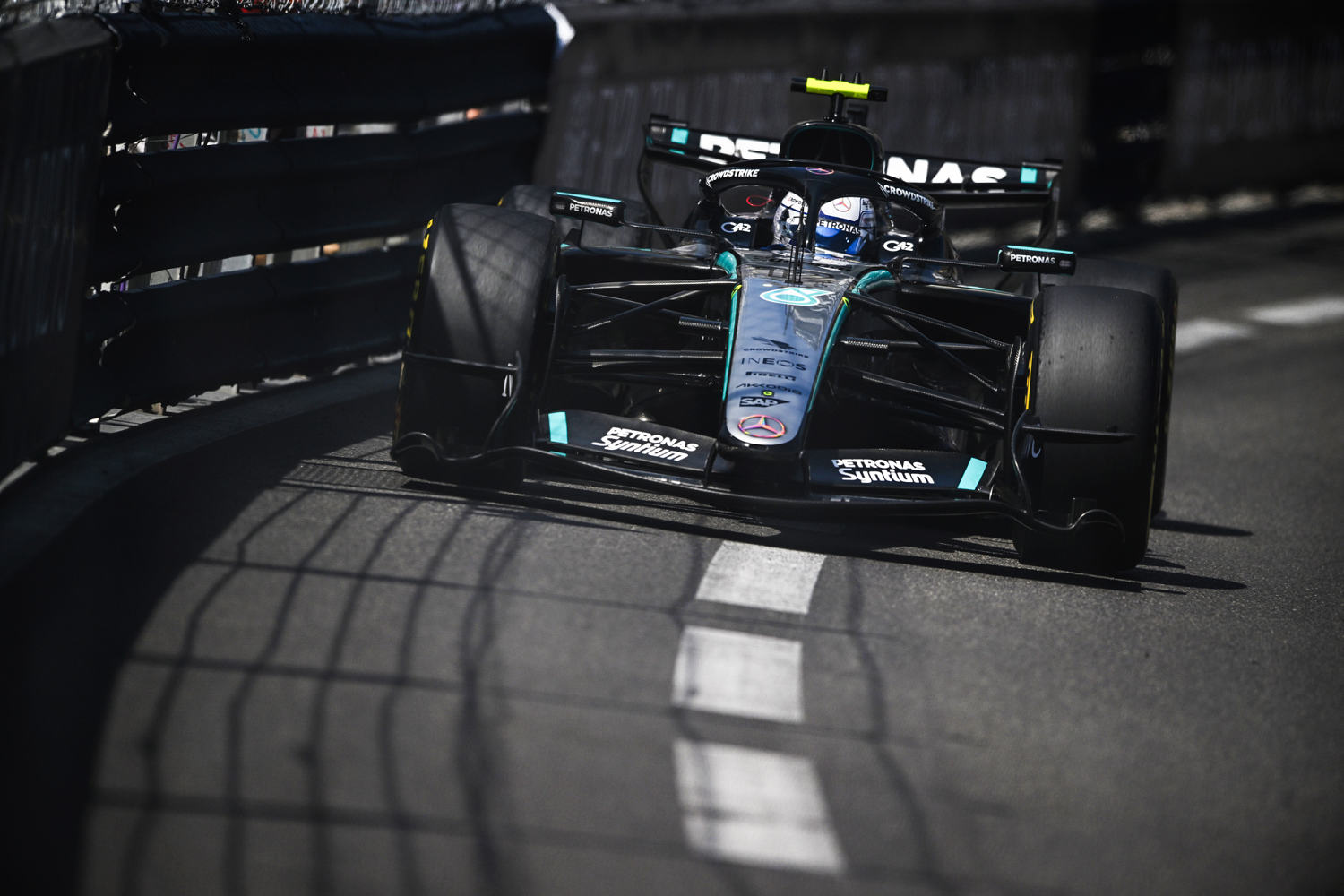
The 2026 Monaco Grand Prix exposed the precise structural vulnerability of modern Formula 1 race management: the disproportionate strategic leverage yielded by early red flag periods. When Kimi Antonelli secured victory amidst multiple structural failures and catastrophic chassis contact behind him, the outcome was not a product of mere fortune. Instead, it was the logical consequence of track-specific aerodynamic limitations, regulatory tire-swap loopholes, and critical bottlenecks in field-wide risk management.
Monaco represents a statistical anomaly in motorsport economics. Circuit topology dictates that overtaking requires a velocity differential often exceeding two seconds per lap between identical machinery. Consequently, track position behaves as an absolute premium, turning traditional tire-degradation models completely on their head. When an early-lap red flag allows the entire field to execute a mandatory tire change under neutralized conditions, the strategic architecture of the Grand Prix collapses from a dynamic multi-stop optimization problem into a static, single-stint endurance constraint.
The Mechanics of Track Position Valuation at Monte Carlo
To quantify why Antonelli’s positioning yielded a compounding defensive advantage, we must evaluate the circuit’s physical constraints through fluid dynamics and geometric limitations. The modern Formula 1 chassis, measuring 5.5 meters in length and 2 meters in width, operates at a severe deficit on a track designed around mid-20th-century urban dimensions.
Three primary variables dictate the impossibility of natural progression through the field:
- The Aerodynamic Wake Bottleneck: In sectors two and three, particularly from the Grand Hotel Hairpin through Portier, the wake generated by a leading car destroys the front-end downforce of any pursuing chassis. This creates understeer precisely where geometric rotation is paramount.
- The Braking Energy Deficit: Without extended straightaways to achieve maximum velocity, thermal energy dissipation in the carbon-ceramic braking systems remains highly localized. Drivers cannot exploit late-braking maneuvers without risking catastrophic lock-ups due to contaminated surface track conditions.
- The Margin of Lateral Deviance: The localized track width at turn four (Casino Square) and turn eighteen (Rascasse) leaves a racing line exactly one car-width wide. Deviating by even twenty centimeters places the tires on low-grip painted lines or structural guardrails.
This structural reality ensures that whoever controls the apex speeds of the lead group dictates the race pace for the entire grid. By qualifying at the front and maintaining control through the initial braking phase into Sainte Devote, Antonelli secured a defensive asset that insulated his vehicle from traditional undercut strategies.
The Red Flag Anomaly and the Extinction of Strategic Optionality
The turning point of the event rested on the immediate deployment of the red flag following multiple midfield impacts. While safety protocols dictate track clearance, the sporting regulations governing tire changes under red flags introduce a profound market distortion into team strategy.
Under standard conditions, a team must balance the degradation matrix of the Pirelli compounds against the time lost in the pit lane—historically 25 seconds at Monaco due to the reduced pit lane speed limit. The red flag completely deletes this 25-second friction cost. By allowing mechanics to swap compounds while cars are stationary in the pit lane, the regulation removes the necessity of a green-flag pit stop.
Standard Strategy Cost = Pit Lane Delta (25s) + Out-Lap Tire Warm-Up Delta
Red Flag Strategy Cost = 0s (Tire swap executed during race stoppage)
This structural loophole divided the grid into two distinct risk profiles:
The Front-Row Defensive Conservation Matrix
For Antonelli and the lead engineers, the neutralization eliminated their primary point of strategic failure: the pit-stop execution window. With a fresh set of hard or medium compounds fitted during the stoppage, the engineering task shifted from optimizing lap times to minimizing thermal spikes in the rear tires. The objective function became simple: drive as slowly as possible in the low-speed sequences to prevent graining, knowing that the trailing vehicles possessed zero physical space to pass.
The Midfield High-Risk Congestion Failure
Further down the order, the compression of vehicles entering tight braking zones created a compounding wave of deceleration. When the trailing drivers attempted to exploit highly marginal gap vectors to compensate for their lack of strategic optionality, structural failure was inevitable. The resulting contact and debris fields triggered the very red flag that frozen the positions of the front-runners.
The Micro-Sector Optimization of Kimi Antonelli
With pit-stop variables eliminated, Antonelli’s victory depended on high-precision energy management across specific micro-sectors. Analyzing his telemetry reveals a deliberate, highly sophisticated manipulation of the pace delta designed to maximize defensive posture while preserving tire integrity over an unprecedented stint length.
The driving strategy relied on a distinct two-phase implementation per lap:
Phase One: Deep Management (Sectors 1 and 2)
Through the Loews Hairpin and the tunnel entry, Antonelli intentionally dropped his mid-corner speeds by up to 15% relative to qualifying capabilities. This deceleration served a dual purpose. First, it controlled the temperature of the front-left tire carcass, which bears the highest load through the continuous right-hand loading phases. Second, it compressed the pack behind him, forcing pursuing cars into a low-velocity, high-turbulence zone that starved their radiators of clean cooling air, inducing structural thermal stress in their internal combustion units.
Phase One: Apex Execution (Sector 3)
As the car approached Tabac and the Swimming Pool chicane, Antonelli transitioned to maximum deployment. By utilizing his energy recovery system (ERS) exclusively in these short, high-speed directional changes, he established a critical gap prior to the final corners of Rascasse and Anthony Noghes. This rapid deployment ensured that even if a trailing driver attempted a high-risk dive down the inside at the final corner, the physical gap remained wider than the maximum width of the pursuing car.
The second limitation facing his competitors was the inability to generate clean air over their front wings during these critical sequence exits. By the time the trailing cars stabilized their downforce platforms, Antonelli was already utilizing the mechanical grip of his rear tires to clear the exit curb.
Operational Failures in Midfield Risk Assessment
The accidents that triggered the red flag illustrate a systemic failure within midfield pit walls to accurately assess the risk-to-reward ratio of early-stage aggression at Monaco. In a standard race environment, a high-risk overtake attempt early in the race carries a negative expected value because subsequent tire degradation and pit stop cycles naturally create delta differentials later in the event.
However, the modern grid suffers from a systemic cognitive bias regarding track position at street circuits. Because teams recognize that passing under green flag conditions is nearly impossible, drivers in positions nine through fifteen operate under the false assumption that they must capitalize on the chaotic first lap, regardless of spatial constraints. This mindset turns the tight corridors of Monte Carlo into an inevitable collision zone.
The resulting economic damage—measured in millions of dollars of carbon-fiber suspension assemblies, floor structures, and front wing elements—highlights the need for a structural reassessment of how teams instruct drivers during the opening 800 meters of street races. When a driver enters a gap that is narrowing geometrically, they are betting against the physics of momentum. The payoff matrix almost never justifies the risk.
The Long-Term Performance Vector
This victory marks a definitive shift in the development trajectory of the field. Antonelli’s ability to execute a prolonged tire-preservation strategy under intense psychological pressure confirms his adaptation to the highly specific thermal management parameters required by modern aerodynamics.
Teams must now re-engineer their simulation models to account for the heightened probability of early-lap red flags in street races. The traditional strategy of designing a car purely for peak qualifying single-lap pace must be balanced against the vehicle’s mechanical ability to restart on cold tires without glazing the compound surface. Teams that continue to prioritize purely theoretical aerodynamic peak performance over mechanical compliance in low-speed, high-density environments will find themselves repeatedly outmaneuvered by organizations that optimize for structural durability and defensive race management.