The Mechanics of Asymmetric Escalation
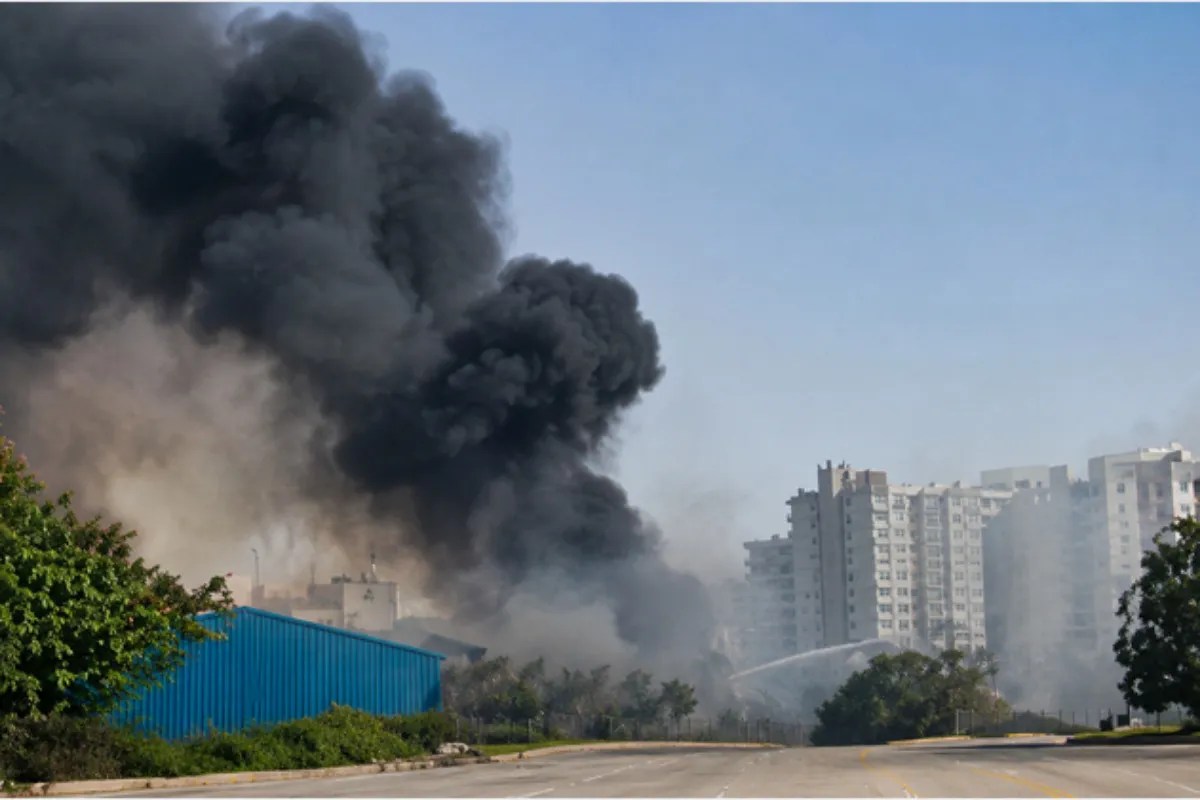
Unmanned aerial vehicle (UAV) saturation strikes against sovereign energy and naval infrastructure represent a fundamental shift from conventional deterrence to low-cost attrition. When localized military vectoring targets state assets across the Persian Gulf, the underlying strategic objective rarely centers on total strategic destruction. Instead, the tactical focus relies on economic friction, air defense exhaustion, and market destabilization.
The operational doctrine governing these drone vector deployments relies on three distinct operational layers: Meanwhile, you can find other stories here: Tragedy in Jerusalem Highlights Foreign Caregiver Safety Rules.
- Radar Signal Flooding: Deploying low-radar-cross-section loitering munitions in dense waves forces targeted defense batteries to engage expendable targets, altering the cost-to-kill ratio heavily in favor of the attacker.
- Geographic Vulnerability Exploitation: Targeting localized littoral energy terminals and processing facilities exploits static infrastructure that cannot be retrofitted with dynamic armor or mobile defense systems quickly.
- Sovereignty Testing via Proxy Vectors: Utilizing direct or proxy launching sites introduces deliberate ambiguity, complicating immediate kinetic retaliation and forcing the targeted state to weigh diplomatic friction against military escalation.
When state actors employ these vector clusters against regional neighbors, the primary vulnerability identified is not a failure of intelligence, but an asymmetry in engagement cost. Countering a mass-produced delta-wing drone costing under $50,000 using land-based surface-to-air interceptors costing upward of $1 million per launch creates an unsustainable attrition curve for defending forces.
The Tri-Tier Impact Model on Sovereign Infrastructure
Evaluating the systemic impact of localized drone strikes requires moving beyond immediate structural damage assessments. The true cost of targeted drone activity manifests across three delayed vectors. To explore the complete picture, we recommend the excellent report by The Washington Post.
Primary Physical and Operational Disruption
Direct kinetic impacts target specific vulnerable nodes within oil processing, refining, and export facilities. Critical pressure-vessel systems, gas-oil separation plants, and offshore loading buoys represent high-yield targets. Disruption at these specific points forces immediate automated safety shutdowns across connected pipeline networks, stopping upstream extraction regardless of actual storage capacity.
Secondary Maritime and Logistics Friction
The primary ripple effect occurs within maritime security corridors. Persistent aerial threats within littoral shipping lanes trigger immediate adjustments in commercial risk calculations:
- War Risk Insurance Premium Spikes: Marine underwriters immediately recalibrate risk zones, raising premiums on tanker traffic transiting affected waters.
- Rerouting Delays: Commercial shipping fleets shift to alternative transit routes or implement mandatory anchored waiting periods, reducing active global maritime transit capacity.
- Naval Escort Depletion: Sovereign navies are forced to reallocate surface combatants from wider patrol zones to point-defense escort missions for commercial shipping.
Tertiary Capital Flight and Sovereign Credit Pressure
The longer-term risk profile centers on long-term capital deployment. Foreign direct investment in infrastructure projects requires predictable operational security. Persistent low-intensity airborne threats elevate the risk discount rate applied to sovereign infrastructure bonds, driving up borrowing costs for targeted nations seeking to diversify or expand their industrial assets.
Defense Interception Bottlenecks and Strategic Mitigation
Standard integrated air and missile defense (IAMD) architectures were designed to intercept high-speed, high-altitude ballistic threats or low-flying cruise missiles. Massed, low-speed, low-altitude loitering munitions exploit gaps within standard early-warning radar coverage, creating a structural failure mode in legacy defense arrays.
+-----------------------------------------------------------------------+
|                       ATTACK VECTOR: SATELLITE / GPS                  |
|                                     |                                 |
|                                     v                                 |
|                  +----------------------------------+                 |
|                  |     Low-RCS Loitering Munitions  |                 |
|                  +----------------------------------+                 |
|                                     |                                 |
+-------------------------------------|---------------------------------+
                                      |
                                      v
+-----------------------------------------------------------------------+
|                      DEFENSE VECTOR: IAMD MATRIX                      |
|                                                                       |
|  [Early Warning Radar] ---> [Command & Control] ---> [Kinetic Launch] |
|            |                        |                       |         |
|            x                        x                       x         |
|     (Clutter Noise)         (Target Overload)       (Cost Inversion)  |
+-----------------------------------------------------------------------+
To resolve this imbalance, targeted defense networks must transition away from high-cost kinetic interceptors toward a multi-layered defensive posture.
Directed Energy and Electronic Warfare Integration
Replacing kinetic interceptors with high-power microwave (HPM) array systems and counter-UAS electronic jamming mitigates the cost-inversion problem. Electronic disruption severs satellite navigation linkup and localized command bands, forcing pre-programmed loitering munitions to fail off-target without expending high-value missile inventories.
Point-Defense Network Hardening
Deploying automated short-range air defense systems (SHORAD) utilizing radar-guided kinetic cannons provides a localized, low-cost inner shield for high-value targets. Pairing these systems directly with static energy infrastructure insulates primary operational nodes from single-vector saturation tactics.
Strategic Action Plan
National defense commands and energy infrastructure operators facing high-frequency drone threats must execute an immediate transition away from legacy defense tactics:
Establish localized, high-density counter-UAS grids comprising passive radio frequency detection, mobile point-defense cannons, and high-power microwave disruption arrays around all primary coastal crude export nodes. Simultaneously, restructure national air defense doctrine to reserve high-tier surface-to-air missile batteries exclusively for high-altitude ballistic or cruise missile threats, ending the financial depletion driven by low-cost drone saturation.