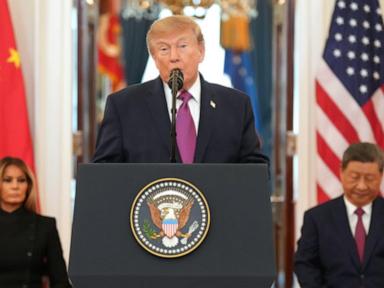
State dinners function as high-resolution diagnostic instruments for international relations. When the executive branch publishes the roster of attendees for a diplomatic banquet hosting a foreign head of state, political analysts and market strategists treat the document not as a social register, but as a weighted matrix of political priorities, industrial dependencies, and strategic signaling. The guest list released for the recent White House dinner honoring the Chinese delegation under President Xi Jinping provides a clear blueprint of how modern bilateral diplomacy operates at the intersection of statecraft and corporate concentration. By examining the structural composition of the attendee roster, observers can reverse-engineer the precise diplomatic calibration occurring behind closed doors, separating public ritual from hard commercial reality.
The most striking characteristic of the guest list is the heavy representation of foundational technology leadership. Executives from companies controlling the global semiconductor supply chain, artificial intelligence infrastructure, and consumer hardware architecture occupied prime seating positions alongside cabinet secretaries and senior intelligence officials. This concentration is not accidental. Modern geopolitical competition is fundamentally tethered to technological hegemony, particularly regarding advanced microelectronics, computing power, and proprietary algorithms. When figures like Jensen Huang of Nvidia, Tim Cook of Apple, Elon Musk of SpaceX and Tesla, and Lisa Su of Advanced Micro Devices are seated within arm's reach of visiting Chinese officials and American trade representatives, the dinner table becomes an extension of the negotiating room.
To understand this dynamic, one must examine the commercial vector of state visits. Traditional diplomacy relied primarily on foreign service officers and trade ministers to negotiate treaties and tariff schedules. In the contemporary global economy, multinational corporations wield economic mass that rivals sovereign states. Their supply chains span multiple jurisdictions, making them both instruments of state policy and vulnerable hostages to regulatory friction. By placing corporate titans directly into the diplomatic architecture, the administration establishes a direct channel of communication that bypasses traditional bureaucratic latency. Chief executives gain unmediated visibility into the risk tolerances of both governments, while state actors secure immediate feedback on how proposed export controls, sanctions, or tariff adjustments will impact industrial output and market stability.
The presence of financial infrastructure leaders compounds this commercial alignment. The inclusion of executive leadership from major global financial institutions—such as JPMorgan Chase, Goldman Sachs, Citigroup, and BlackRock—signals that capital allocation remains a central pillar of bilateral management. Foreign direct investment, sovereign debt holdings, and cross-border capital flows dictate the baseline financial stability of both nations. Financial executives do not attend such functions merely to dine; their presence reflects the ongoing management of systemic financial risk, currency stability, and market access. When market makers sit opposite regulatory architects, the discussion centers on liquidity channels, asset security, and the prevention of disorderly financial decoupling.
Simultaneously, the domestic political architecture of the guest list reveals internal administrative priorities. The inclusion of key national security officials, intelligence leadership, and domestic policy advisors establishes boundaries around economic engagement. While corporate leaders advocate for open markets and supply chain continuity, cabinet members and intelligence directors enforce national security imperatives. This juxtaposition creates a dynamic tension within the room. Every corporate entity present operates under the constant pressure of compliance mandates, export restrictions, and national security reviews. The seating arrangement forces a coexistence between commercial expansionism and state-enforced containment, highlighting the dual-track nature of current great power competition.
Analyzing the structural omissions provides analytical clarity equal to studying the attendees. A guest list is finite, meaning every inclusion represents a deliberate choice that displaces another potential candidate. The absence of specific corporate entities or industry sectors tells a story of disfavor or strategic irrelevance. For instance, companies facing intense national security scrutiny or those operating in sectors targeted for strict regulatory decoupling are conspicuously absent or sparsely represented. This differential treatment establishes a signaling mechanism for the broader market, indicating which business models align with national security objectives and which face systemic headwinds. Observers tracking future regulatory actions can map regulatory risk directly against these guest list inclusions and exclusions.
The staging and execution of the event further reinforce the underlying economic and diplomatic calculations. The deliberate curation of the menu, blending domestic agricultural products with subtle nods to foreign culinary traditions, mirrors the broader negotiation strategy: a framework built on domestic economic support paired with calculated diplomatic gestures. Protocol dictates optics, and optics dictate market psychology. International investors and foreign ministries parse every detail—from seating proximity to public statements—searching for indicators of thaw or escalation. The choreography of the evening is engineered to project strength and stability while maintaining strict adherence to strategic boundaries.
Beyond the immediate actors, the guest list reflects a broader transformation in how state power is projected. Diplomacy is no longer the exclusive domain of diplomats. It has evolved into a multi-tiered negotiation involving state organs, intelligence apparatuses, and mega-corporations. The state dinner serves as a pressure valve in an otherwise high-tension relationship, allowing leaders to test hypotheses, signal intentions, and gauge adversary reactions in a controlled environment before formalizing policy positions. The transactional nature of these gatherings strips away diplomatic pretense, laying bare the core interests driving each administration.
The mechanics of this engagement rely on reciprocal accountability. For the visiting delegation, interaction with American corporate leadership provides direct insight into domestic economic pressures within the United States, offering a counterweight to official state department messaging. For the host administration, direct engagement with foreign counterparts alongside domestic industrial leaders ensures that trade policy remains grounded in operational reality rather than purely theoretical models. This feedback loop reduces the probability of catastrophic miscalculation, providing a structural mechanism for crisis management and incremental de-escalation.
Evaluating the long-term utility of this approach requires examining the friction points between commercial interests and geopolitical strategy. Corporations optimize for shareholder value, operational efficiency, and global market expansion. States optimize for sovereignty, security, and strategic autonomy. When these objectives diverge, tension is inevitable. The state dinner acts as a temporary harmonization mechanism, masking underlying structural contradictions beneath the veneer of high-level social engagement. However, social signaling cannot override fundamental strategic incompatibilities. Export controls, technology restrictions, and territorial disputes persist regardless of who shares a meal.
Furthermore, supply chain vulnerabilities amplify the stakes of these interactions. Modern manufacturing relies on highly integrated, cross-border networks where a single point of failure can disrupt entire industrial ecosystems. When heads of state sit down with the chief executives of automotive, aerospace, and energy giants, the conversation inevitably addresses resource security, mineral access, and logistics resilience. The guest list reflects an acknowledgment that national security is inextricably linked to industrial supply chains. States can no longer separate military readiness from commercial manufacturing capacity, making corporate executives de facto participants in national security planning.
The utility of analyzing such events lies in predictive modeling. By mapping the network of relationships visible at high-level diplomatic gatherings, analysts can forecast regulatory shifts, trade policy adjustments, and industrial policy priorities. The inclusion of specific executives highlights which sectors are currently prioritized for protection, negotiation, or strategic realignment. When an administration grants high-level access to specific industry leaders, it signals an implicit partnership in executing national economic strategy. Market participants who ignore these signals misjudge the direction of regulatory enforcement and industrial policy.
Future diplomatic engagements will likely institutionalize this fusion of state power and corporate representation. As geopolitical competition shifts increasingly toward economic statecraft, technology standards, and financial dominance, the traditional boundaries separating foreign policy from corporate strategy will continue to erode. The guest list for a state dinner is no longer a historical footnote or a social courtesy. It is a leading indicator of economic policy, a roadmap for regulatory direction, and a concrete manifestation of modern statecraft operating under the constraints of globalized capitalism. Analysts must read these rosters with the same rigor applied to economic indicators and regulatory filings, recognizing them as essential data points in the architecture of international power.