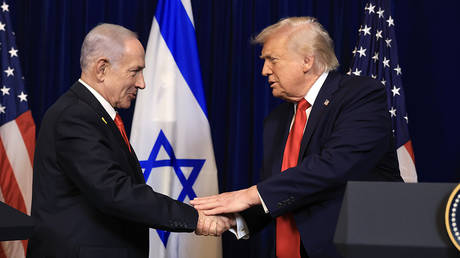
The assertion that a sovereign superpower can be "pulled" into a regional conflict by a junior security partner ignores the structural hierarchies of military command and the cold calculus of national interest. Strategic agency remains the most critical variable in the US-Israel-Iran triangle. While tactical synchronicity between Washington and Jerusalem is high, the decision to escalate into a direct kinetic engagement with Tehran is governed by a specific set of US-centric triggers rather than external provocation.
Understanding this dynamic requires a departure from the "wag the dog" narrative. Instead, the relationship functions as a high-stakes alignment of two distinct security architectures. The US operates under a global containment model, while Israel operates under a regional existential model. Conflict occurs when these models overlap, but the US maintains a set of circuit breakers designed to prevent total theater absorption.
The Strategic Circuit Breaker Framework
The US-Israel security relationship is often characterized as a monolith, yet it is governed by three distinct layers of operational insulation. These layers ensure that even if Israel initiates a high-intensity strike on Iranian soil, US involvement remains a choice rather than an inevitability.
- The Information Asymmetry Buffer: The US maintains independent intelligence, surveillance, and reconnaissance (ISR) assets in the region. This allows Washington to verify or debunk situational escalations in real-time, preventing the "intelligence capture" where a partner’s data dictates a superpower's response.
- The Logistic Control Valve: Israel relies on US-made munitions and replenishment cycles. By controlling the flow of specific precision-guided munitions (PGMs), the US dictates the duration and intensity of any Israeli offensive. This is not a passive relationship; it is a mechanism of indirect theater management.
- The Command and Control (C2) Partition: Despite deep integration via CENTCOM, US and Israeli command structures remain legally and operationally separate. No treaty obligation exists that mandates an automatic US kinetic response to an Iranian counter-attack on Israel, provided that US personnel or strategic assets are not directly targeted.
The Cost Function of Iranian Containment
Analyzing the US stance toward Iran requires quantifying the costs of direct intervention versus the costs of proxy management. The US Department of Defense operates on a "Shift to the Pacific" doctrine, which treats the Middle East as a resource drain on the primary objective of containing peer competitors in the Indo-Pacific.
The Three Pillars of US Restraint
- Economic Friction: A direct war with Iran would likely involve the closure or severe disruption of the Strait of Hormuz. Approximately 20% of the world's total petroleum liquid consumption passes through this chokepoint daily. The US Federal Reserve and the Treasury Department view the resulting inflationary shock as a greater threat to national security than a localized exchange of missiles in the Levant.
- Logistical Overextension: The US military’s current posture is optimized for high-readiness in small-scale counter-terrorism or mid-scale regional deterrence. A full-scale engagement with Iran would require the reactivation of massive supply chains and the deployment of multiple Carrier Strike Groups (CSGs) currently earmarked for the South China Sea.
- Domestic Political Capital: The US electorate has a documented exhaustion with "forever wars." Any administration that permits a partner to dictate the commencement of a new multi-year conflict faces an immediate crisis of legitimacy and a high probability of electoral defeat.
The Mechanism of Deterrence via Proxy
Iran’s strategy is rooted in "Forward Defense," using the Axis of Resistance—Hezbollah, the Houthis, and various militias in Iraq and Syria—to create a buffer. This creates a fragmented battlefield. When Israel strikes these proxies, it does so to degrade the threat to its borders. When the US provides support for these strikes, it does so to maintain the regional balance of power without crossing the threshold into total war.
The cause-and-effect relationship missed by standard reporting is the escalation ladder.
Each rung of the ladder represents a specific level of violence. Israel frequently operates on rungs 4 through 6 (targeted assassinations and cyber-sabotage). The US generally prefers to remain at rung 3 (sanctions and naval presence). A "pull-in" scenario only occurs if Iran skips to rung 10 (direct attack on US bases or global shipping). Crucially, Israel's actions on rung 6 do not mathematically force the US to jump to rung 10. The US has demonstrated a persistent ability to "de-escalate by proxy," allowing Israel to take the lead on kinetic actions while maintaining a diplomatic and defensive posture that signals a lack of intent for full-scale invasion.
Deconstructing the Entanglement Hypothesis
Critics argue that the $3.8 billion in annual military aid and the political "ironclad" rhetoric make US involvement inevitable. However, a data-driven analysis of historical precedents—such as the 1981 strike on the Osirak reactor or the 2007 strike on Syria’s Al-Kibar facility—shows that the US can and does distance itself from unilateral Israeli actions when they conflict with broader American interests.
The current geopolitical environment adds a new variable: the Abraham Accords architecture. The US is attempting to build a regional air defense network that includes Arab partners like Jordan, Saudi Arabia, and the UAE. This network is inherently defensive. Its success depends on the US being seen as a stabilizing force, not a combatant in an Israeli-initiated war. If the US were to be "pulled in," this burgeoning coalition would likely fracture, as several Arab states prioritize internal stability over a regional conflagration.
The Operational Reality of US Bases
The presence of US troops in Iraq, Syria, and the Gulf is often cited as the "tripwire" that would force US entry into a war. This is a misunderstanding of the tripwire's function. In a traditional Cold War context, a tripwire was meant to ensure a massive response to protect a specific territory. In the Middle East, these bases serve as active deterrent nodes. Their purpose is to make the cost of an Iranian attack on US interests prohibitively high, thereby isolating the Israel-Iran conflict.
If an Iranian-backed militia kills a US service member, the US responds against that militia—not necessarily against the Iranian state. This "proportionality filter" is a deliberate policy choice to prevent a single tactical failure from becoming a strategic disaster.
The Strategic Play: Calculated Ambiguity
The US will continue to provide the hardware for Israeli defense while withholding the "Green Light" for a broader regional offensive that requires American boots or bombers. The strategic objective is to keep Iran "in a box"—economically sanctioned and militarily checked—without committing the US to a regime-change war that would bankrupt its Pacific ambitions.
Future stability depends on maintaining the distinction between Security Assistance and Co-Belligerency. As long as the US maintains control over its own targeting cycles and keeps its command structures autonomous, it cannot be "pulled" anywhere it does not choose to go. The risk is not an accidental war, but a deliberate miscalculation where one side believes the other’s bluff is a commitment.
To mitigate this, the US must reinforce its "Over-the-Horizon" capabilities, ensuring it can strike if necessary while removing the permanent targets (small, vulnerable outposts) that provide Iran with low-cost leverage. The path forward is a return to offshore balancing: let regional powers manage regional threats, while the US remains the ultimate arbiter of the global commons, intervening only when the global energy supply or the nuclear non-proliferation regime faces a definitive, unmanageable breach.