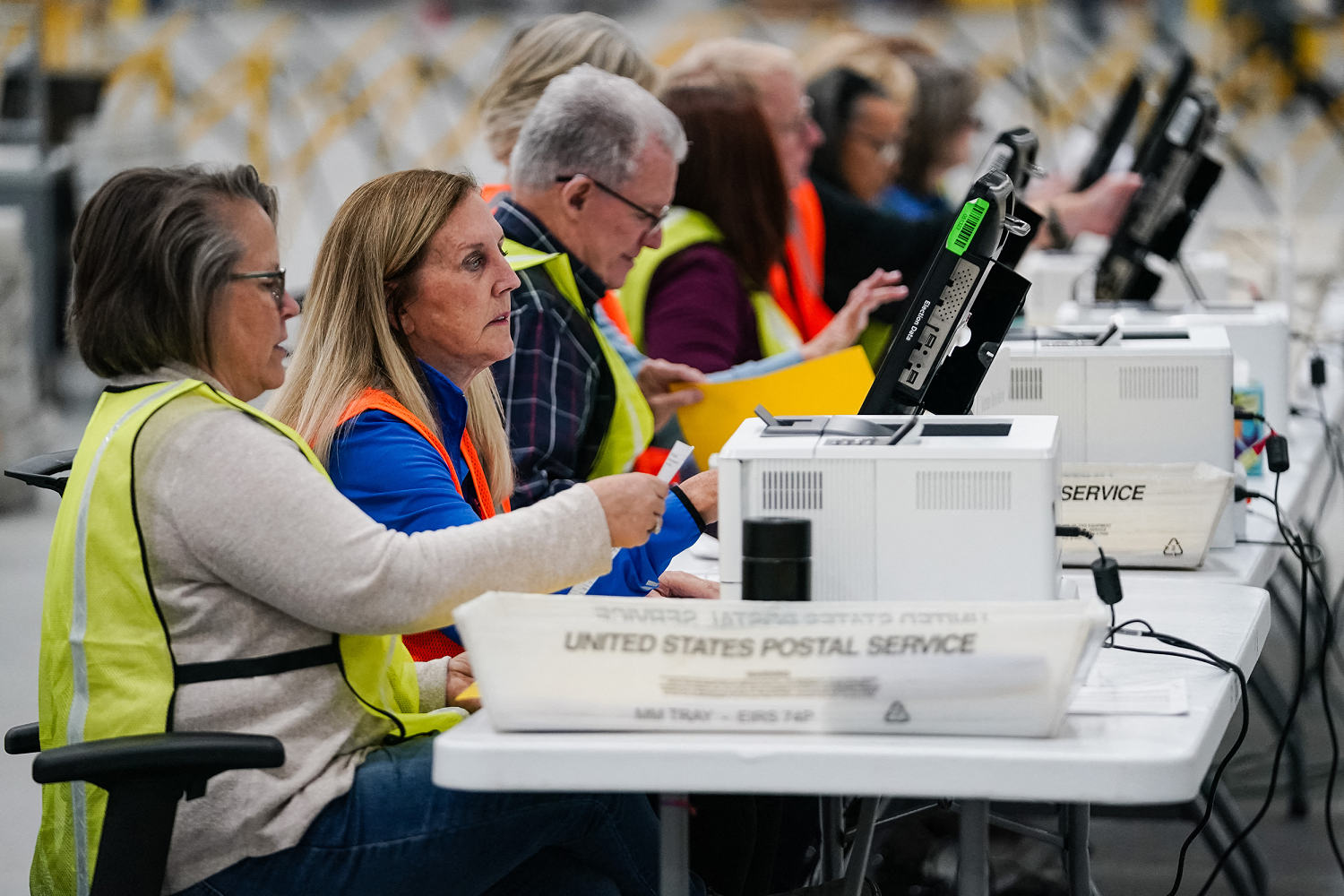
Electoral mechanics are undergoing a structural shift driven by operational friction and changing voter sentiment. For multiple election cycles, political analysts operated under a predictable set of assumptions regarding the partisan distribution of ballots cast prior to Election Day. Specifically, the electorate aligned with the Democratic Party exhibited a heavy reliance on vote-by-mail infrastructure, returning absentee or mail-in ballots weeks ahead of the official close of polls. This behavioral norm generated a reliable baseline of early votes, altering how campaigns deployed capital, monitored enthusiasm, and projected electoral outcomes.
Recent tracking data from early voting returns indicates a disruption in this established workflow. Democratic voters are requesting fewer mail ballots than observed in comparable historical windows, yet those who do secure mail-in ballots are completing and returning them at an accelerated velocity. Simultaneously, a measurable share of the base is bypassing postal channels entirely, redirecting participation toward early in-person voting sites. This behavioral adaptation changes the mechanics of electoral estimation, introducing variables that invalidate historical predictive models.
The Cost Function of Electoral Trust
To understand this transition, one must examine the cost function governing voter behavior. Every method of casting a ballot carries an implicit risk calculation for the individual voter, weighing convenience against the probability of ballot invalidation or disenfranchisement.
The primary driver of the current behavioral shift is an erosion of confidence in postal reliability. Persistent debates over postal delivery timelines, ongoing legal challenges, and targeted political rhetoric surrounding mail-in procedures have increased perceived institutional friction. When voters calculate a high variance in postal delivery times—fearing their ballot might arrive past statutory receipt deadlines—the utility of mail-in voting drops.
[Voter Perception of Postal Friction]
       │
       ▼
[Increased Risk of Late Delivery]
       │
       ▼
[Utility of Mail-in Voting Decreases]
       │
       ▼
[Migration to Early In-Person Channels]
Faced with this uncertainty, risk-minimizing voters substitute postal channels with direct-custody methods. Handing a ballot directly to an election official at an early voting site provides immediate feedback and eliminates third-party transit risk. Consequently, the decline in mail ballot requests is not a contraction of overall voter enthusiasm, but an institutional migration toward physical certainty.
Operational Realignment for Campaigns
Political organizations face an immediate resource allocation problem when the behavioral patterns of their base shift mid-cycle. Field operations optimized for a mail-dominant electorate must reconfigure their logistics to support high-volume, in-person participation.
Campaign infrastructures built around "ballot-chasing" protocols—focusing on envelope accuracy, signature verification, and postage compliance—must pivot capital toward physical infrastructure management. This operational transition involves distinct cost centers:
- Workforce deployment shifts from administrative tracking to staffing high-density early voting hubs.
- Logistical planning requires managing physical queues, transit accessibility, and localized wait times at county election offices.
- Messaging strategy requires coordinated outreach from party leadership to alter instructions given to the base, moving away from postal reliance toward physical polling locations.
This transition introduces friction. Reallocating field staff and capital assets under compressed timelines strains organizational efficiency, particularly when historical data models no longer apply to daily return rates.
Distortion of Election Night Volatility
The migration from mailboxes to in-person booths alters the visual and statistical curves of election night reporting. Since 2020, the heavy reliance of Democratic voters on mail-in ballots produced a well-documented statistical phenomenon. Because mail-in ballots typically require more intensive verification and processing steps, they were often tabulated after in-person votes on Election Day. This operational lag generated distinct shifts in vote totals as reporting progressed.
When a substantial portion of voters who historically used mail ballots shift to early in-person voting, the composition of early totals changes. In-person early votes are typically processed and reported much faster than mail ballots, flattening the dynamic curves that previously defined evening tallies. Campaigns, media organizations, and market analysts can no longer rely on historical templates to project final margins based on uncounted mail stockpiles, increasing analytical uncertainty during the initial reporting windows.
Strategic Horizon and Systemic Adaptation
The durability of this behavioral pivot depends on structural reinforcement by election administration bodies. If voter anxiety regarding postal transit persists, early in-person voting will cement itself as the preferred modality for risk-averse demographics, permanently altering the velocity of vote accumulation.
For strategic planning, organizations must abandon static assumptions regarding baseline voter habits. The primary directive for campaign data architectures is to treat historical mail return curves as obsolete, recalibrating predictive models to account for real-time shifts in physical turnout velocity rather than relying on lagging indicators from postal return registries.
This video provides an overview of how election experts and analysts are evaluating changing voter reliance on postal services and mail-in ballots.