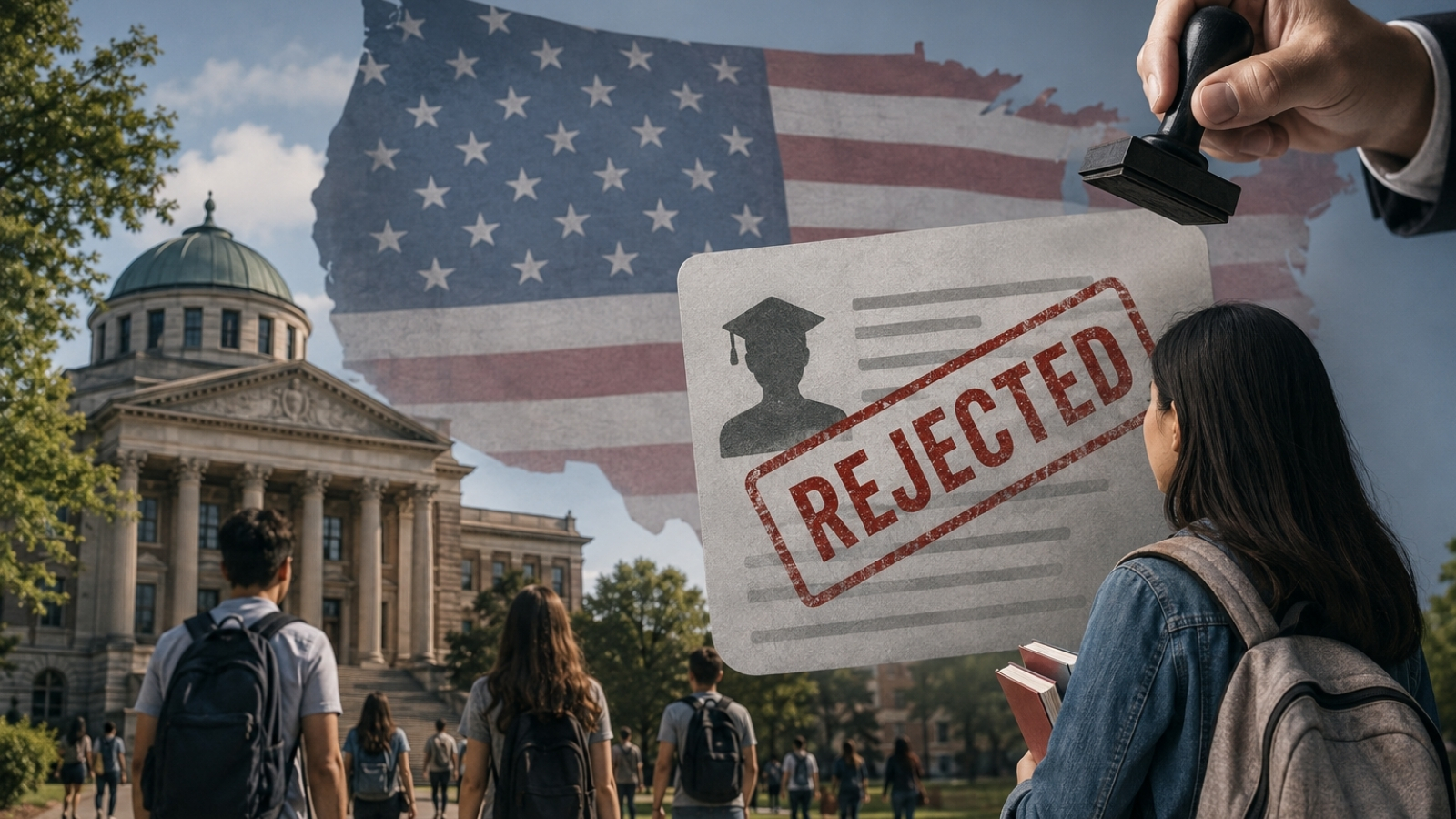
Federal regulatory pressure targeting Curricular Practical Training represents a fundamental shift in how the United States manages the intersection of higher education and domestic labor markets. Rather than an isolated bureaucratic adjustment, the August guidance issued by the Student and Exchange Visitor Program acts as a stress test on the legal architecture that allows international students to secure corporate internships. By threatening institutional certification, the administration has shifted legal liability directly onto universities, forcing a massive contraction in how work authorization is evaluated, processed, and granted.
The Regulatory Mechanics
To understand the current constriction, one must examine the specific statutory mechanism at play. Curricular Practical Training is defined under federal regulations as alternative work study, internship, cooperative education, or other type of required internship or practicum that is offered by sponsoring employers through cooperative agreements with the school. The core compliance friction centers on a single statutory requirement: the training must be an integral part of an established curriculum.
Over the past decade, institutional interpretation of "integral part" expanded significantly. Many universities permitted students to utilize CPT for elective credits, modular practical training courses, or immediate enrollment structures often colloquially termed Day One CPT. This flexibility allowed students to secure continuous corporate employment while maintaining F-1 status.
The recent enforcement directive targets this elasticity by establishing three distinct compliance friction points:
- Curricular Mandate Verification: Work authorization must be explicitly required for all students within a specific degree program, rather than elected optionally by individual choice.
- Institutional Agreement Enforcement: Universities must maintain formal, auditable cooperative agreements with every third-party corporate entity hosting an intern.
- Temporal Proportionality: The duration and timing of the training must strictly mirror academic milestones, curbing extended or multi-semester work placements that resemble traditional employment rather than educational supplements.
Institutional Risk Asymmetry
The enforcement strategy relies on an asymmetric penalty structure. Individual students face immediate loss of work authorization, while universities face the catastrophic revocation of their Student and Exchange Visitor Information System certification. Without SEVP certification, an institution cannot enroll international students—a catastrophic blow to institutional revenue and global research pipelines.
Consequently, risk aversion has dictated institutional responses. Major research institutions, including units within the University of California system, immediately paused or suspended broad categories of CPT authorizations upon receiving the guidance. This administrative halt creates an operational vacuum. When universities freeze approvals to audit their internal compliance workflows, students caught mid-cycle face sudden contract terminations with corporate employers who cannot wait weeks or months for legal clarification.
The Downstream Labor Market Impact
The restriction of CPT does not merely affect students seeking résumé-building experience; it disrupts the primary talent pipeline into post-graduation Optional Practical Training and, ultimately, the H-1B visa lottery. Corporate hiring loops in technology, finance, and engineering rely on internships as extended, de-facto interviews. By cutting off the entry point of this pipeline, the policy forces a structural decoupling between domestic higher education and corporate labor recruitment.
Employers hiring international graduates now face higher friction and uncertainty. When an incoming analyst or engineer cannot complete a legal internship during their degree program, firms lose a critical mechanism to evaluate cultural and technical fit before committing to long-term sponsorship. This increases hiring costs and drives multinational corporations to consider shifting talent acquisition hubs to Canada, Europe, or the students' home countries.
The Broader Strategic Horizon
The tightening of practical training rules operates in tandem with other immigration controls, including maximum duration of status caps and heightened scrutiny on post-graduation employment permits. Universities and employers must transition away from informal, permissive interpretations of federal immigration code. Compliance frameworks must be rebuilt to withstand federal audits, requiring automated verification that coursework requirements align identically with employment start dates. Institutions that fail to adapt their administrative architecture will find themselves locked out of the international talent ecosystem.