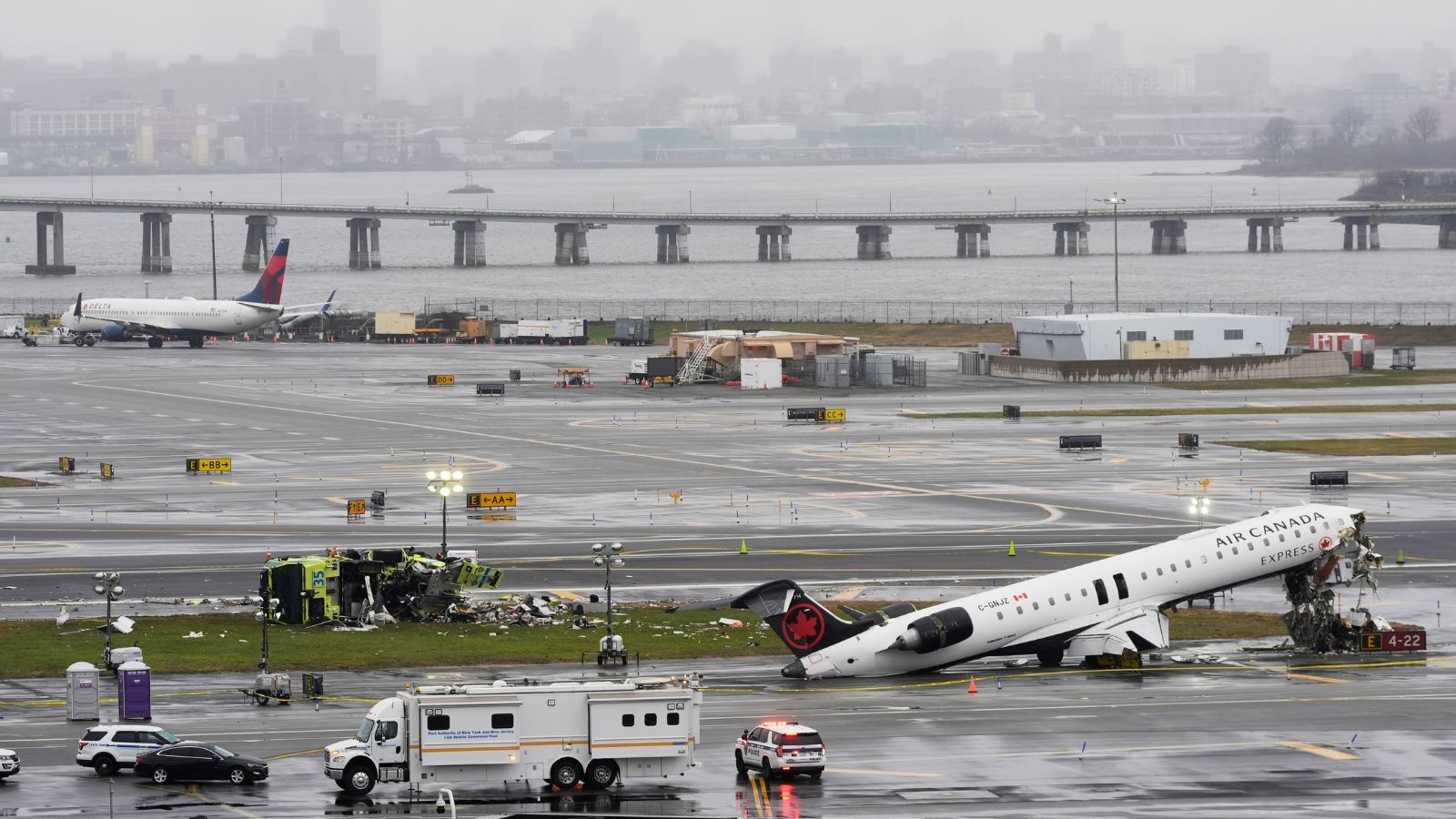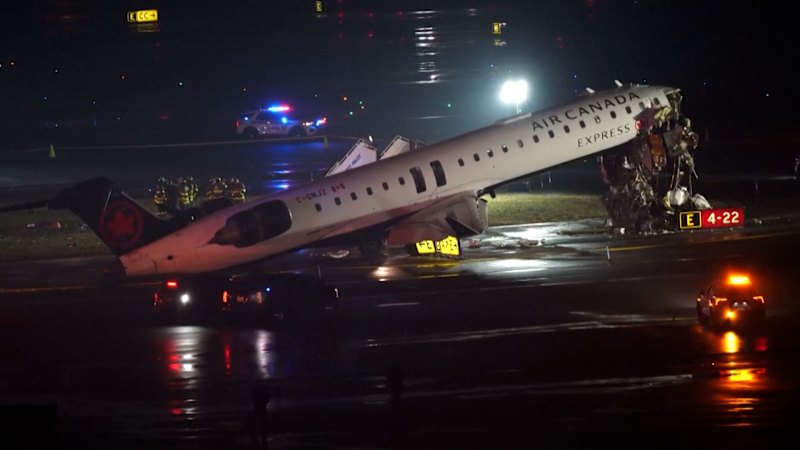
The thin line between a routine landing and a catastrophic hull loss at LaGuardia Airport often comes down to centimeters and seconds. When an Air Canada flight strikes the tarmac with enough force to collapse gear or skid off a runway, the public sees a singular moment of terror. But for those of us who have spent decades analyzing flight recorders and maintenance logs, the event is merely the final link in a long, heavy chain of systemic failures. The recent incident involving an Air Canada jet at New York’s most notoriously cramped airport isn't just a story about pilot error or a sudden gust of wind. It is a stark indictment of the increasing pressure on short-haul infrastructure and the razor-thin margins of safety that the industry now accepts as standard.
LaGuardia is a pilot’s nightmare for a reason. Its runways are short, surrounded by water, and hemmed in by some of the most congested airspace on the planet. When an aircraft loses its footing here, the investigation shouldn't just look at the cockpit. We have to look at the intersection of aging fleet fatigue, the physical limitations of the "postage stamp" airport, and the brutal economics of North American regional transit.
The Physics of a Hard Landing
An aircraft doesn't just "crash" on a runway without a fight from the laws of physics. In the case of the Air Canada incident, the focus shifts immediately to the stabilized approach. Aviation safety dictates that by the time a jet is 1,000 feet above the ground, it must be configured perfectly: speed, descent rate, and engine power must be locked in. If one variable drifts, the pilot is trained to "go around."
But at LaGuardia, the pressure to land is immense. Air traffic controllers are juggling arrivals like a high-speed Tetris game. A go-around isn't just a safety maneuver; it’s a logistical headache that ripples through the entire Northeast corridor. When the Air Canada jet hit the runway, the energy wasn't dissipated through the tires and struts as intended. Instead, the force was transferred directly into the airframe.
This is often the result of sink rate. If a pilot pulls back on the throttles too early or encounters a sudden "microburst" of wind, the plane stops flying and starts falling. At that point, you aren't landing; you are becoming a multi-ton lawn dart. The landing gear is designed to handle significant stress, but it has a breaking point. When that metal shears, the aircraft loses its ability to steer and brake, turning a controlled arrival into a chaotic slide.
Why LaGuardia Leaves No Room for Error
If this same mechanical or pilot hiccup happened at Dulles or Denver, the plane might have just bounced and taxied to the gate with some rattled passengers and a very expensive inspection ahead of it. LaGuardia offers no such luxury.
The airport’s runways, 4 and 22, are roughly 7,000 feet long. To the average driver, that sounds like plenty. To a pilot landing a heavy jet at 140 knots, it’s a strip of carpet in a bathtub. There is no "overrun" space that isn't immediately punctuated by the East Bay or a concrete pier. This lack of runway safety area (RSA) means that any deviation from the centerline or any failure of the braking system turns a minor mishap into a national headline.
Air Canada, like many carriers, has been pushing its fleet harder than ever. The demand for trans-border travel has spiked, and the turnaround times at gates are shrinking. When you combine a high-stress environment like LGA with a schedule that demands perfection, you create a breeding ground for "hurry-up syndrome." This is a documented psychological state where crews subconsciously prioritize the schedule over the fine-tuned safety checks that prevent hard landings.
The Myth of the Routine Flight
We have become too comfortable with flight. We treat a trip from Toronto to New York like a bus ride, forgetting that we are hurtling through the air in a pressurized tube. This complacency extends to how airlines manage their aging narrow-body jets.
While the investigation into the specific Air Canada hull damage continues, we must examine the fatigue life of the landing gear components. High-cycle aircraft—those that take off and land many times a day—undergo massive thermal and mechanical stress. Every time those tires hit the pavement, the metal in the struts "remembers" the impact. Over thousands of cycles, microscopic cracks can form. If an airline’s maintenance program is focused on the minimum legal requirements rather than aggressive preventative replacement, these cracks stay hidden until a particularly firm landing turns them into a catastrophic failure.
It is easy to blame the person in the left seat. It is much harder to blame the board of directors who slashed the maintenance budget or the regulators who haven't forced LaGuardia to expand its safety buffers because of the astronomical cost of building into the water.
The Hidden Danger of Automation Dependency
Modern cockpits are marvels of engineering. They can practically land themselves in a fog bank. However, this has led to a degradation of manual handling skills. When the "automation surprise" happens—perhaps a sudden shift in wind or a localized sensor glitch—pilots who spend 99% of their time monitoring screens have to suddenly revert to raw stick-and-rudder flying.
In the seconds before the Air Canada jet made contact, there was likely a moment where the human-machine interface broke down. If the autopilot was disconnected late in the approach, the pilot had to instantly get a "feel" for the aircraft's weight and momentum. In the gusty, turbulent air often found over the East River, that transition is where the danger lives.
Comparing the Industry Standards
How does Air Canada stack up against its peers in these scenarios? Generally, the carrier has a strong safety record, but no airline is immune to the pressures of the current aviation climate.
| Factor | LaGuardia (LGA) | Standard Major Hub (JFK/ORD) |
|---|---|---|
| Runway Length | ~7,000 ft | 10,000 - 14,000 ft |
| Margin for Error | Near Zero | Moderate |
| Surrounding Terrain | Water/Piers | Open Fields/Buffer Zones |
| Congestion Level | Extreme | High |
The table above illustrates the deficit. Operating at LaGuardia is effectively "varsity level" flying. When an incident occurs here, it is rarely due to a single catastrophic failure. It is the result of latent conditions: a short runway, a tired crew, an aging component, and a sudden gust of wind.
The Financial Fallout of a Scrapped Jet
Beyond the physical danger, the economic impact of a runway excursion is massive. An Airbus or Boeing narrow-body jet can cost north of $100 million. When the main gear collapses and the engine pods scrape the runway, the structural integrity of the wing box is often compromised.
For Air Canada, this isn't just about an insurance claim. It’s about the loss of capacity in a tight market. It’s about the PR nightmare of images showing their maple leaf logo tilted on a New York runway. The industry calls these "hull losses," even if the plane isn't technically destroyed, because the cost of a certified repair often exceeds the value of the airframe.
We also have to consider the passengers. The psychological impact of a "crash landing" ripples through the market. While flying remains statistically the safest way to travel, the visceral image of emergency slides deployed on a runway reminds the public of the inherent risks.
Addressing the Infrastructure Gap
The real fix for the LaGuardia problem isn't just better pilot training. It’s a fundamental rethink of how we use the space. The airport has seen billions in terminal upgrades, making it look like a high-end mall, but the airside infrastructure—the actual pavement where the planes live—remains largely unchanged since the mid-20th century.
Installing EMAS (Engineered Materials Arrestor Systems) is a start. These are blocks of lightweight concrete at the end of runways that crumble under the weight of a jet, slowing it down safely. But EMAS doesn't prevent the hard landing itself; it only prevents the plane from ending up in the drink.
To truly solve this, we need to address the "arrival at all costs" mentality. Air traffic control needs the authority to increase spacing during even minor weather events without facing a firing line of airline lobbyists complaining about delays. Safety costs time. It costs money. And right now, the system is biased toward the clock.
The Reality of the Investigation
Over the next few months, the NTSB will pore over the "black boxes." They will synchronize the cockpit voice recorder with the flight data. They will look at the exact angle of the aircraft at the moment of impact. They will check the wind speed sensors at the end of the runway.
What they will likely find is a series of small, unremarkable deviations that added up to a disaster. A slightly high approach. A slightly late power reduction. A slightly worn seal in a hydraulic strut. None of these things are "illegal" or "wrong" in isolation. But when they converge at 140 miles per hour on a short strip of concrete in Queens, the result is inevitable.
The Air Canada incident is a warning shot. As we push for more flights and more "efficiency," we are eating away at the safety buffers that were built after the accidents of the 1970s and 80s. We have reached a point where the hardware is so reliable that we’ve forgotten how to manage the environment it operates in.
If you are a frequent flier, don't look for a new airline. Look for a new approach to how we fund and manage our most congested airports. The problem isn't the pilot's hands; it's the system's heart. Demand that your local representatives prioritize runway safety areas and air traffic control staffing over shiny new terminal gate lounges with overpriced coffee.
Go to the NTSB's public database and look up the "preliminary reports" for LaGuardia over the last five years. You will see a pattern of "near misses" and "blown tires" that never make the news. This Air Canada jet was just the one where the luck finally ran out.