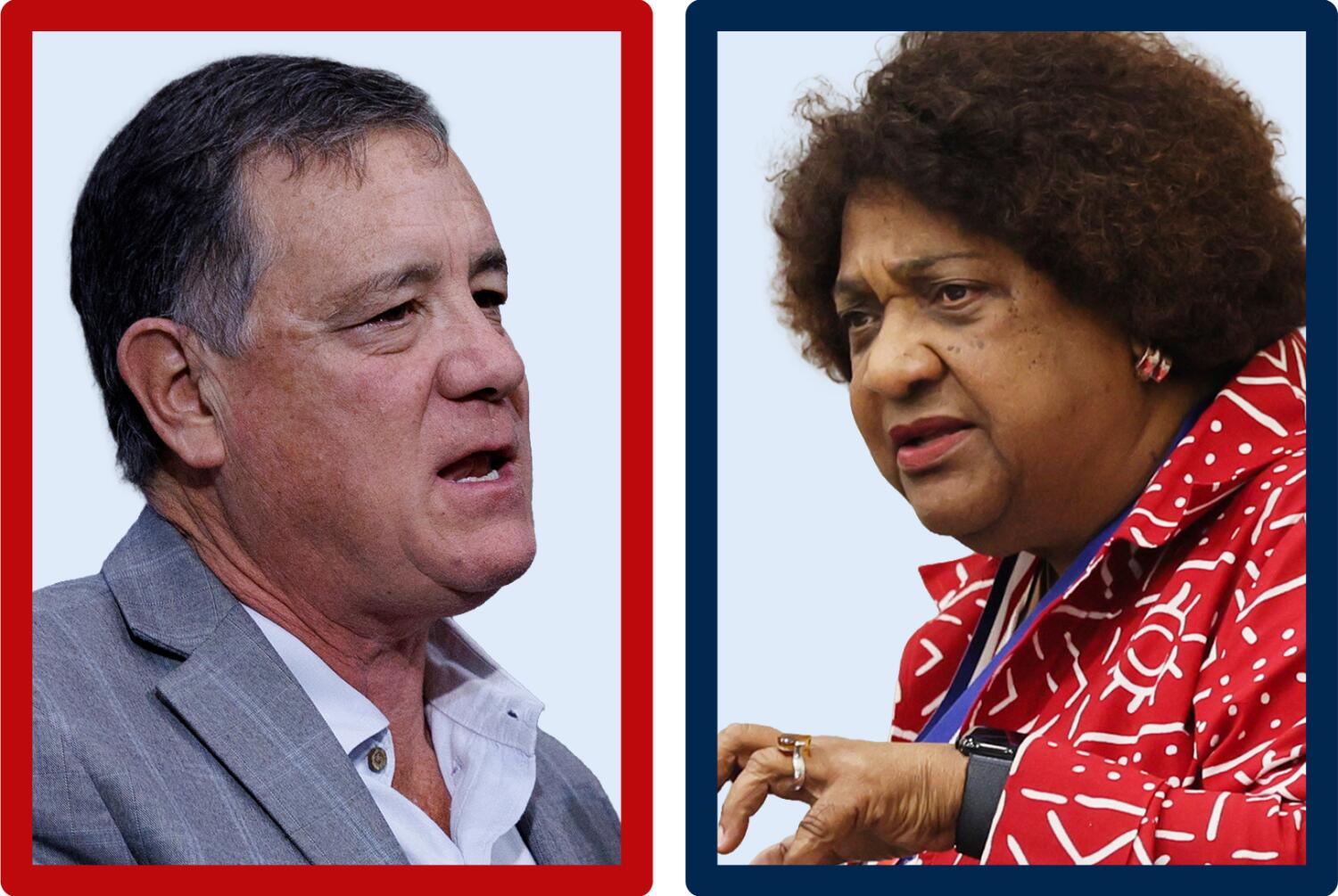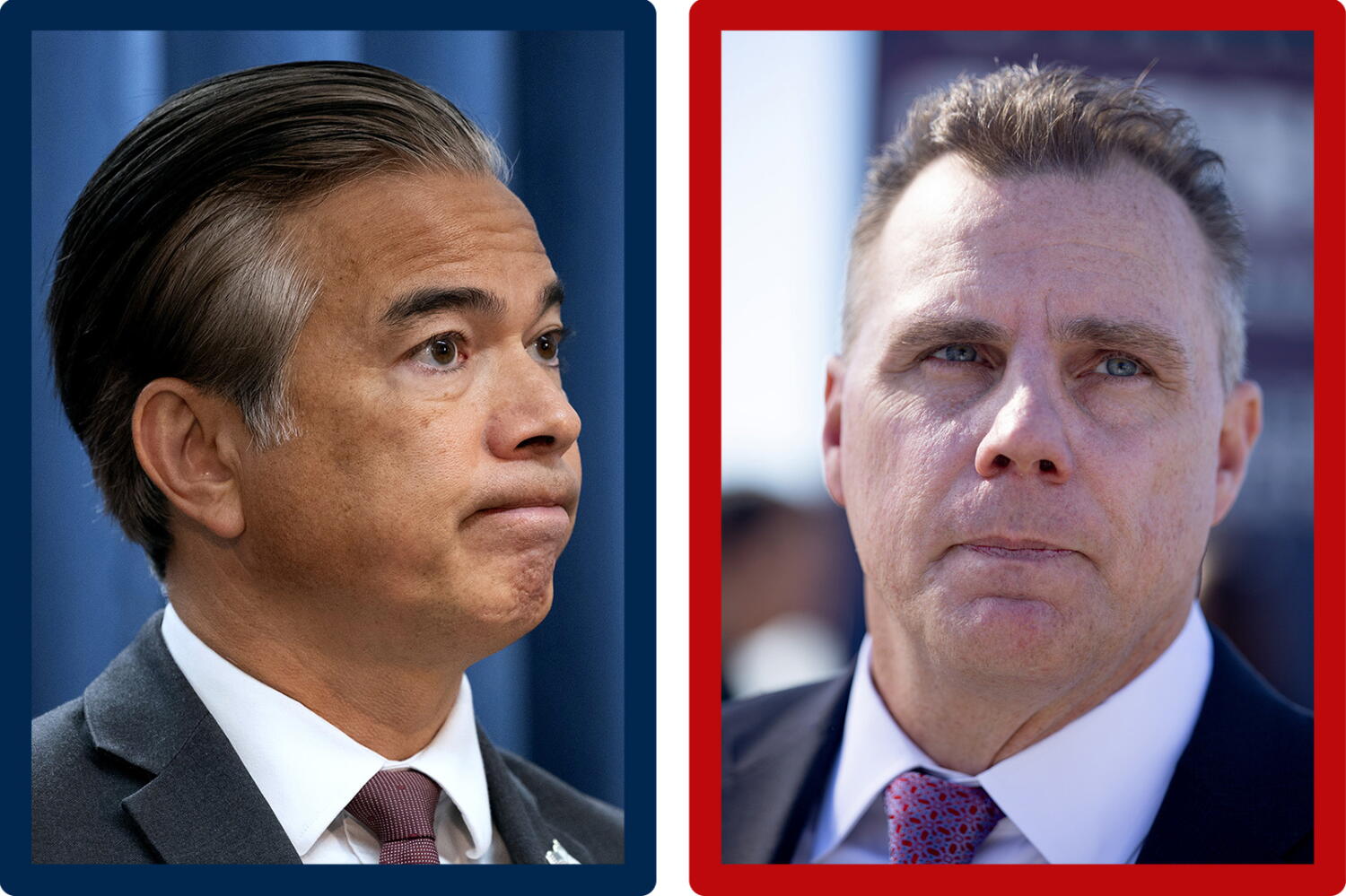
The California Attorney General race between incumbent Rob Bonta and challenger Eric Gates is not a conventional ideological debate over criminal statutes; it is an institutional conflict over resource allocation, prosecutorial discretion, and the constitutional limits of state executive power. Standard political coverage reduces this contest to a binary clash between progressive reform and tough-on-crime enforcement. That framing obscures the actual mechanics of the California Department of Justice (DOJ). Voters evaluating these two candidates must analyze how each intends to deploy a multi-billion-dollar legal apparatus across two competing operational mandates: local criminal intervention versus federal regulatory litigation.
The Structural Mandate of the Office
To understand the divergence between Bonta and Gates, one must first define the operational scope of the California Attorney General. Unlike local District Attorneys, who manage high-volume, day-to-day felony and misdemeanor dockets, the Attorney General oversees the state’s overarching legal architecture. The office operates as both the chief law enforcement officer of the state and the primary defense counsel for state agencies.
This dual role creates an inherent resource-allocation problem. Every dollar and attorney hour committed to suing federal agencies, enforcing environmental regulations, or investigating corporate antitrust violations is a resource unavailable for direct criminal prosecution, state-level task forces, or local law enforcement oversight.
- The Institutionalist Model (Rob Bonta): Treats the DOJ as a macroeconomic and regulatory counterweight. Under this framework, the primary function of the office is systemic intervention—using civil litigation, consumer protection statutes, and environmental enforcement to alter corporate and governmental behavior at scale.
- The Enforcement Model (Eric Gates): Treats the DOJ as a direct operational backstop for local public safety. Under this framework, the primary function of the office is microeconomic deterrence—increasing the certainty and severity of punishment for retail theft, narcotics trafficking, and violent crime when local prosecutors decline to act.
Deconstructing the Incumbent Strategy Rob Bonta
Rob Bonta’s tenure defines the modern progressive state attorney general model, which relies heavily on affirmative civil litigation and statutory interpretation to achieve policy outcomes that stall in the legislature.
The Regulatory Litigation Engine
Bonta has systematically expanded the DOJ’s civil divisions. Rather than waiting for criminal predicates, his office utilizes California’s Unfair Competition Law (Business and Professions Code Section 17200) and environmental statutes like the California Environmental Quality Act (CEQA) to extract settlements and behavioral mandates from major corporations and municipalities.
The mechanism here is leverage through asymmetric litigation costs. When the state initiates an investigation into housing element compliance, oil industry pricing, or social media algorithms, the target faces massive discovery expenses and reputational risk. Bonta’s strategy relies on converting that legal pressure into consent decrees. The limitation of this approach is bandwidth; complex civil litigation consumes senior litigators for years, yielding long-term structural shifts rather than immediate street-level deterrence.
Algorithmic and Market Intervention
A distinct pillar of Bonta’s platform involves regulating emerging markets and pricing mechanisms. By targeting algorithmic rent-setting, healthcare consolidation, and "junk fees," his office applies antitrust principles to consumer protection. The economic theory driving this strategy is that market failures—specifically information asymmetry and localized monopolies—inflict broader financial harm on Californians than traditional property crime.
However, critics point out a friction point in this logic: regulatory victories rarely translate into visible improvements in urban core safety, creating a perception gap between the DOJ’s output and voter priorities.
Oversight of Local Law Enforcement
Under Assembly Bill 1506, the California DOJ is mandated to investigate all officer-involved shootings resulting in the death of an unarmed civilian. Bonta has leaned into this oversight function, establishing specialized review teams and pursuing pattern-or-practice investigations into local police departments. While this establishes state-level accountability, it introduces institutional friction between Sacramento and local sheriffs and police chiefs, occasionally slowing down joint task force operations on organized retail crime and fentanyl distribution.
Deconstructing the Challenger Strategy Eric Gates
Eric Gates enters the race by attacking the foundational premise of Bonta’s resource allocation. His campaign is built on the argument that the DOJ has abandoned its core law enforcement mandate in favor of ideological civil litigation.
The Deterrence Deficit and Concurrent Jurisdiction
Gates’s central operational thesis relies on Article V, Section 13 of the California Constitution, which grants the Attorney General direct supervision over every district attorney and sheriff in the state, including the power to prosecute any violation of law where local enforcement is deemed inadequate.
In counties where progressive District Attorneys have implemented diversion programs or declined to prosecute low-level offenses, a deterrence deficit emerges. Offenders calculate that the probability of incarceration is near zero. Gates proposes utilizing the Attorney General’s concurrent jurisdiction to bypass local prosecutors entirely, deploying state prosecutors to file charges in high-crime jurisdictions.
The operational bottleneck in Gates’s model is capacity. The California DOJ does not possess the courtroom staffing, paralegal infrastructure, or investigative bandwidth to absorb the felony and misdemeanor caseloads of major metropolitan counties like Los Angeles or Alameda. Attempting to systematically override local DAs would require either a massive legislative budget expansion—unlikely in a constrained fiscal environment—or a near-total liquidation of the DOJ’s civil, environmental, and appellate divisions.
Supply-Side Narcotics Interdiction
On the fentanyl crisis, Gates advocates for shifting the DOJ’s Bureau of Medi-Cal Fraud and Elder Abuse and Special Crimes Unit resources toward aggressive supply-side interdiction and enhanced sentencing frameworks. The logic follows traditional law enforcement economics: disrupting mid-level distribution networks increases the street price and transaction risk of illicit narcotics, thereby reducing consumption.
The historical limitation of supply-side interdiction is the replacement effect. Unless paired with structural reductions in demand or cross-border federal coordination, arresting mid-level distributors often creates a temporary vacuum that is rapidly filled by competing networks, sometimes triggering localized spikes in violence during the transition.
Statutory Rollbacks and Proposition Reform
Gates aligns his platform with efforts to roll back elements of Proposition 47 and Proposition 57, specifically targeting the $950 threshold for felony grand theft and the classification of certain violent offenses as non-violent for parole eligibility. While the Attorney General does not write statutes, the office drafts the official ballot titles and summaries for state initiatives—a massive strategic lever in California politics. Under Gates, the DOJ would transition from framing criminal justice initiatives through a rehabilitative lens to framing them through a public safety and fiscal cost lens.
Comparative Matrix of Operational Trade-Offs
Voters cannot evaluate these candidates in a vacuum; choosing either requires accepting a specific set of institutional trade-offs.
- Federal Relations and Constitutional Defense: If the federal executive branch implements policies conflicting with California statutes—ranging from environmental waivers to immigration enforcement and reproductive healthcare access—Bonta’s DOJ is structurally built to file immediate injunctions and sustain multi-year federal appeals. Gates’s restructuring would intentionally dismantle much of this federal-litigation apparatus, leaving California agencies to defend themselves independently or capitulate to federal preemption.
- Corporate Compliance vs. Small Business Overhead: Bonta’s aggressive enforcement of labor, environmental, and data privacy laws forces large corporations to internalize social costs, but it simultaneously increases regulatory compliance burdens that trickle down to mid-sized enterprises. Gates’s deregulation posture reduces state-level compliance friction for businesses, at the cost of removing state oversight over predatory lending, environmental dumping, and anti-competitive mergers.
- State-Local Friction: Bonta’s model maintains cooperative relationships with urban progressive District Attorneys while creating friction with suburban and rural sheriffs. Gates’s model inverts this dynamic, aligning the DOJ with police unions and county sheriffs while triggering open legal warfare with progressive city councils and urban prosecutors.
The Fiscal Constraint Variable
Neither candidate operates with an unlimited balance sheet. California’s structural budget deficits directly impact the DOJ’s General Fund allocations. A significant portion of the DOJ’s budget is derived from special funds—fees collected from firearms dealers, background checks, corporate settlements, and regulatory assessments—which are legally restricted to specific programmatic uses.
Consequently, Gates cannot simply take money designated for environmental enforcement settlements and use it to hire street-level narcotics prosecutors. Reallocating those resources requires complex legislative maneuvers or voter-approved statutory changes. Conversely, Bonta’s reliance on settlement funds to finance ongoing litigation units creates a structural incentive to pursue high-dollar corporate targets, exposing the office to criticism that it engages in "regulation by litigation" to sustain its own operational budget.
Strategic Evaluation Framework for Voters
The outcome of the Bonta versus Gates contest will determine the primary vector of state legal power for the next four years. Because the Attorney General’s office cannot maximize both systemic civil regulation and localized criminal prosecution simultaneously without a structural overhaul of state tax revenues, the decision reduces to a single risk-assessment calculation.
If the primary threat to California’s stability is identified as corporate consolidation, environmental degradation, and federal overreach, Bonta’s specialized civil litigation machine is the rational operational choice, despite its detachment from street-level crime metrics. If the primary threat is identified as the erosion of commercial corridors, acute retail theft, and localized breakdowns in criminal deterrence, Gates’s enforcement-first doctrine directly targets those failure points, provided voters accept the resulting contraction in consumer protection and environmental oversight.
For political strategists and institutional observers tracking this race, ignore the campaign rhetoric surrounding specific crime statistics or isolated court victories. Monitor two leading indicators: police union independent expenditure commitments in suburban swing districts, and the fundraising velocity of corporate defense PACs. If corporate PAC money consolidates behind Gates while suburban law enforcement endorsements fracture Bonta’s moderate coalition, the incumbent’s structural advantage in a heavily Democratic electorate will neutralize, turning a safe partisan hold into a margin-of-error referendum on urban governance.