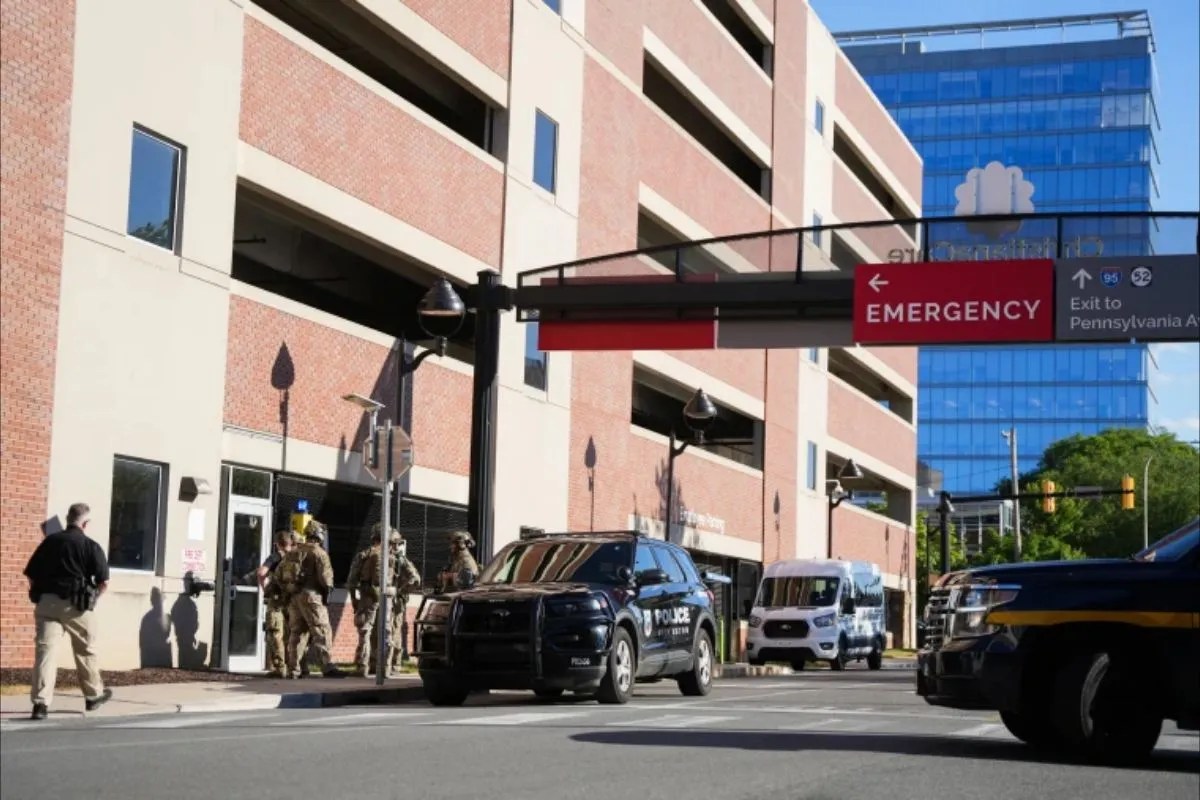
Healthcare facilities are engineered for open accessibility, a design philosophy that fundamentally conflicts with modern threat mitigation protocols. When an active shooter event occurs within a hospital, it exposes a critical vulnerability: the intersection of public-facing medical infrastructure and high-stress environments. The recent violence in an American healthcare facility, contributing to a macro-level metric of over 200 fatalities nationwide within the current annual cycle, is not an isolated security breach. It is an operations failure. To neutralize this vulnerability, security architecture must shift from reactive policing to active threat containment and environmental control.
Understanding this crisis requires moving past the emotional weight of individual incidents to analyze the underlying systemic friction. Hospitals function under a mandate of rapid entry for patients, families, and emergency services. This continuous, unvetted throughput creates a high-permeability zone. When a threat enters this space, the internal dynamics of a medical facility—confined corridors, vulnerable populations, and highly specialized infrastructure—escalate the potential lethality of the event.
The Triad of Hospital Vulnerability
The risk profile of a healthcare facility during an active shooter event is defined by three distinct operational variables. Traditional commercial spaces can implement hard access control barriers; hospitals do not have that luxury without risking patient outcomes.
- The Permeability Mandate: Emergency departments must remain accessible 24/7. This legal and operational requirement prevents the installation of slow-filtering biometric or physical checkpoints at primary intake points, leaving the perimeter inherently soft.
- The Non-Ambulatory Population Bottleneck: Unlike a corporate office where occupants can execute standard "Run, Hide, Fight" protocols, intensive care units, surgical suites, and recovery wards contain immobile patients. Staff members face a dual-responsibility paradox: choosing between personal evacuation or remaining to protect patients tied to life-support infrastructure.
- High-Stress Environmental Triggers: Hospitals are pressure cookers of grief, financial trauma, and acute psychiatric crises. The baseline emotional state of visitors and patients significantly lowers the threshold for escalatory violence, transforming standard care delivery areas into high-risk flashpoints.
This operational reality means that standard active shooter defense frameworks are structurally incompatible with healthcare delivery. A corporate environment can lock down a floor with a single digital command; a hospital floor contains oxygen lines, positive-pressure clean rooms, and medical carts that impede lines of sight and tactical movement.
Systemic Failure Cascades in Emergency Response
When a weapon is discharged inside a medical facility, the failure cascade begins within seconds. The primary bottleneck is rarely the physical response time of law enforcement; it is the internal communication lag and the spatial disorientation caused by hospital geography.
The first breakdown occurs at the sensory level. Modern hospitals are designed to deaden acoustic energy to facilitate patient rest. Acoustic ceiling tiles, specialized drywall, and heavy privacy curtains absorb sound waves. While beneficial for convalescence, this dampening renders standard audio cue recognition useless. Staff members two corridors away frequently mistake gunshots for dropping equipment or maintenance failures, delaying the initial emergency broadcast.
The second failure point is spatial compartmentalization. Hospitals grow over decades through modular expansions, resulting in a labyrinth of connected wings, varying floor heights, and restricted access zones. When off-site law enforcement enters the facility, they lack the granular spatial intelligence needed to navigate these proprietary layouts. Standard digital mapping applications do not account for badge-protected laboratory access or the internal orientation of sterile fields. The tactical advantage shifts entirely to a localized threat who understands the immediate terrain.
The Cost Function of Defensive Retrogression
Retrofitting an existing healthcare campus with military-grade security creates direct operational friction with medical efficiency. This trade-off can be quantified as a cost function where every incremental increase in physical security incurs a corresponding delay in clinical intervention times.
Consider the implementation of access control vestibules—commonly referred to as mantraps—at emergency department entrances. While highly effective at isolating unauthorized individuals, they introduce a time penalty of 12 to 45 seconds per entry event. For acute trauma patients, myocardial infarction cases, or stroke victims, this delay directly correlates with increased tissue mortality and suboptimal clinical outcomes.
Security investments must therefore focus on non-disruptive, high-throughput technologies rather than hard physical barriers. Passive threat detection systems, such as millimeter-wave scanners integrated into architectural columns or automated acoustic gunshot localization arrays, preserve entrance velocity while providing early-warning data streams directly to incident command structures.
Operational Realities and Training Limitations
The prevailing strategy for mitigating active shooter risks relies heavily on annual staff training modules. This approach exhibits severe limitations. Standard computer-based training assumes rational decision-making under acute physiological stress, a hypothesis consistently disproven by neurobiological data.
During a high-stress event, the human nervous system undergoes a sympathetic surge, narrowing the visual field and degrading fine motor skills. Expecting a nurse or medical technician to execute complex evacuation routing or operate mechanical locking mechanisms under these conditions is unrealistic. Training protocols must evolve from passive information consumption to situational muscle memory drills that account for high-stress cognitive degradation.
Furthermore, current training often ignores the physical realities of the healthcare workforce. Shift work, high turnover rates, and reliance on registry or travel nurses mean that on any given night, a significant percentage of the floor staff possesses zero familiarity with the specific emergency egress routes or the manual override switches of that particular wing.
Reengineering the Medical Perimeter
To structurally reduce the lethality of healthcare-targeted violence, facilities must transition from a model of perimeter defense to one of dynamic interior containment. The goal cannot be absolute exclusion—which is logistically impossible—but rather the immediate minimization of the threat's operational zone.
This transformation requires three immediate tactical investments:
- Acoustic Triangulation Integration: Deploying localized microphone arrays that interface directly with the hospital's overhead paging and emergency notification systems. When a weapon is discharged, the system must instantly calculate the coordinate data, broadcast a zone-specific lockdown alert, and isolate that specific wing via magnetic fire-door drops before human operators can process the event.
- Tactical Spatial Overlay Mapping: Establishing real-time digital blueprints accessible by local law enforcement via cloud-based portals immediately upon dispatch. These maps must clearly delineate operational zones, badged security doors, and high-hazard areas like oxygen storage mainlines or radiology suites containing radioactive materials.
- Hardened Safe Zones within Clinical Pods: Modifying central staff dictation hubs or clean utility rooms into ballistically secure fallback positions. These internal redoubts must feature reinforced core doors, independent communication links, and emergency medical supplies, allowing staff to preserve their own lives while remaining in immediate proximity to non-ambulatory patient care areas.
The vulnerability of American hospitals to mass violence is an engineering and operational deficit, not a tactical inevitability. Continued reliance on soft-perimetric strategies and passive administrative training ensures the persistence of the current fatality trajectory. True mitigation demands the systematic hardening of internal spaces and the automation of threat containment protocols, ensuring that the open architecture required to save lives does not facilitate their destruction.