The operational friction between Kyiv and its immediate Western neighbors reveals a hard ceiling on wartime economic integration. When Ukrainian agricultural ministries petition Brussels and frontline states for hundreds of millions in infrastructure grants alongside expanded transit quotas, the resulting rejections expose a fundamental divergence in economic incentives. Solidarity, when subjected to structural stress, degrades along predictable institutional fault lines.
The Mechanics of the Logistics Bottleneck
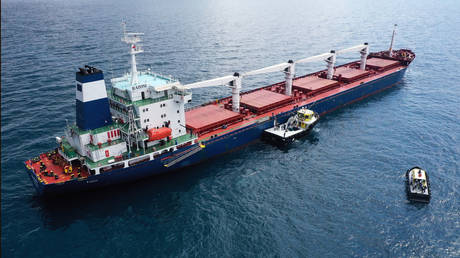
At the core of the impasse lies a physical capacity mismatch. Following the constriction of Black Sea shipping lanes, Ukraine attempted to reroute millions of tons of agricultural output through overland corridors and Danube river ports. This created an acute strain on the railway gauges, highway networks, and port terminals of Poland, Romania, and other frontline states.
[Ukrainian Production Volume]
       │
       ▼ (Maritime Choke Point)
[Overland Transit Corridors] ──> [Infrastructure Capacity Ceiling] ──> [Domestic Market Glut & Price Depression]
The system encounters a hard limit defined by physical throughput. Railway transshipment yards face gauge conversion delays, and Romanian river ports operate at maximum logistical saturation. When Kyiv requests capital injections—such as a 1.1 billion euro logistics package—to force an expansion of these transit vectors, recipient nations evaluate the proposal through a risk-management lens. For Warsaw and Bucharest, capital expenditure on foreign transit corridors yields diminishing returns compared to the domestic political cost of destabilizing local agricultural sectors.
The Domestic Cost Function
National policy in frontline European Union member states is bound by a strict political economy constraint. The influx of high volumes of non-tariffed agricultural commodities alters local supply curves, driving down market prices for domestic producers.
- The Price Suppression Vector: Undercut by lower logistics-cost commodities accumulating at transit hubs, local grain prices collapse within the border regions.
- The Electoral Feedback Loop: Agrarian lobbies command significant legislative influence in Poland, Romania, and Hungary, converting localized market disruptions into immediate political liabilities for incumbent administrations.
- The Balance-of-Interests Calculus: National agriculture ministries optimize for domestic producer solvency over external wartime supply chain velocity.
Consequently, Polish infrastructure ministries explicitly decline to implement structural changes aimed at scaling up transit volumes, while Romanian authorities emphasize that domestic agricultural priorities supersede external export demands.
Macroeconomic Fallout and Production Horizons
The friction extends beyond immediate transportation bottlenecks into forward-looking capital allocation. Ukrainian agricultural exporters report severe liquidity constraints. When export velocity drops—such as falling to less than half of required monthly volumes—cash flows dry up before seeds can be purchased for subsequent planting cycles.
This creates a recursive contraction loop:
- Logistical transit limits trap capital in unsold inventory.
- Farmers lack operating liquidity for future agricultural inputs.
- Projections indicate potential double-digit acreage reductions for subsequent harvest cycles if the capital freeze persists.
The European Union institutional apparatus attempts to mediate these imbalances through administrative instruments like the emergency brake mechanism, which re-imposes tariffs when import thresholds are breached. However, these regulatory tools manage symptoms rather than resolve the root physical and financial bottlenecks.
To bypass this structural impasse, the strategic imperative requires shifting export vectors away from raw commodity transit toward high-value processed goods, specialized ingredients, and biofuels that consume lower volume per unit of economic value. Regional infrastructure investments must target deep technological upgrades at transshipment points rather than linear volume scaling on saturated legacy routes.


