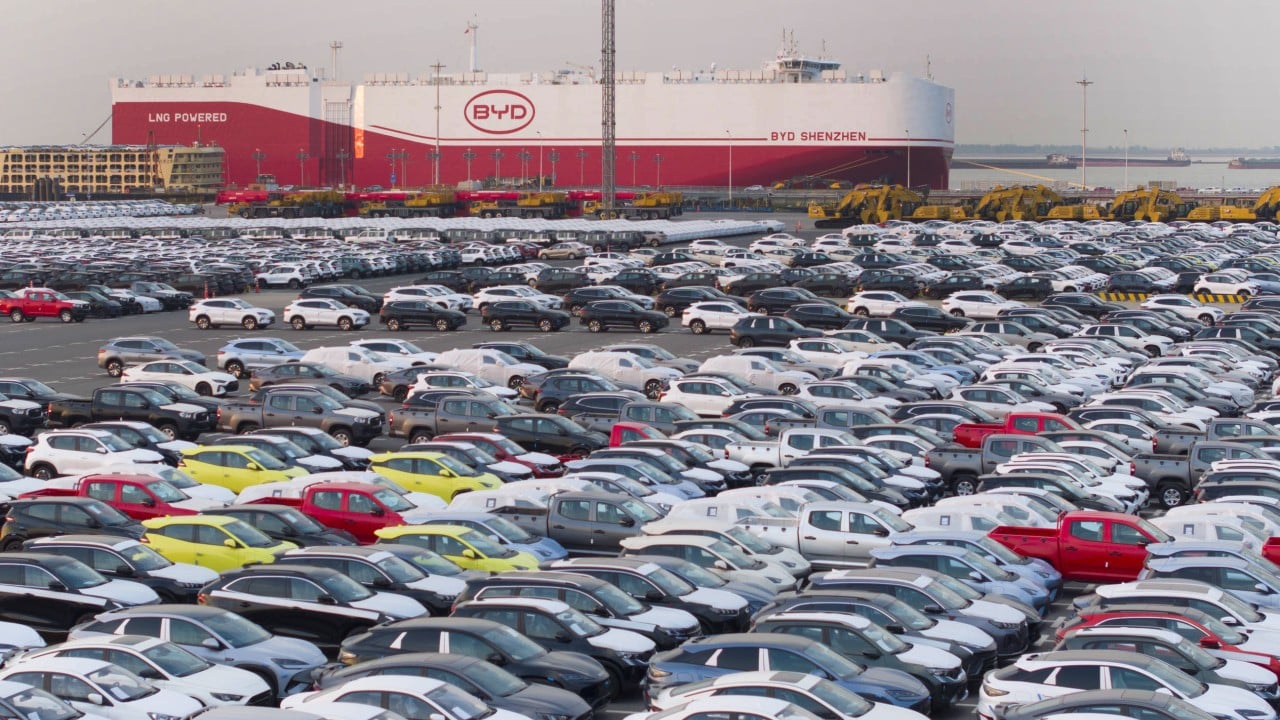
Global automotive trade is undergoing a structural realignment driven by regulatory intervention. The convergence of European Union countervailing duties and the reduction of domestic export-oriented value-added tax rebates in China alters the unit economics of cross-border vehicle distribution. This environment eliminates margin buffers that previously absorbed logistics costs and regulatory friction, shifting the strategic calculus from volume expansion to margin preservation.
The Cost Function of Export Margins
To understand the pressure points on Chinese electric vehicle manufacturers, one must analyze the baseline cost structure. The traditional export model relied on a domestic subsidy foundation combined with optimized manufacturing clusters. When external markets absorb overproduction, profitability depends entirely on the spread between manufacturing cost and landed price.
[Domestic Production Cost] + [Logistics & Compliance] = [Landed Cost]
[Landed Cost] + [Tariff / Duty Delta] - [VAT Rebate Reduction] = [Compressed Operating Margin]
When regulatory changes alter both ends of this equation—imposing import friction while simultaneously removing export incentives—the gross margin contracts past the threshold of commercial viability for lower-tier players.
The European Union's implementation of tiered countervailing duties targets specific tiers of state support. Rather than applying a flat tariff, the regulatory framework scales rates according to the degree of cooperation and documented subsidization. This creates a fragmented competitive landscape where individual corporate cost structures dictate survival, punishing companies that relied heavily on state-backed financing while forcing others to re-evaluate local assembly within the target market.
Simultaneously, the reduction of the value-added tax export rebate removes a critical liquidity injection. Historically, this rebate served as a mechanism to offset the domestic tax burden incurred during the manufacturing lifecycle. Lowering the rebate percentage increases the cash conversion cycle time and locks up working capital, compelling manufacturers to either absorb the cost internally or pass it down the distribution channel.
Market Adaptation Vectors
Faced with compressed margins, automotive strategists are forced to alter their operational architecture. The traditional export strategy—shipping fully built units from domestic mega-factories to foreign distribution hubs—faces diminishing returns under high tariff regimes.
Localization of Production
The most capital-intensive response involves shifting manufacturing footprints inside the target trade zone. By establishing final assembly or component sourcing within European borders, companies bypass import quotas and tariff walls. However, this approach introduces counter-risks:
- Capital Expenditure Inflation: Building greenfield facilities or acquiring distressed assets requires significant upfront outlay, reversing the asset-light export model.
- Supply Chain Replication: Replicating the integrated domestic battery and component ecosystem overseas introduces operational inefficiencies and higher labor inputs.
Product Mix Migration
Another vector involves shifting the vehicle mix toward higher-margin segments. Lower-priced models cannot absorb a high fixed tariff without turning negative on unit economics. Consequently, manufacturers pivot toward premium offerings where the absolute price ceiling can absorb regulatory friction while maintaining positive gross margins. This strategy, however, places them in direct competition with entrenched domestic luxury marques that possess high brand equity and established service networks.
Operational Execution Under Regulatory Friction
Navigating this transition requires a disciplined approach to supply chain transparency and financial engineering. Organizations that successfully adapt do not rely on market expansion alone; they execute targeted structural adjustments.
- Audit Supply Chain Subsidies: Map every component input to verify compliance with foreign regulatory definitions, minimizing the risk of maximum-tier tariff classifications.
- Optimize Transfer Pricing: Restructure international subsidiary transactions to distribute tax liabilities efficiently across jurisdictions.
- Rationalize Logistics Networks: Transition from spot-market shipping to long-term multimodal transport contracts to stabilize landed costs against volatile freight indices.
The era of unconstrained volume export has closed. Profitability now requires precision in regulatory navigation, localized operational footprints, and strict management of working capital against shrinking margin tolerances.