Geopolitical conflict involving critical infrastructure operates according to strict economic and strategic cost functions. When external actors propose partial armistices—such as energy ceasefires targeting power grids and hydrocarbon networks—the proposal's viability depends entirely on asymmetric verification costs and immediate tactical incentives for the belligerents. Diplomatic announcements from third-party mediators often reflect strategic signaling rather than operational realities on the ground, creating a divergence between political assertions and military execution.
Deconstructing an unconfirmed energy ceasefire requires analyzing the incentive structures of both defending and offensive states. In prolonged attritional campaigns, energy infrastructure serves dual purposes: it maintains civilian economic baseline capacity and powers military supply chains. Consequently, any suspension of strikes against these targets alters the operational calculus for both parties, shifting the balance between force preservation and strategic exhaustion.
The Information Asymmetry Problem
Diplomatic initiatives regarding localized ceasefires frequently collapse due to verification deficits. Without a neutral, highly technical monitoring apparatus deployed across contested zones, neither side can trust compliance.
- The Monitoring Vacuum: Detecting a violation of an energy infrastructure strike involves tracking missile and drone telemetry across hundreds of kilometers of contested airspace.
- Dual-Use Ambiguity: Substations, high-voltage transformers, and rail electrification grids support both civilian heating and military logistics. Pinpointing a violation requires shared definitions of what constitutes a protected facility versus an active military node.
- Asymmetric Signaling: When a state announces a prospective agreement unilaterally, it shifts the diplomatic burden of rejection onto the adversary, optimizing its international posture regardless of whether the operational command structure actually halts fire.
Strategic Cost Functions in Infrastructure Targeting
The calculus governing strikes on energy networks is driven by marginal utility. As winter approaches or industrial capacity degrades, the value of each additional strike on generation facilities increases exponentially for the attacking force, while the defensive marginal cost of repair grows due to depleted replacement components and skilled labor shortages.
When external political actors intervene with cessation proposals, they attempt to artificially flatten this cost curve. However, if the attacking force calculates that continued degradation of the enemy grid will trigger systemic collapse before diplomatic costs accumulate, compliance remains irrational. Conversely, the defending state must weigh the immediate relief of civilian infrastructure against the risk that a localized pause will be exploited by the adversary to reconstitute tactical reserves or reposition air defense assets.
Tactical Realities Versus Diplomatic Declarations
The immediate aftermath of an unconfirmed armistice proposal is characterized by operational noise.
Structural Failures in Energy Infrastructure Bargaining
news
The diplomatic framework surrounding energy infrastructure security during active military conflict relies on a flawed premise: that asymmetric actors possess the incentive structure to self-regulate localized utility destruction without binding verification mechanisms. Recent statements regarding an unverified energy ceasefire initiative highlight the mechanics of strategic signaling absent institutional enforcement. When political pronouncements outpace operational realities on the ground, the divergence between declaratory policy and kinetic execution reveals systemic vulnerabilities in conflict containment.
To evaluate the durability of any proposed moratorium on energy grid targeting, observers must deconstruct the underlying cost function governing utility strikes. For a belligerent state, electrical generation facilities and transmission nodes represent high-leverage targets that yield asymmetric returns. Degrading an opponent's grid infrastructure achieves two distinct objectives simultaneously: it compresses the target's industrial output capacity and introduces friction into civilian population management, thereby shifting the psychological equilibrium of the conflict.
The marginal cost of executing a precision strike against a transformer substation is low relative to the systemic friction imposed on the defender's economy. Consequently, a verbal or unconfirmed accord that lacks immediate verification protocols introduces a moral hazard. If one party perceives an informational or tactical advantage in maintaining kinetic pressure, unilateral adherence becomes structurally irrational. The absence of a third-party monitoring mechanism ensures that any temporary cessation of hostilities remains vulnerable to rapid escalation upon the first tactical disagreement.
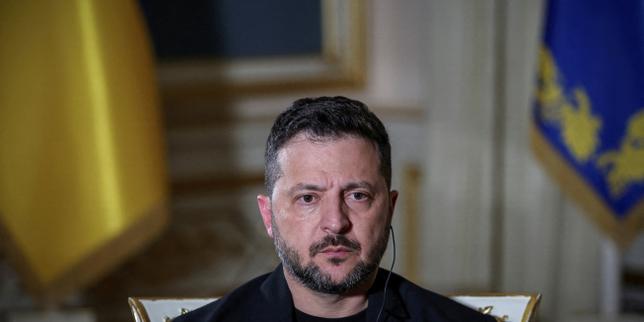
Volodymyr Zelensky's denunciation of renewed strikes following unverified ceasefire reports underscores the operational gap between political mediation and theater-level strategy. In protracted conflicts, energy grids do not function merely as civic utilities; they operate as dual-use nodes that sustain supply chains, command infrastructure, and logistics networks. Treating these assets as separable from the broader military campaign ignores the reality of modern attritional warfare, where economic strangulation and kinetic destruction are fundamentally integrated operations.
Future trajectories of energy infrastructure security in this conflict depend entirely on the emergence of enforceable verification frameworks rather than declarative diplomacy. Until mechanisms are established that impose tangible costs on treaty violations, unilateral announcements will function primarily as tactical communication rather than operational stabilization.