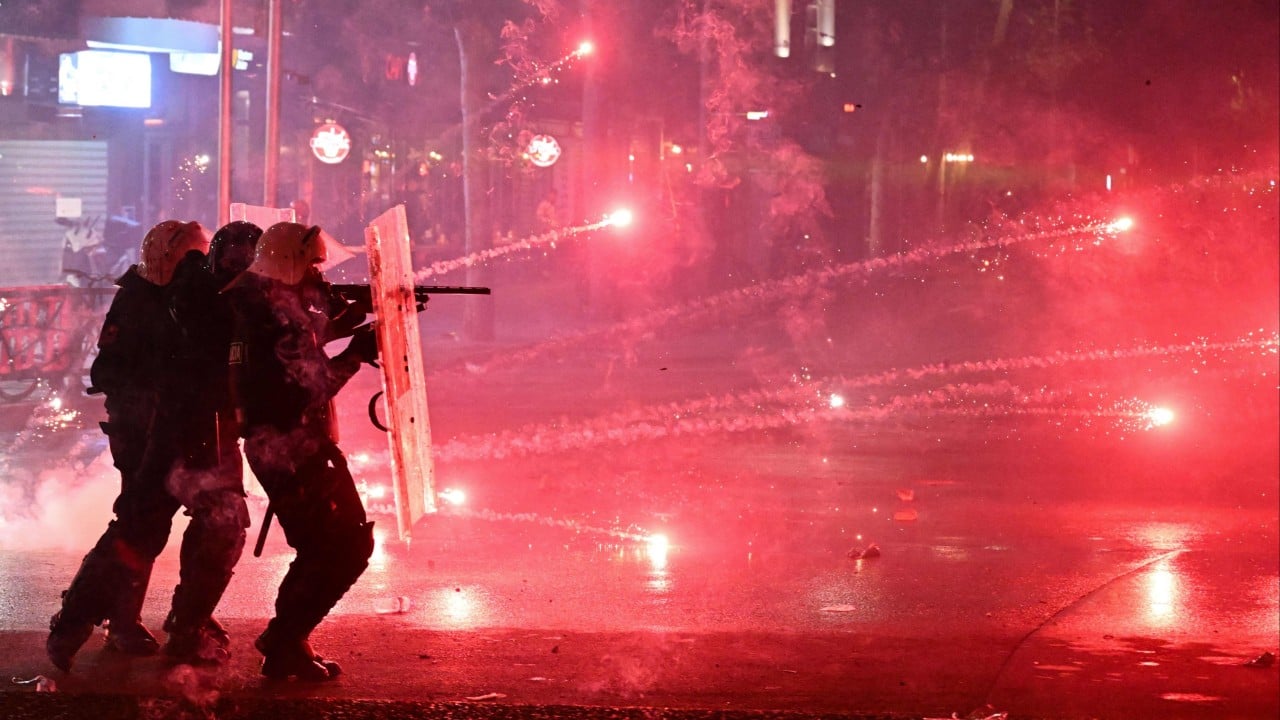
Mass civil unrest in France follows a systemic pattern governed by predictable feedback loops rather than isolated bursts of spontaneous anger. When executive leadership frames public disorder around moral indignation—asking how citizens can inflict damage on their own nation—it addresses the symptoms of public hostility while obscuring the structural mechanics driving the escalation. Managing urban violence requires examining three distinct variables: the institutional friction between law enforcement and localized communities, the operational incentives governing youth mobilization, and the state’s executive dilemma between concession and enforcement.
The Escalation Architecture of French Urban Violence
Urban rioting in France rarely originates from a single policy disagreement. Instead, it operates as a cascading security event triggered by an acute friction point that acts upon pre-existing socio-economic conditions. For an alternative perspective, check out: this related article.
Trigger Event and Information Acceleration
The initial phase depends on an incident involving state authority—typically a high-profile fatal interaction between municipal or national police and a resident of a low-income suburb (banlieue). Modern digital infrastructure accelerates this stage. Real-time video footage eliminates the traditional multi-hour delay between an event and public awareness, compressing the mobilization window for protest movements from days down to minutes.
Operational Mobilization and Spatial Diffusion
Unlike organized labor strikes, urban riots lack centralized command structures. Mobilization occurs through decentralized digital networks, allowing fluid groups to coordinate tactics, bypass police blockades, and target public infrastructure. Violence shifts rapidly from immediate protest sites to economic nodes, transit hubs, and civic buildings (such as town halls and police stations). This tactical flexibility overwhelms localized police deployments, forcing the state to transition from standard crowd control to mobile counter-measures. Further insight on this matter has been published by TIME.
The Feedback Loop of Executive Rhetoric
When executive authorities respond primarily with condemnation and threat of judicial severity, it alters the operational incentives for protesters. Strong deterrence language reassures rural and suburban middle-class voter bases demanding order, but it often increases polarization in targeted urban sectors. Moral framing redefines a operational policing challenge into an ideological confrontation between the state and disenfranchised populations.
The Tri-Partite Cost Function of State Response
The French executive faces a complex balancing act when selecting a crisis response model. Every administrative intervention carries costs across three domains.
- Political Capital Depreciation: Employing emergency powers or heavy police force stabilizes short-term physical security but alienates progressive coalition partners and international human rights monitors. Conversely, offering rapid concessions signals state vulnerability, encouraging secondary mobilizations by rival political factions or labor unions seeking leverage.
- Fiscal and Municipal Strain: Direct property destruction—burned public transport networks, damaged commercial storefronts, and looted municipal inventory—requires state-backed insurance underwriting and municipal emergency funding. Extended security deployments incur substantial overtime expenditures for the Police Nationale and Gendarmerie Mobile, drawing operational resources away from standard counter-terrorism and routine security mandates.
- Institutional Legitimacy Wear: Sustaining prolonged high-intensity policing degrades trust in civil institutions. High arrest volumes overload local judicial machinery, leading to expedited trials that critics characterize as punitive rather than procedural, compounding long-term resentment toward the state apparatus.
Deterrence Mechanics and Operational Realities
Executive declarations promising "severe consequences" rely on classical deterrence theory: increasing the perceived probability and severity of punishment to deter illegal behavior. However, this model faces specific operational limits during high-density civil unrest.
Deterrence Degradation in High-Density Environments
Deterrence breaks down when individual risk is diluted within a large crowd. When thousands of individuals engage in simultaneous illegal acts, the probability of any single actor being apprehended drops dramatically. Protesters recognize that police capacity is finite, which incentivizes opportunistic property destruction despite harsh legal penalties established on paper.
The Asymmetry of Mobility vs. Containment
Standard public-order tactics rely on perimeter defense, containment (kettling), and tear gas dispersion. These strategies succeed against static demonstrations but struggle against highly mobile, small-scale groups executing rapid strikes on retail centers or public infrastructure. The state's reliance on heavy physical security hardware can leave key targets exposed if intelligence gathering fails to anticipate crowd movements.
Economic Factors Driving Urban Frustration
The structural driver behind repeated waves of unrest in France's post-industrial urban periphery remains economic insulation. High youth unemployment, limited geographic mobility, and concentrated socio-economic disadvantage create populations with low stakes in institutional stability. When social mobility stalls, the opportunity cost of participating in illegal acts decreases, rendering legal threats less effective as a deterrent.
Strategic Interventions for Executive Stabilization
Addressing recurring civil volatility requires moving beyond reactive crisis management toward structural risk mitigation.
- Deploy Algorithmic and Predictive De-escalation: Shift law enforcement strategies from static containment to predictive analytics, mapping real-time mobility patterns via open-source intelligence to secure critical municipal assets before crowds assemble.
- Decentralize Crisis Response Frameworks: Authorize local mayors and regional prefects to negotiate immediate localized de-escalation protocols, reducing reliance on centralized executive rhetoric that can inflame local tensions.
- Reform Urban Spatial and Economic Integration: Invest targeted capital into infrastructure projects that physically link peripheral suburbs to major economic centers, addressing the structural isolation that feeds long-term civil volatility.
To prevent periodic urban violence from paralyzing governance, the state must treat civil unrest as a predictable systemic failure rather than an isolated moral breakdown. Sovereign stability depends on maintaining a balance between proportional enforcement and structural economic integration.