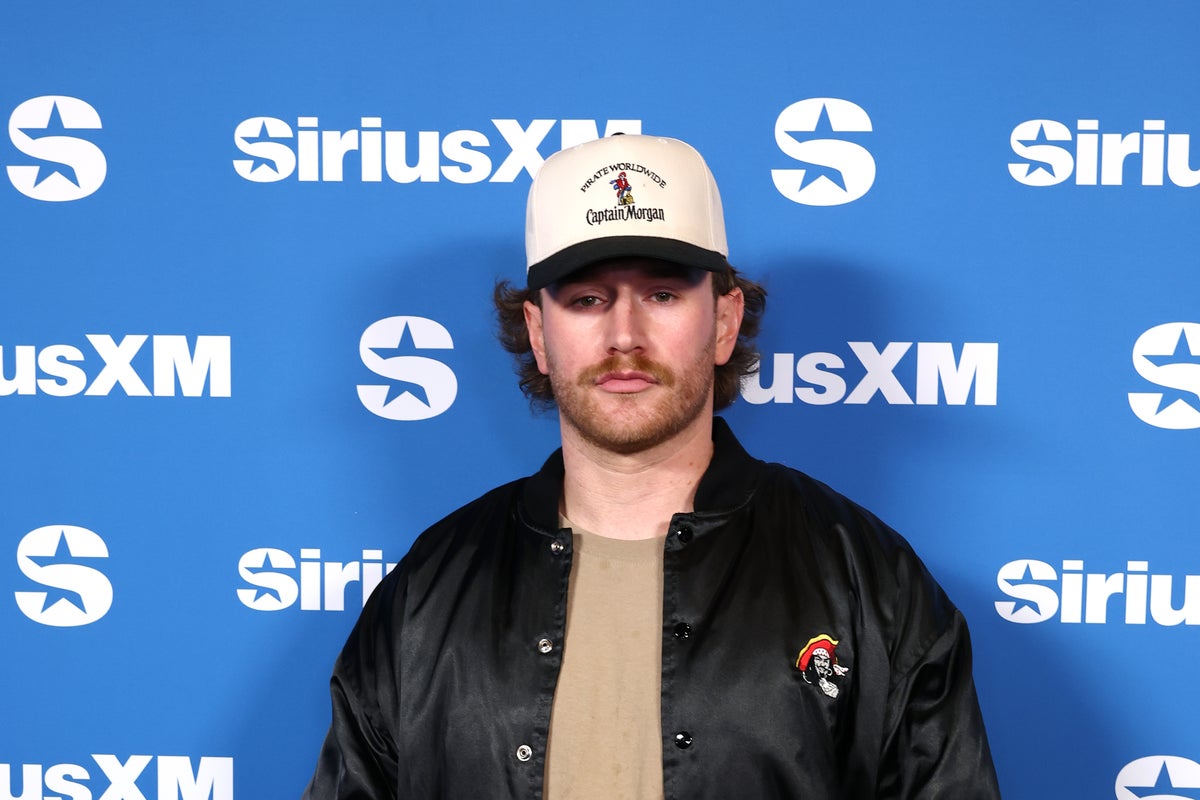
The intersection of viral fame and criminal allegations creates a high-velocity feedback loop that often outpaces the legal system’s capacity to establish a baseline of fact. In the case involving David Burke, known professionally as d4vd, the circulation of claims regarding a violent encounter with a female associate provides a case study in Information Cascades. When an allegation moves from private grievance to public digital discourse, the perceived validity of the claim scales exponentially with the volume of social shares, regardless of the presence of forensic evidence or official police documentation.
The Information Lifecycle of High-Profile Allegations
Allegations against public figures follow a predictable mechanical progression that dictates the speed of reputational decay. This process is rarely linear; instead, it operates through three distinct layers of transmission.
- The Trigger Event: The initial upload of a claim, usually hosted on platforms with low barriers to entry like TikTok or X (formerly Twitter). The power of this stage lies in the "asymmetry of proof." The accuser provides a narrative that is emotionally resonant, while the accused is forced to choose between immediate denial (which can appear defensive) or strategic silence (which is often interpreted as guilt).
- The Amplification Phase: Algorithmic discovery pushes the content beyond the original niche into the mainstream. At this point, the "Truth Effect" takes hold—the psychological phenomenon where people believe a statement to be true simply because it has been repeated multiple times across different channels.
- Institutional Validation: This occurs when traditional media outlets report on the existence of the rumors. Even if the reporting is neutral, the mere act of coverage signals to the public that the claim is significant enough to warrant a formal response, thereby codifying the rumor as a "story."
Quantifying the Vulnerability of the Gen Z Artist
Independent artists like d4vd operate within a "Trust-Based Economy" where the brand is inseparable from the person. Unlike legacy celebrities who have layers of corporate shielding, modern artists rely on direct-to-consumer relationships. This structural intimacy creates a high-stakes vulnerability. If a fan feels a personal connection to an artist, a serious allegation is perceived not as a legal matter, but as a personal betrayal.
The economic fallout from such allegations follows a specific Cost Function:
- Streaming Attrition: Users remove tracks from personal and editorial playlists to avoid social friction or "second-hand guilt."
- Contractual Stasis: Potential brand deals, festival bookings, and collaborative projects enter a holding pattern. Partners do not necessarily wait for a verdict; they wait for the "heat" to dissipate, which can be just as financially damaging as a conviction.
- Legal Overhead: Even if an allegation is entirely baseless, the capital required to manage public relations and legal defense creates a significant drain on an independent artist’s liquid assets.
The Burden of Evidence in Digital Jurisprudence
A critical failure in public discourse is the conflation of "unconfirmed reports" with "criminal proceedings." In the specific context of the d4vd allegations, the absence of a verified police report or a formal statement from a law enforcement agency creates a data vacuum.
In a standard criminal investigation, the chain of custody for evidence—DNA, digital footprints, and witness testimony—is strictly regulated. In the digital court of opinion, evidence is replaced by "clout-based verification." This involves assessing the accuser's history, the specificity of their details, and the presence of supporting digital assets like screenshots or voice memos.
However, these digital assets are subject to the Malleability Problem. In an era of sophisticated deepfakes and manipulated metadata, a screenshot is no longer a definitive artifact. The logical framework for evaluating these claims requires a binary check:
- Internal Consistency: Does the narrative remain the same across multiple retellings?
- External Correlation: Are there physical logs (travel records, GPS pings, bank statements) that align with the timeline provided?
Without these two factors, an allegation remains a hypothesis rather than a factual event.
Strategic Response Mechanics and the "Silence Penalty"
Crisis management for an artist facing severe allegations generally falls into two tactical categories.
The first is the Rapid Response Model. This involves a direct, scorched-earth denial supported by immediate legal filings (such as a defamation suit). This is intended to stop the information cascade by introducing a legal consequence for further sharing. The risk here is the "Streisand Effect," where the aggressive denial actually brings more attention to the original claim.
The second is the Information Starvation Model. The artist remains silent, allowing the news cycle to move to the next viral event. This relies on the short attention span of digital audiences. This strategy fails if the accuser continues to release "drip-feed" information, which keeps the story alive and forces the artist into a reactive position.
Structural Incentives for Misinformation
It is necessary to acknowledge the economic incentives that drive the spread of sensational claims. Within the attention economy, "outrage" is the most valuable currency. Creators who aggregate celebrity gossip or "expose" videos see a direct correlation between the severity of a claim and their own monetization metrics. This creates a perverse incentive to amplify unverified claims, as the platform rewards engagement (comments, shares, likes) rather than accuracy.
The mechanism of "Clout-Chasing" is often cited as a motive for false allegations, but from a strategic standpoint, this is a high-risk, low-reward play for an accuser. While they may gain short-term visibility, they face potential civil litigation and criminal charges for filing false reports. Therefore, a data-driven analysis must weigh the credibility of the accuser against the potential risks they are assuming by going public.
Navigating the Threshold of Permanent Brand Damage
The point of no return for an artist occurs when the allegation shifts from a specific event to a general characterization. If "d4vd" becomes synonymous with "violence" in search engine results and social media tags, the brand has suffered a structural collapse. Rebuilding requires a long-term "rehabilitation of narrative," which usually involves a combination of legal exoneration and a sustained period of high-quality creative output that outweighs the negative associations.
The current landscape dictates that every modern artist must have a Reputational Reserve Fund—a combination of legal retainers and a crisis PR team ready to deploy within minutes of a viral event. The speed of the internet has eliminated the luxury of the 24-hour news cycle. In 2026, a reputation can be dismantled in the time it takes for a video to reach 100,000 views.
For any artist or management team, the immediate strategic priority must be the "Lockdown of Information Flow." This involves securing all private communications, verifying the whereabouts of the artist during the alleged timeline, and preparing a factual rebuttal that prioritizes logic over emotion. The goal is not to win the internet's favor, but to provide enough conflicting data to stall the information cascade and move the battle from the court of public opinion to a regulated legal environment where evidence takes precedence over engagement.