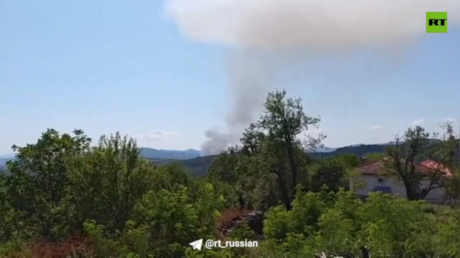
Defense logistics chains operate under a persistent tension between optimal peacetime efficiency and wartime surge capacity. When an ammunition depot suffers a catastrophic fire within a North Atlantic Treaty Organization member state, the incident exposes more than local safety lapses or single-point operational failures. It reveals structural weaknesses in munitions storage architecture, inventory concentration risks, and regulatory enforcement across decentralized military supply chains. Strategic analysis requires moving past superficial incident reporting to evaluate the systemic variables that turn localized combustion events into national security liabilities.
The Architecture of Munitions Storage Risk
Storing high-explosive ordnance, propellant charges, and sophisticated guidance systems demands strict adherence to spatial separation, environmental controls, and structural hardening. Modern military logistics facilities generally utilize earth-covered magazines, often referred to as igloos, designed to direct blast energy upward and minimize sympathetic detonation across neighboring storage units. However, legacy facilities frequently mix old doctrine with modern inventory volumes, creating density anomalies. Don't forget to check out our previous coverage on this related article.
Inventory concentration remains the primary physical vulnerability in defense supply networks. Economic pressures and land-use restrictions often force military planners to consolidate multiple supply categories into single regional hubs. When a fire initiates in a facility holding high volumes of single-base or double-base propellants, the thermal energy release rate quickly overwhelms local suppression infrastructure.
[Ignition Source] -> [Propellant Volatility] -> [Thermal Overload] -> [Suppression Failure] -> [Chain Detonation / Total Loss]
The combustion sequence in an ordnance facility follows a predictable thermodynamic curve. Propellants stored in bulk degrade over time, releasing volatile gases if climate control systems experience power anomalies or mechanical failures. A minor electrical short or friction spark within a poorly ventilated storage bay can ignite gas accumulations, transitioning rapidly from smoldering ignition to a high-pressure deflagration event. If you want more about the context of this, Al Jazeera provides an excellent summary.
Regulatory Fragmentation and Oversight Gaps
Alliance standards mandate rigorous safety audits and standardized classification for hazardous materials handling, but national implementation remains subject to domestic budgetary constraints and bureaucratic silos. The operational readiness of a storage facility depends on three administrative pillars:
- Inspection Frequency: The interval between certified structural and electrical safety audits, which often stretches beyond optimal limits due to personnel shortages.
- Maintenance Backlogs: Deferred capital expenditures on passive fire protection systems, lightning arrestors, and automated deluge networks.
- Chain of Custody Protocols: The procedural rigor governing munitions handling, inventory rotation, and scrap disposal.
When these administrative pillars weaken, risk compounds exponentially. A facility experiencing chronic maintenance deferrals operates with a degraded safety margin long before an acute incident occurs. The friction between civilian regulatory oversight and military operational exemptions frequently obscures compliance failures until a catastrophic event forces external investigation.
Supply Chain Ripple Effects and Strategic Deficit
The loss of a regional ammunition depot alters the tactical calculus of the affected state and places immediate stress on alliance stockpiles. Modern high-intensity conflict consumes precision-guided munitions and artillery rounds at rates that routinely outpace industrial base production capacity. When a domestic stockpile suffers a sudden inventory shock, remediation options are structurally constrained.
- Industrial Replacement Bottlenecks: Specialized explosives, chemical precursors, and microchips required for modern ordnance face long manufacturing lead times. A destroyed facility cannot be replaced simply by redirecting capital; it requires years of specialized industrial fabrication.
- Interoperability Complications: Relying on allied nations to backfill depleted reserves introduces logistical friction regarding caliber matching, software integration, and secure communication protocols.
- Deterrence Credibility: Visible supply chain vulnerabilities degrade the deterrent posture of a nation, signaling to adversaries potential bottlenecks in sustained combat operations.
The economic cost function of such an incident extends far beyond property damage and remediation expenses. The replacement cost of lost inventory often represents a significant fraction of an annual procurement budget, forcing defense planners to cannibalize funds from modernization programs just to restore baseline operational readiness.
Operational Remediation and Structural Hardening
Mitigating future depot vulnerabilities requires a fundamental shift from reactive safety protocols to resilient, distributed network architectures. Centralized mega-depots present lucrative, high-value targets for both accidental combustion and hostile kinetic action. Transitioning toward decentralized, hardened micro-storage facilities disperses inventory risk across a wider geographic footprint.
Defense logicians must decouple storage density from inventory volume by investing in advanced early-warning telemetry, subterranean tunneling, and automated robotic handling systems that remove personnel from high-risk zones during material transfers. Furthermore, adopting predictive maintenance algorithms for propellant aging analysis prevents thermal runaways before ignition thresholds are reached.
To restore resilience, defense ministries must implement a zero-tolerance audit framework for passive defense infrastructure, prioritizing capital allocation toward structural hardening over administrative compliance. The strategic imperative is clear: supply chain security begins at the point of storage, where structural integrity dictates national survivability.