Panic sells headlines. Nuance takes work.
Every time a cargo vessel hits a sea mine in the Persian Gulf, the media script writes itself in three minutes flat. A ship sinks. A chokepoint shudders. Analysts scream that global commerce is hanging by a thread, oil prices are about to detonate, and supply chains are days away from total collapse.
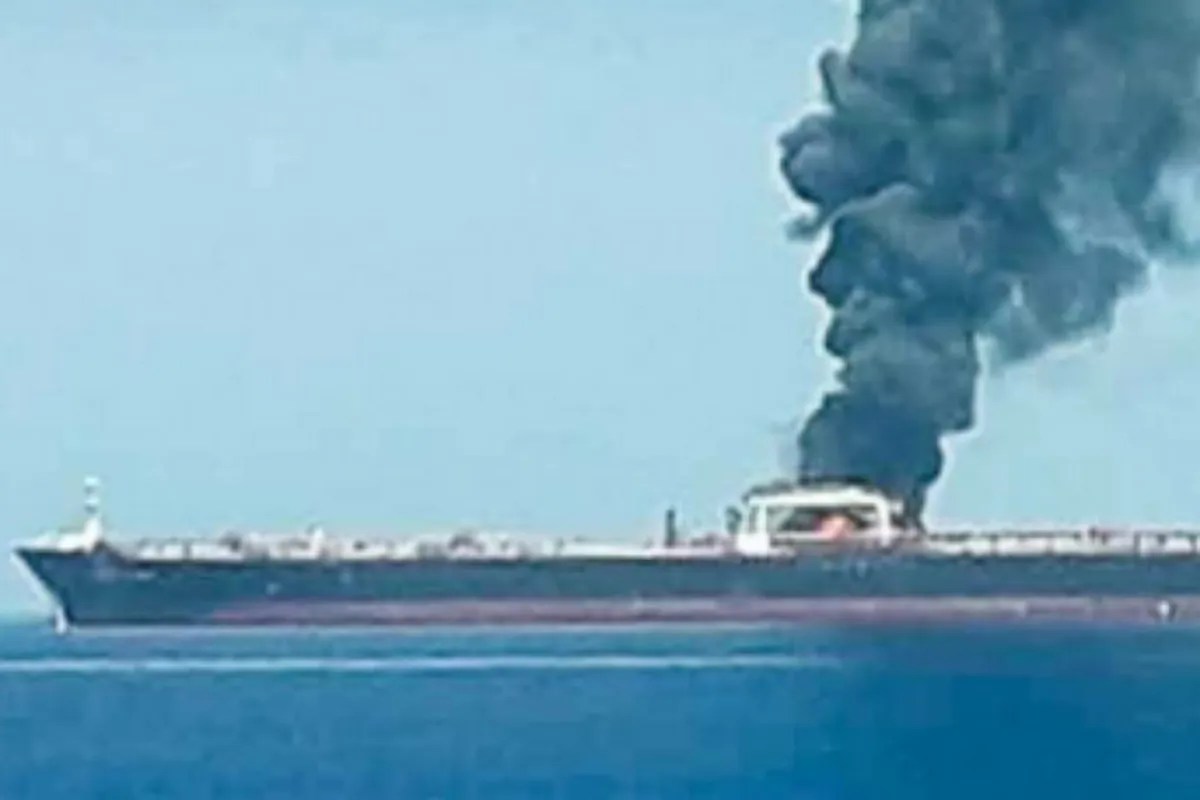
A 2,500-container ship goes down in the Strait of Hormuz after striking a naval mine, and suddenly everyone acts like a single sunken hull is a cork jammed into the throat of the world economy.
It isn't. That story is lazy, dramatic, and wrong on almost every operational count.
I have spent years watching supply-chain directors, procurement heads, and risk committees burn millions of dollars reacting to headline velocity instead of physical reality. When disruption hits a major maritime artery, the loudest voices in the room usually know the least about vessel dimensions, salvage physics, insurance underwriting, and routing math. They confuse noise with paralysis.
Let's tear apart the lazy consensus around a 2,500-TEU container ship sinking in the Strait of Hormuz—and look at what actually breaks, what bends, and why most executives are asking the wrong question before they even get to the port.
The Lazy Consensus Around Chokepoint Disasters
When a headline announces that a 2,500-TEU vessel struck a mine and sank in the Strait of Hormuz, three standard assumptions immediately follow:
- The strait is effectively closed or imminently shut down.
- A 2,500-TEU container loss is a massive blow to global container capacity.
- Emergency air freight and knee-jerk rerouting are the only sane defenses.
Each of those points sounds tough and urgent. Each one falls apart under basic maritime scrutiny.
First, a "2,500-container ship" in industry terms means roughly 2,500 twenty-foot equivalent units (TEUs)—a feeder or small Panamax-class ship. That is not an ultra-large container vessel carrying 18,000 to 24,000 TEUs. Losing 2,500 TEUs of box capacity hurts the specific shippers and beneficial cargo owners whose freight was aboard that hull—especially if time-sensitive components, chemicals, or seasonal inventory went down with it—but in the context of a global container fleet numbering tens of millions of TEUs, it is a local wound, not a systemic capacity wipeout.
Second, the Strait of Hormuz is a vital maritime corridor linking the Persian Gulf to the Gulf of Oman and the open ocean, with inbound and outbound traffic lanes separated and monitored by naval forces and commercial operators. A single sunken vessel does not automatically seal a waterway unless it blocks a narrow navigable channel in shallow water or triggers an immediate, sustained minefield campaign that forces insurers and operators to suspend transits.
Third, the reflex to panic-book air cargo or tear up entire network designs after a single mine strike usually rewards brokers and penalizes balance sheets. Air freight costs a fraction of ocean freight per kilogram—often roughly 10 to 15 times more depending on lane and urgency—and cannot absorb bulk or heavy containerized goods at scale.
You Are Asking the Wrong Question
Most companies ask: "How do we get our containers out of the Gulf right now?"
That is a tactical panic question. It treats the symptom after the hull is already wet.
The sharper strategic question is: Where is your true single-point-of-failure hidden across your Tier-1 and Tier-2 suppliers, and how much working capital did you trap in transit because you bought cheap transit times instead of resilient inventory buffers?
When a mine strikes in the Strait of Hormuz, your real exposure isn't just the box that sank. It is:
- Port congestion and dwell spikes at transshipment hubs as schedules slip and vessels bunch up.
- War-risk insurance premiums and exclusions, which can spike on short notice and alter voyage economics faster than fuel prices.
- Schedule integrity decay, where a delayed feeder connection cascades across regional hubs and turns a 3-day hiccup into a 3-week inventory gap.
- Single-origin concentration, where an entire product line depends on parts or raw materials moving through one narrow maritime corridor.
If your supply chain breaks because one 2,500-TEU vessel went down, the mine didn't cause your fragility. The mine just exposed fragility you already built.
What Actually Happens After a Sea Mine Strike
To separate real operational risk from cable-news theater, you have to look at the mechanics behind the event.
1. Naval Mines vs. Commercial Routing
A sea mine—whether moored, drifting, or bottom-laid with acoustic, magnetic, or pressure sensors—is a psychological and physical hazard. Even a handful of mines changes risk calculations because shipowners and masters face catastrophic hull damage, crew risk, and environmental liability.
Yet maritime corridors don't turn into dead zones overnight by magic. Mine countermeasure operations, naval patrols, route adjustments, and real-time intelligence shape whether shipping continues under heightened escort/monitoring or pauses temporarily. The critical variable isn't merely that a mine detonated; it is whether the threat is isolated or part of a broader, sustained campaign.
2. Vessel Size, Salvage, and Channel Risk
A 2,500-TEU ship is substantial enough to cause serious cargo loss, bunker/oil spill concerns, and localized hazard zones, yet small enough compared to mega-ships that salvage and wreck-removal dynamics depend heavily on exact water depth, position relative to traffic separation schemes, and security conditions.
In maritime law and salvage—think of frameworks referenced by organizations like the International Maritime Organization (IMO) and international maritime insurers—wreck removal and navigation hazards are assessed by depth, obstruction to navigation, and environmental threat. A sunken hull sitting outside the main fairway creates a very different operational problem from one resting squarely across a primary dredged or narrow passage.
3. The Real Cost Driver: Risk Pricing and Delay
When a vessel is lost to a mine, the immediate financial shock hits three places:
- Cargo owners: General average, cargo claims, marine cargo insurance adjustments, and stockouts on specific SKUs.
- Carriers and charterers: Hull loss or damage, crew safety obligations, schedule disruption, and higher war-risk premiums.
- Buyers downstream: Longer lead times, higher safety-stock carrying costs, and margin compression when forced to expedite critical items.
Notice what doesn't happen automatically: global manufacturing doesn't grind to a halt the moment a feeder-sized ship sinks. Markets adjust through rerouting, buffer stock drawdowns, alternative sourcing, and spot rate shifts.
A Thought Experiment on Panic vs. Discipline
Imagine a scenario where a mid-sized electronics assembler imports specialized enclosures and connectors through Gulf-linked routes and sees a headline about a 2,500-TEU container ship sinking after hitting a sea mine. The VP of Supply Chain immediately orders 40% of next month's inbound volume shifted to air freight at four times the budgeted logistics cost, while freezing ocean bookings across unaffected lanes. Two weeks later, ocean services keep moving with minor schedule slippage, alternative suppliers fulfill standard replenishment, and the company's quarterly gross margin takes a needless multi-million-dollar hit—not because freight couldn't move, but because leadership confused urgency with intelligence.
I have seen versions of that exact movie play out in real boardrooms. Fear makes smart executives do expensive, dumb things.
What "People Also Ask" Gets Wrong
"Does a sunken container ship in the Strait of Hormuz shut down global trade?"
No. Global trade is vast, redundant, and adaptive—though regional trade flows and specific supply chains tied to Persian Gulf ports can face acute delays, higher insurance costs, and localized shortages. Calling a 2,500-TEU sinking a shutdown of global trade exaggerates a real regional shock into an impossible global absolute.
"Should companies immediately switch to air freight or alternate ports when a mine hits?"
Only for genuinely high-value, low-weight, mission-critical components where line-down costs exceed the air premium—and only after verifying actual cargo exposure. Shifting heavy or low-margin goods by reflex burns cash without solving structural chokepoint risk.
"Are sea mines an obsolete Cold War weapon?"
Hardly. Naval mines remain cheap, asymmetric, and notoriously disruptive precisely because finding and clearing them is slow, methodical work, and the threat of a mine can slow or divert traffic even before a second hull is hit. Treating them as "old tech" is a rookie mistake.
Actionable Moves That Actually Work When Chokepoints Heat Up
Skip the theatrics. Run a disciplined operational playbook instead:
- Audit actual container-level exposure within 24 hours. Don't guess. Check vessel manifests, booking confirmations, bill-of-lading statuses, and feeder connections to see which exact purchase orders are on affected vessels or transiting the zone.
- Segment SKUs by true line-down impact. Separate "we run out of this in 6 days and the factory stops" from "we have 45 days of stock or a secondary vendor." Spend expedite budget only on items that actually stop production or lose high-margin revenue.
- Talk to your marine cargo insurer and broker early. Clarify war-risk coverage, policy wording, and claim documentation rules before panic rumors turn into bad assumptions about what is covered.
- Build structural optionality before the next crisis. Dual-source critical components across distinct regions, maintain calibrated safety stock on high-variance lanes, and keep pre-vetted freight forwarders active—not just when the headlines scream.
The Catch With My Own Contrarian Take
Here is the honest downside to pushing back against chokepoint panic: being calm about the aggregate numbers can make you careless about local timing.
A 2,500-TEU loss may be small in global capacity terms, yet if your sole critical sub-assembly was sitting in one of those containers, "global capacity is fine" won't keep your assembly line running tomorrow morning. Contrarianism becomes dangerous when it turns into complacency. The smart posture isn't apathy—it's cold-eyed precision: don't overreact to the headline, but don't ignore the specific boxes with your name on them.
Stop treating every maritime incident in the Strait of Hormuz like the end of commerce. Fix your single-source dependencies, protect your cash, and let the tourists panic.