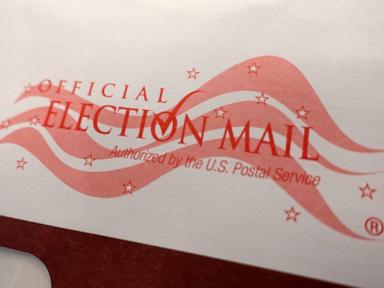
Coverage of Supreme Court decisions on election administration often frames every ruling as a decisive ideological victory for one political faction and a total defeat for another. When the Court declines to intervene in state mail-in ballot procedures or rejects federal executive attempts to alter voting rules, commentators frequently treat the outcome as a permanent endorsement of broad mail-in access. That framing misses the actual legal mechanics at play.
Legal scholars, election administrators, and civil rights advocates view these rulings through very different lenses. Understanding what the Supreme Court actually decides—and what it leaves open—requires separating partisan headlines from constitutional doctrine.
What the Court Actually Decides in Election Disputes
Under Article I, Section 4 of the U.S. Constitution—the Elections Clause—state legislatures hold primary authority over the "Times, Places and Manner" of holding federal elections, subject to congressional override. Meanwhile, the executive branch possesses no inherent constitutional power to rewrite state ballot deadlines, witness requirements, or drop-box rules by fiat.
When the Supreme Court rejects an administration's attempt to restrict mail-in voting, legal analysts point out that the ruling often rests on separation-of-powers boundaries and procedural posture rather than a substantive endorsement of mail-in balloting itself.
- Executive Overreach vs. Legislative Authority: According to constitutional law scholars, the Court has consistently signaled skepticism toward executive actions—whether from a Democratic or Republican administration—that attempt to alter election rules without explicit congressional authorization.
- The Purcell Principle: Named after Purcell v. Gonzalez (2006), this doctrine discourages federal courts from altering state election rules close to an election to avoid voter confusion and administrative chaos. Often, when the Supreme Court refuses to block or impose a mail-in voting rule, it is applying Purcell restraint rather than ruling on the underlying merits of the policy.
- Standing and Procedural Hurdles: Many high-profile election challenges fail before the justices ever evaluate empirical claims about fraud or voter access because plaintiffs fail to demonstrate concrete, particularized injury under Article III.
Competing Perspectives on Mail-In Voting Access and Security
Public debate over absentee and mail-in ballots centers on two competing priorities: maximizing eligible voter participation and safeguarding administrative integrity. Both viewpoints are supported by distinct institutional arguments.
The Case for Broad Mail-In Access
Voting rights organizations, such as the Brennan Center for Justice and the American Civil Liberties Union (ACLU), argue that no-excuse mail-in voting removes structural barriers for shift workers, elderly citizens, voters with disabilities, and rural residents who live far from polling places.
- Turnout and Convenience: Researchers at the MIT Election Data and Science Lab have documented that universal or no-excuse mail-in voting simplifies participation and reduces long lines on Election Day.
- Existing Safeguards: Election officials across states that conduct all-mail elections—such as Oregon, Washington, and Colorado—emphasize that mail ballots rely on multiple layers of verification, including signature matching, unique barcode tracking, and bipartisan canvassing boards.
- Empirical Record: Studies cited by election law experts and bipartisan commissions consistently find that confirmed instances of mail-in ballot fraud are exceedingly rare relative to the tens of millions of ballots cast.
The Case for Stricter Mail-In Guardrails
Conversely, conservative legal groups, such as the Heritage Foundation and the Public Interest Legal Foundation, alongside several state attorneys general, contend that expanding mail-in voting beyond traditional absentee categories introduces vulnerabilities that in-person voting avoids.
- Chain-of-Custody Concerns: Critics of broad mail-in voting argue that once a ballot leaves the supervision of election officials, it is no longer protected by the secret-ballot environment of a polling booth, creating potential exposure to ballot harvesting or household coercion.
- Administrative Strain and Rejection Rates: Data from the U.S. Election Assistance Commission (EAC) shows that mail-in ballots are historically rejected at higher rates than in-person ballots due to missing signatures, mismatched handwriting, or late postmarks—errors that disproportionately affect younger and first-time voters.
- Public Confidence: Proponents of tighter restrictions argue that clear, uniform Election Day deadlines and stricter identity verification strengthen public trust in outcomes, regardless of whether fraud occurs at scale.
Why Federal Rulings Rarely Settle the Issue
Assuming that a single Supreme Court order resolves the national debate over mail-in voting overlooks how decentralized American elections truly are. Because the United States operates thousands of local election jurisdictions under 50 distinct state statutory frameworks, a ruling blocking federal executive intervention simply returns the battlefield to state legislatures and state courts.
- State Statutory Divergence: While states like California, Nevada, and Utah automatically mail ballots to all active registered voters, states such as Texas, Indiana, and Mississippi maintain strict excuse requirements for absentee voting. A Supreme Court refusal to impose nationwide executive restrictions leaves both models intact.
- State Constitutional Litigation: Increasingly, voting rights advocates and challengers bypass federal courts altogether, litigating mail-in ballot rules under state constitutional provisions—such as "free and equal" election clauses—where state supreme courts hold final authority.
- Congressional Authority: Under the Elections Clause, Congress retains the constitutional power to set baseline national standards for federal elections, meaning long-term uniform changes require legislative consensus rather than executive orders or emergency court dockets.
Key Questions Voters and Observers Often Misunderstand
Does a Supreme Court rejection mean mail-in voting is permanently protected nationwide?
No. According to election law specialists, declining to grant emergency relief or rejecting an executive branch challenge does not establish a federal constitutional right to no-excuse mail-in voting. State legislatures remain free to expand or tighten absentee rules within the bounds of the Voting Rights Act and the Equal Protection Clause.
Can a president unilaterally restrict or expand mail-in voting by executive order?
Constitutional scholars across the ideological spectrum broadly agree that the president has minimal direct authority over how states conduct elections. While federal agencies can issue guidance, provide cybersecurity support, or enforce existing federal civil rights statutes, changing ballot eligibility or deadlines requires state legislation or an act of Congress.
What actually determines how mail-in ballots are handled in a given state?
State election codes—passed by state legislatures and signed by governors—govern every operational detail: when ballots are mailed out, whether return postage is prepaid, whether drop boxes are permitted, how signature curing works, and whether ballots must arrive by Election Day or merely be postmarked by that date.
The Trade-Offs of Decentralized Election Administration
The American system of decentralized, state-driven election rules carries inherent trade-offs that neither side of the political debate can entirely eliminate.
- Resilience vs. Consistency: Decentralization makes large-scale manipulation across multiple jurisdictions extraordinarily difficult, as no single system controls the vote. At the same time, it produces a patchwork of rules where a ballot cast lawfully in one state would be invalid across the border.
- Speed vs. Verification: Allowing postmarked ballots to arrive days after Election Day ensures military personnel and voters facing postal delays are not disenfranchised, yet the resulting delay in final vote tallies often fuels public anxiety and misinformation during the canvassing period.
Ultimately, Supreme Court decisions rejecting executive attempts to reshape mail-in voting underscore a foundational feature of U.S. election law: the rules of voting are not set from the Oval Office, nor are they permanently fixed by a single docket order. They are contested, written, and rewritten across 50 state capitols and thousands of county election offices every cycle.